
Hyundai Motor Group’s annual Go Green Hackathon challenged students to rethink climate-resilient communities and vehicle-based safe spaces, highlighting how the automaker’s vision for future mobility is expanding beyond transportation to encompass safety, sustainability, and urban resilience.
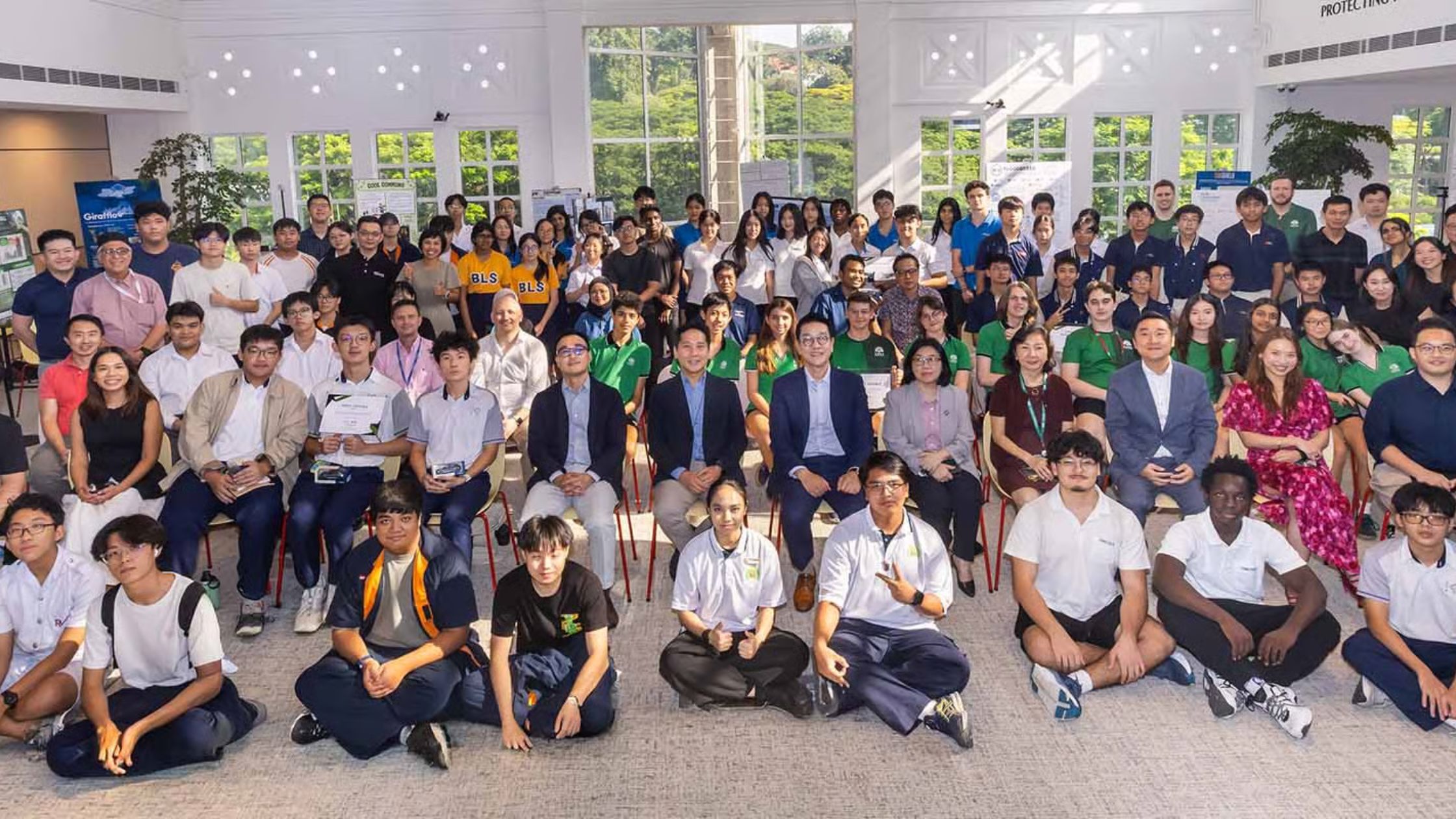
Hyundai Motor Group Innovation Center Singapore (HMGICS) and Hyundai CRADLE Singapore have concluded the fifth edition of their annual Go Green Hackathon, bringing together a record 91 students across 25 teams from nine local and international schools to develop practical solutions for climate adaptation. Held for the first time at Temasek Shophouse, the hackathon was organized in conjunction with the Ministry of Sustainability and the Environment’s Go Green SG 2026 campaign, in partnership with Temasek Foundation and with support from the National University of Singapore (NUS).
Unlike previous editions, this year’s program challenged participants to address two pressing climate adaptation issues: redesigning community spaces to improve heat resilience, and developing vehicle-based solutions that could serve as safe spaces during climate emergencies such as flooding, extreme heat, and deteriorating air quality.
While student hackathons have become common across the technology sector, Hyundai’s latest initiative also reflects a broader strategic direction for the South Korean automotive group. As Hyundai continues expanding its software-defined mobility, robotics, and smart manufacturing ambitions, the company increasingly views future mobility as extending beyond vehicles themselves to include the broader environments in which people live and move.
The hackathon’s problem statements align closely with Hyundai Motor Group’s long-term vision of becoming a Smart Mobility Solution Provider, a strategy that has steadily expanded the company’s focus from vehicle manufacturing to robotics, software-defined vehicles, artificial intelligence, advanced manufacturing, and future urban mobility.
Rather than asking students to design the next generation of automobiles, this year’s competition encouraged participants to rethink how mobility technologies could contribute to safer and more resilient communities.
One challenge asked teams to reimagine multi-purpose public spaces that could meet everyday community needs while also functioning as heat adaptation measures. The second asked teams to develop smart, car-based solutions capable of turning vehicles into mobile safe spaces during climate hazards.
During an exclusive conversation with KoreaTechToday, Dr. Park Hyun Sung, Chief Executive Officer of HMGICS, said the concepts reflected Hyundai’s broader understanding of mobility.
“The themes explored during the hackathon align with Hyundai Motor Group’s broader vision of mobility to improve people’s lives beyond transportation. As cities and communities face increasingly complex challenges, we believe future mobility solutions should contribute not only to movement, but also to safety, connectivity, and sustainability.
“Although the concepts were developed by students, many of them captured the broader perspective and importance of thinking critically about how technology, community needs, human-centered design, and sustainability can come together to improve quality of life and support the transition toward a more sustainable and holistic future.”
The comments underscore how Hyundai increasingly sees mobility as part of a wider ecosystem connecting transportation, public infrastructure, sustainability, and urban resilience.
A Testbed for Future Mobility
The event also highlights the growing role of HMGICS within Hyundai Motor Group’s global innovation strategy. Located in Singapore’s Jurong Innovation District, HMGICS serves as Hyundai’s first global open innovation hub and Software-Defined Factory testbed. Operational since November 2023, the facility combines robotics, artificial intelligence, autonomous manufacturing, and digital technologies to develop production systems that can later be deployed across Hyundai’s global manufacturing network.
Beyond manufacturing, HMGICS also collaborates with startups, universities, government agencies, and research institutions through an open innovation model that supports future mobility development.
The annual hackathon, now in its fifth year since launching in 2022, forms part of this broader ecosystem. Since its inception, the program has engaged more than 330 students.
Students spent two months working alongside mentors from HMGICS and NUS before presenting solutions evaluated against four criteria: relevance and alignment, feasibility and practicality, innovation and creativity, and impact and benefit. Prior to the finale, participants also took part in learning journeys to HMGICS, Gardens by the Bay, and the National Environment Agency’s Centre for Climate Research Singapore to better understand how technology and climate science intersect with urban planning and resilience.
Student Concepts Mirror Emerging Mobility Trends
Several of the winning concepts echoed challenges already being addressed across the automotive industry. The first-place winner for the community resilience challenge, Team HeatSync from the Institute of Technical Education College Central, proposed an evaporative cooling shelter using terracotta materials and passive cooling techniques to improve outdoor comfort during periods of extreme heat.
Meanwhile, Team License to Chill from the German European School Singapore developed smart adaptive windows capable of reducing heat buildup inside parked vehicles using electronically controlled tint technology.
Five additional teams received recognition: River Valley High School’s Team Ephemeral and the School of Science and Technology’s Team WD-40 took second place in the community resilience and smart mobility categories, respectively. United World Colleges East was recognized twice, with Team EcoLink winning the Most Innovative award and Team Coolth receiving Best User Experience, while Boon Lay Secondary School’s Team BLSparkler was named Most Feasible.
Other student concepts explored AI-powered flood detection systems, emergency vehicle escape mechanisms during flash floods, climate-adaptive public transport, intelligent air-quality management inside vehicle cabins, and passive cooling technologies for urban community spaces. While these remain conceptual projects developed within a two-month student program, they reflect broader industry trends as automakers increasingly integrate climate resilience, occupant safety, connected technologies, and sustainability into future mobility platforms.
What It Means for Hyundai and South Korea
Hyundai’s latest hackathon arrives as South Korea accelerates investment in software-defined vehicles, artificial intelligence, robotics, and next-generation mobility technologies. Across the automotive sector, the definition of mobility is expanding beyond vehicle performance to encompass user experience, digital connectivity, environmental sustainability, and public safety. Climate adaptation is becoming part of that conversation as cities prepare for more frequent heat waves, flooding, and extreme weather events. Singapore itself has designated 2026 as the Year of Climate Adaptation and is developing its first National Adaptation Plan, a policy backdrop that gives added weight to the hackathon’s focus on heat resilience and climate-related emergency response.
Against that backdrop, Hyundai’s decision to challenge students to rethink community infrastructure alongside vehicle technologies illustrates how the company is broadening its innovation agenda.
The hackathon itself may have focused on student-led concepts, but it also provides a glimpse into Hyundai Motor Group’s evolving vision for future mobility. As the company continues investing in software-defined factories, intelligent manufacturing, robotics, and advanced mobility services, the next generation of transportation may be shaped not only by smarter vehicles, but also by how those vehicles interact with communities, infrastructure, and the people they are designed to serve.