
South Korea’s Hyundai Card is expanding beyond credit card issuance through its proprietary AI platform and data partnerships, seeking to turn capabilities developed in financial services into technology offerings for businesses in South Korea and overseas.
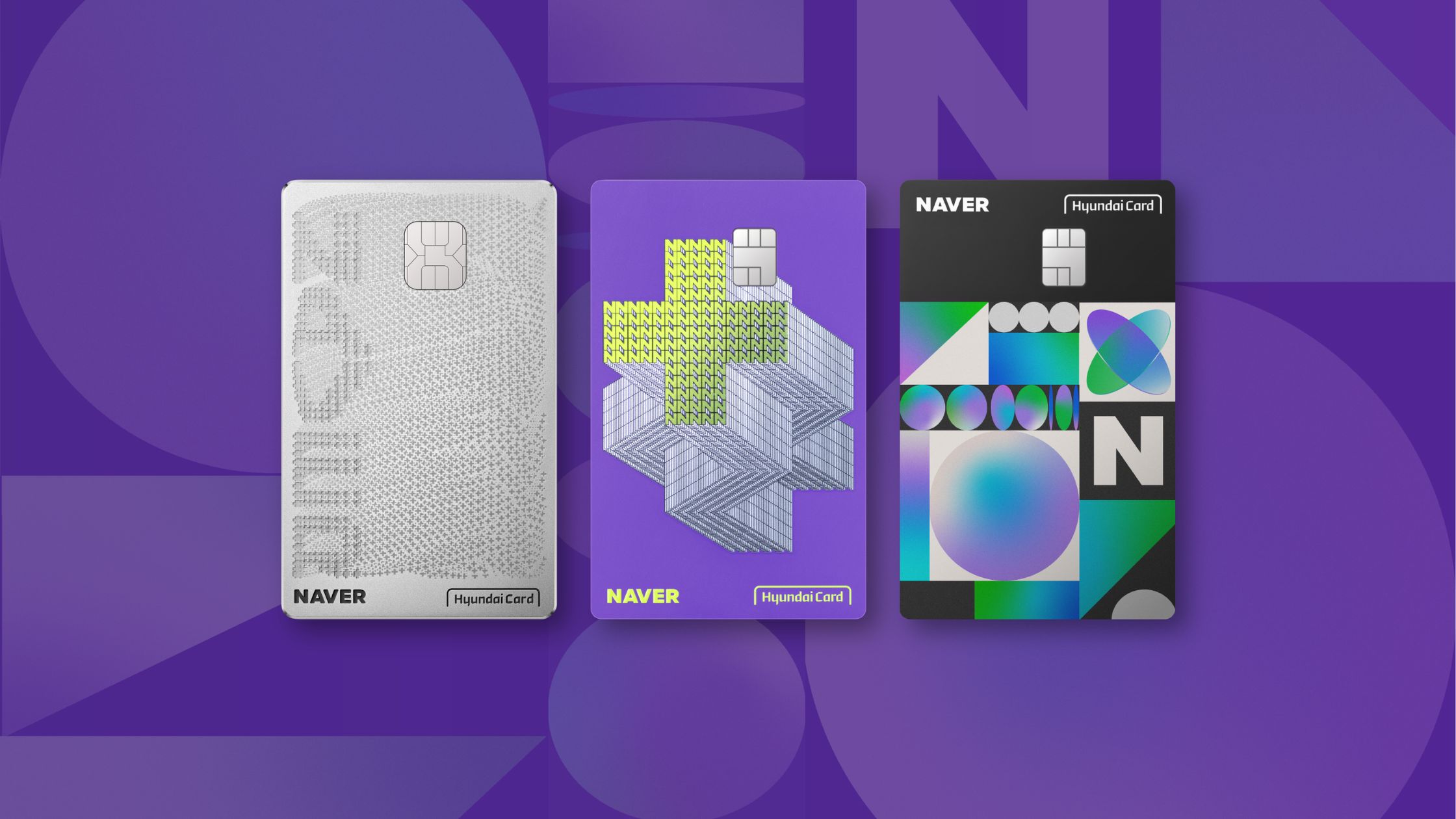
Hyundai Card has partnered with New York-Tokyo creative collective CEKAI to introduce 3D motion-inspired designs for its NAVER Hyundai Card Edition3, bringing a new visual approach to the physical credit card. Launched in South Korea, the card features designs inspired by CEKAI’s 3D billboard and visual work, developed through more than 100 design drafts and adapted for both plastic and metal card plates. The collaboration highlights Hyundai Card’s approach to financial products, combining design and technology to differentiate its offerings in an increasingly competitive market.
The strategy reflects an effort to make Hyundai Card more than a card issuer. By combining design-led products with data infrastructure and AI services, the company is seeking to create value for its commercial partners beyond payment transactions.
Design Is the Entry Point, Not the Entire Strategy
The NAVER Hyundai Card Edition3, launched in August 2026, illustrates how Hyundai Card approaches product differentiation. Developed with creative collective CEKAI, the card uses graphics designed to create an impression of movement across plastic and metal surfaces. The teams reviewed more than 100 design proposals before finalizing three versions, translating a digital visual concept into a physical financial product.
The card also combines design with a commercial proposition. It offers shopping-related rewards through NAVER’s ecosystem, including up to 15% in NAVER Pay points under specified conditions. More than 1.2 million NAVER Hyundai Cards had been issued since the original product launched in 2021, according to Hyundai Card.
Speaking with KoreaTechToday, a Hyundai Card spokesperson said the company views design, technology, and culture as integral to the customer experience rather than separate elements of financial services.
“As the core functions of financial products become increasingly similar, we believe differentiation will depend more on how clearly a company expresses its unique identity and how meaningfully customers can experience that identity through its products and services,” the spokesperson said.
The statement captures the company’s design philosophy, but its wider strategy extends beyond the physical card. Design can distinguish the customer-facing product; data and AI offer a way to deepen relationships with partner businesses.
From Co-Branded Cards to Data Collaboration
Hyundai Card’s private-label credit card (PLCC) partnerships have historically helped brands attract customers through tailored rewards and co-branded products. Its newer PLCC 2.0 strategy seeks to expand these relationships into broader business collaboration.
The company’s Domain Cosmos data alliance enables partners to conduct data-driven marketing without directly exchanging customer data. The combined network represents approximately 260 million customer touchpoints, and partners have conducted more than 5,000 data-collaboration marketing initiatives, according to recent reporting. The figure represents the partner network’s combined reach, not necessarily unique individuals.
This network provides a foundation for Hyundai Card to offer more than card issuance and marketing support. Its next step is to give partners direct access to AI capabilities that can help them understand customers, identify opportunities, and develop more targeted campaigns.
UNIVERSE Turns Data Expertise Into an Exportable Product
Hyundai Card’s UNIVERSE platform demonstrates how the company is commercializing capabilities developed through its financial business.
The platform uses structured data and AI models to support customer segmentation, recommendations, and marketing decisions. In 2024, Hyundai Card signed an agreement to supply UNIVERSE to Japan’s Sumitomo Mitsui Card Company (SMCC), with implementation completed in March 2026. SMCC subsequently reported roughly three times the effectiveness of previous marketing campaigns using the platform, according to Seoul Economic Daily. That result is encouraging, although it does not establish that the same improvement will occur across other customers or markets.
The export matters because it shows that Hyundai Card can sell technology developed within a financial institution to another company overseas. Rather than treating AI solely as an internal efficiency tool, the company is pursuing it as a potential source of external revenue.
Hyundai Card is now extending that approach through UNIVERSE for Partners (U4P), a version of its AI platform adapted for partner companies. The offering is intended to let businesses use AI-driven customer analysis, recommendations, and predictions without building an entire AI system themselves. Hyundai Card plans to expand adoption among its PLCC partners, including Genesis, which is expected to integrate U4P.
The Challenge Is Turning Technology Into a Scalable Business
Hyundai Card’s strategy faces a key test: whether its data and AI capabilities can generate repeatable value beyond its established partnerships.
Its reported results in Japan provide evidence of commercial potential, but deployments may require customization to fit each partner’s customers, data, and operating environment. The company must also demonstrate that its approach offers a meaningful advantage over competing analytics and AI services.
There is a distinction, too, between a growing partner network and a scalable technology business. The former can create opportunities for the latter, but sustained growth will depend on adoption, measurable business outcomes, and the ability to expand into additional use cases.
Hyundai Card’s financial performance offers a useful backdrop. Its nine-month net profit increased 8.2% year over year, while its technology and partnership strategy continued to develop. However, the available figures do not isolate how much of its financial growth came from AI exports or data services.
Hyundai Card’s evolving strategy illustrates how a financial institution can build on its existing business to develop technology offerings for other companies. Design helps shape the customer experience, data infrastructure supports collaboration, and AI creates opportunities to turn those capabilities into services.
The long-term opportunity lies in connecting these elements without assuming that success in one automatically guarantees success in another. A distinctive card can attract attention, but sustained differentiation requires value that customers and partners can measure. For Hyundai Card, the next phase will depend on whether the technology behind its products can become as commercially meaningful as the products themselves.