

Assessing the Strategic Significance and Implications for the Domestic Space Industry
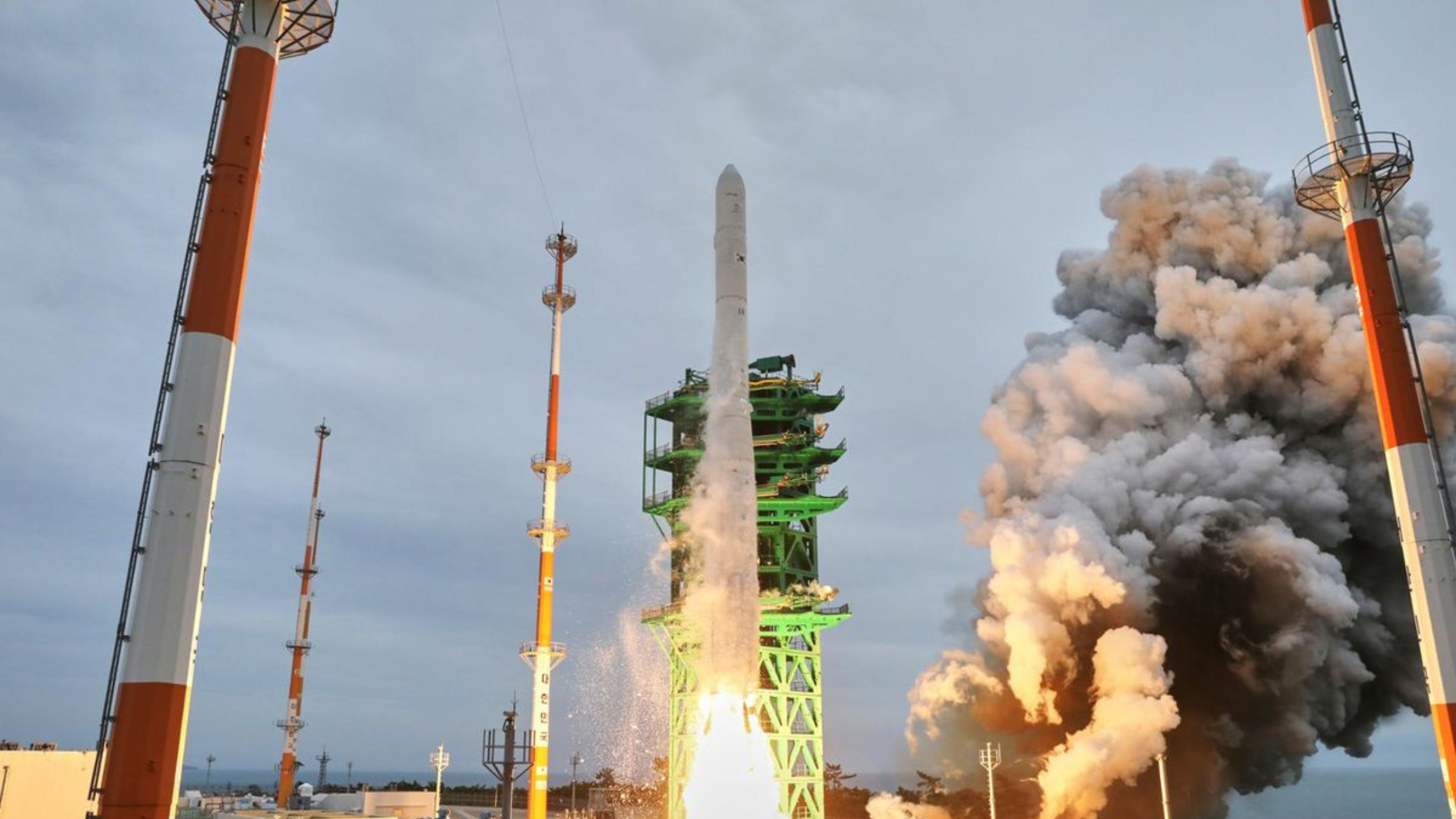
South Korea is set to launch its domestically developed Nuri rocket, officially named the Korea Space Launch Vehicle II (KSLV-II), for the fourth time on November 27. The Korea AeroSpace Administration (KASA) confirmed the date following meetings that included a launch management committee review and an assessment of the transportation logistics for the rocket’s main payload—a next-generation midsized satellite.
A backup launch window has been set from November 28 to December 4 to account for possible technical problems or weather delays. The Nuri rocket is expected to lift off from the Naro Space Center in the southern coastal town of Goheung, with the exact launch time, between 12:54 a.m. and 1:14 a.m., to be confirmed a day in advance.
Payload Composition and Mission Objectives
The Nuri rocket will carry its primary payload alongside 12 smaller satellites, which are scheduled to arrive at the launch site by the end of October. This combination of midsized and small satellites highlights South Korea’s dual focus on strategic satellite deployment and expanding its small-satellite ecosystem.
KASA Administrator Yoon Young-bin emphasized the importance of this launch, stating that it will be the first conducted under the newly established space agency. He stressed that meticulous preparation and close coordination among teams are essential to ensure the mission’s success.
Budget Allocation and Strategic Priorities
The launch coincides with KASA’s announcement of a 15% increase in its 2026 budget, raising it to 1.11 trillion won (US$7.98 billion). Most of the additional funds are earmarked for satellite development and lunar exploration. Key highlights include:
- Satellite Development: 236.2 billion won allocated, up 24.4 billion won from 2025, supporting ultra-high-resolution imaging satellites and 6G-based low-orbit communication projects.
- Space Transportation: 264.2 billion won allocated, down 46.4 billion won or 14.9%, reflecting the conclusion of the Nuri program and delays in next-generation launch vehicle development.
KASA has outlined six priority areas for 2026: strengthening space transportation capabilities, acquiring new technologies, advancing satellite communications, navigation, and observation, and promoting future space industries through exploration initiatives.
Analytical Perspective: Strategic Implications
The fourth Nuri launch is not merely a technical milestone; it represents a strategic effort to consolidate South Korea’s autonomous space capabilities. By continuing to develop independent launch capacity, the country aims to:
- Reduce reliance on foreign launch services for satellites.
- Expand domestic expertise in both midsized and small satellite deployment.
- Build a foundation for future space industries, including advanced communications and Earth observation technologies.
While the budget adjustments reflect a temporary slowdown in space transportation investments, they also underscore a shift toward maximizing the returns from existing launch infrastructure and focusing on high-value satellite projects.
Conclusion: Future Outlook
The upcoming Nuri launch underscores South Korea’s growing ambitions in space and provides a test of its homegrown rocket technology. Success will not only enhance national capabilities in satellite deployment but also strengthen the country’s position in the regional and global space sector. By integrating strategic budget planning, payload diversification, and institutional coordination, South Korea is laying the groundwork for a sustainable and technologically advanced domestic space ecosystem.