
A potential partnership with Intel could give SK hynix its first U.S. memory manufacturing base, expanding its American footprint beyond HBM packaging as AI demand intensifies.
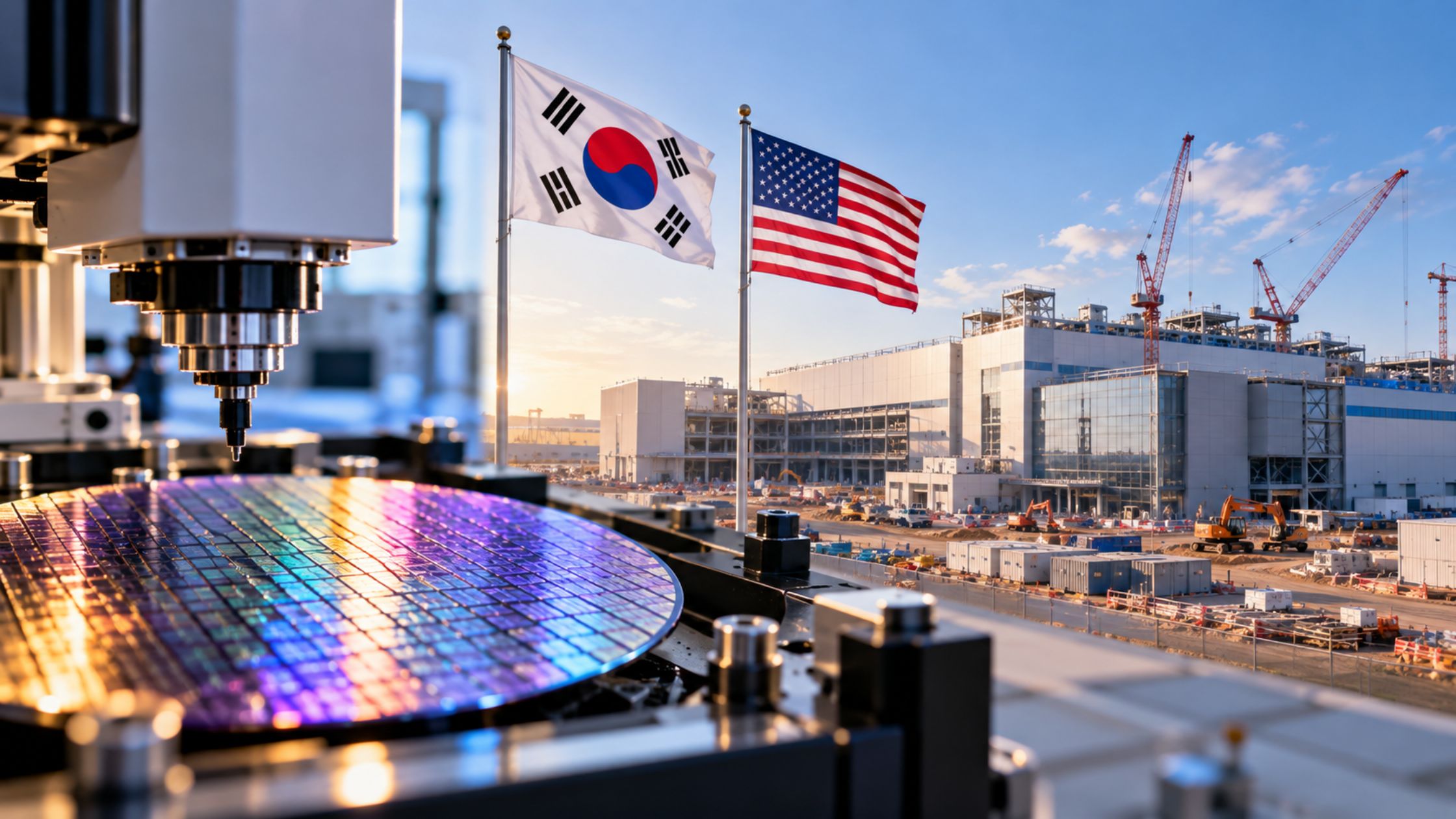
SK hynix is reportedly in exploratory talks with Intel over a potential arrangement to manufacture memory chips in the United States for the first time, according to three people familiar with the discussions. One scenario would see SK hynix lease part of Intel’s planned semiconductor manufacturing facility in Ohio, while another could involve a joint venture between SK hynix, Intel and major cloud companies seeking to secure memory supplies.
No agreement has been reached. SK hynix said it is reviewing various options, including additional production bases, but that nothing has been decided regarding the reported Intel cooperation or U.S. memory production. Intel also described the report as speculation while saying it continues to invest in its Ohio site.
If realized, however, the move would represent a significant change in SK hynix’s U.S. strategy. The company is already building an advanced packaging facility in Indiana, but the potential Ohio arrangement would move its American footprint further upstream into memory chip manufacturing.
From HBM Packaging to Memory Fabrication
SK hynix’s Indiana project provides an important distinction. The company broke ground in August on a facility in West Lafayette with an investment of more than $4 billion. The site is expected to begin mass production of next-generation HBM in the second half of 2029 and employ about 1,000 people once operational.
But the Indiana facility is primarily an advanced packaging and testing operation. Under the current model, advanced DRAM wafers produced by SK hynix in Korea are shipped to Indiana, where they are packaged and tested before being supplied to U.S. customers.
A U.S. memory fab would therefore create a different production structure, potentially allowing SK hynix to manufacture memory wafers as well as package them closer to its American customers. The specific memory technology that could be produced in Ohio has not been determined. SK hynix produces DRAM and NAND as well as high-bandwidth memory, or HBM, which has become critical to AI accelerator systems.
AI Demand Is Changing the Geography of Memory
The potential expansion comes as the AI boom pushes memory demand higher. SK hynix approved approximately KRW 54.3 trillion ($38.3 billion) in August for new production facilities in Yongin and Cheongju. Of that amount, KRW 35.2 trillion is allocated to the Y2 fab in the Yongin Semiconductor Cluster, which will produce next-generation DRAM including HBM, while KRW 19.1 trillion is earmarked for the M17 fab in Cheongju.
The company cited Omdia projections that both DRAM and NAND demand could grow at a compound annual rate of 19% through 2030. That makes SK hynix’s U.S. strategy less about replacing Korean production and more about adding capacity closer to a market where AI infrastructure investment is concentrated.
The company has already signaled that possibility. In July, SK Group Chairman Chey Tae-won said SK hynix was reviewing locations worldwide, including the United States, for a potential memory production base. He said a U.S. fab would depend on the availability of power, clean water, land, skilled workers and a supporting supply chain. The reported Intel discussions therefore follow an existing strategic direction rather than representing an entirely new consideration.
Why Intel’s Ohio Site Matters
Building a semiconductor fab in the United States requires enormous capital as well as access to utilities, skilled labor, suppliers and supporting infrastructure. Intel’s long-planned Ohio semiconductor complex could potentially give SK hynix access to an established site without requiring the company to develop an entirely new location from the ground up.
The reported options also indicate that the proposed structure could extend beyond a conventional landlord-tenant relationship. A joint venture involving Intel and major cloud companies could give SK hynix a closer connection to the customers driving demand for AI memory.
For Intel, such an arrangement could also help improve the utilization of its Ohio infrastructure while bringing another major semiconductor manufacturer into the site. But these remain reported possibilities, not finalized plans.
Korea Still Remains SK hynix’s Core Manufacturing Base
Any expansion into the United States needs to be viewed alongside SK hynix’s continued investment in Korea. The company is accelerating the development of the Yongin Semiconductor Cluster, with Y2 planned as a major DRAM production base and the wider cluster targeted for completion by 2033, 12 years earlier than the original 2045 schedule.
That investment indicates that SK hynix is not shifting its semiconductor manufacturing base away from Korea. Instead, it is building additional capacity in response to a semiconductor industry that is becoming increasingly regional.
For Korea, however, overseas expansion involving advanced memory technology carries another consideration. Under the country’s Industrial Technology Protection Act, overseas transfers involving designated national core technologies can be subject to government review. South Korea’s trade ministry said a potential U.S. production plan would be a company decision but could face such review if national core technologies were involved.
The issue is particularly relevant because advanced DRAM and HBM technologies sit at the center of Korea’s semiconductor competitiveness.
The Strategic Opportunity and the Trade-Off
From an investor perspective, the potential move reflects how AI is changing the semiconductor supply chain.
While conversing with KoreaTechToday, angel investor Sunay said,
“There are very, very big opportunities with the AI boom in every sector. So it’s all about identifying those opportunities and addressing them.”
For SK hynix, one of those opportunities is the growing need to place memory production closer to the companies building AI infrastructure. A U.S. manufacturing footprint could strengthen customer relationships, diversify production geography and reduce exposure to future supply-chain disruptions.
At the same time, manufacturing in the United States comes with significantly higher labor and construction costs than production in Korea, while much of the semiconductor supply chain remains concentrated in Asia. That means the economics of a U.S. fab would need to be balanced against strategic and customer considerations.
The reported Intel talks highlight a broader shift in the memory industry. As AI turns HBM and other advanced memory products into critical infrastructure, leading suppliers are being pushed to consider not only how much they produce, but where that production takes place.
SK hynix’s more than $4 billion Indiana investment already connects Korean wafer production with U.S. packaging and customers. A potential Ohio manufacturing arrangement would take that localization a step further.
For Korea, the question will be how SK hynix can globalize its manufacturing footprint while keeping advanced technology, R&D and a deep production ecosystem anchored at home. For SK hynix, meanwhile, the challenge is becoming increasingly clear: serve the fastest-growing AI markets locally without weakening the Korean semiconductor base that underpins its global memory leadership.