

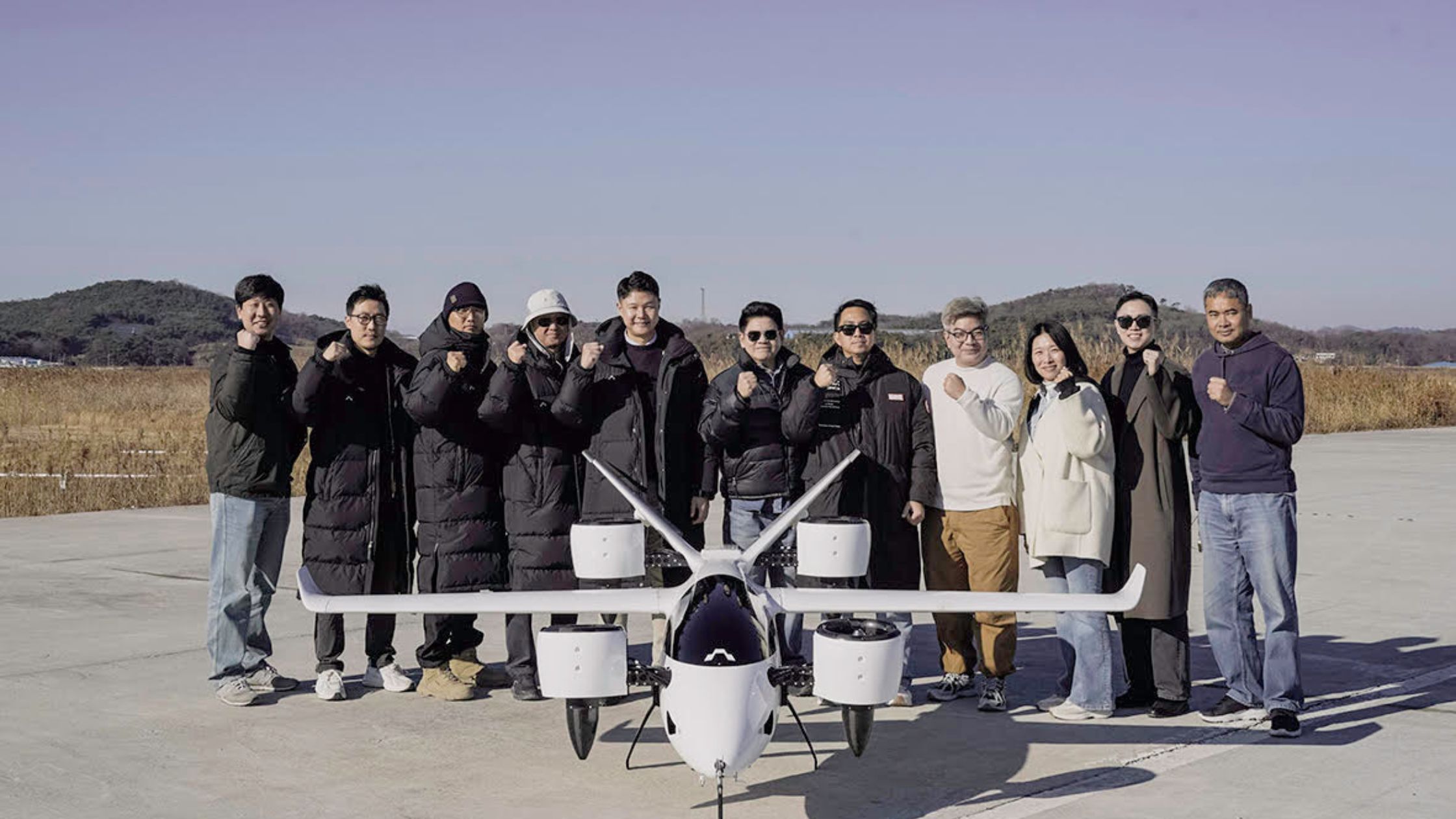
As Korea’s aerial mobility ecosystem matures, Airbility’s Southeast Asia push reflects a shift toward mission-driven, export-oriented deployments
South Korea-based Airbility Inc. has signed a four-party Memorandum of Understanding (MoU) with Thailand’s NT iBuzz Co., Ltd. and SmartOkO Thailand Co., Ltd., along with Singapore-headquartered KILSA Global Co., Ltd., to collaborate on UAV-based public safety and border security systems.
While the agreement is centered on deployment in Thailand, it also reflects a broader trend: South Korean aerial mobility companies are increasingly looking beyond domestic pilots to real-world applications in overseas markets, particularly in Southeast Asia.
South Korea’s UAV and eVTOL sector has evolved rapidly in recent years, supported by both government-led initiatives and private-sector participation. Programs such as K-UAM have focused on building an urban air mobility ecosystem, while defense modernization efforts have accelerated the development of unmanned and autonomous systems.
This dual-track approach—combining civilian mobility and defense-driven innovation—has created a pipeline of technologies that are increasingly being tested for real-world deployment.
While speaking to KoreaTechToday, Airbility described the current phase of the ecosystem as one of transition:
“South Korea’s UAV and eVTOL ecosystem is rapidly maturing, driven by strong government support through programs like K-UAM and defense modernization initiatives. Airbility is positioned at the intersection of defense and commercial applications — our high-speed tilt-duct eVTOL technology, originally developed by specialists from Hyundai Motor and the Agency for Defense Development, enables us to serve mission-critical use cases such as ISR, counter-UAS, and disaster response that most civilian-focused eVTOL players do not address.”
This positioning highlights a divergence within the sector, where a number of companies are focused on urban air mobility and passenger transport, while others—like Airbility—are targeting mission-critical and public-sector use cases.
From domestic pilots to international deployment
South Korea has been active in testing UAV and eVTOL technologies through pilot programs, regulatory sandboxes, and smart city initiatives. However, large-scale commercial deployment—particularly in public safety and defense-linked applications—remains an ongoing process.
Against this backdrop, overseas markets are becoming important testing grounds. Southeast Asia, with its demand for border monitoring, disaster response, and infrastructure surveillance, offers use cases that align closely with the capabilities being developed in Korea.
Airbility’s Thailand partnership reflects this outward shift. By participating in a multi-party collaboration that includes telecom infrastructure and AI analytics, the company is moving beyond platform development toward integrated system deployment.
System integration as a differentiator
The structure of the MoU underscores a broader shift in how Korean UAV companies are approaching the market. Rather than focusing solely on hardware, there is increasing emphasis on integrating aerial platforms with communications networks and data analytics.
Airbility’s origins—drawing on expertise from Hyundai Motor Company and the Agency for Defense Development—position it within a segment of the ecosystem that is closely aligned with defense-grade engineering and mission reliability.
This background is reflected in its focus on use cases such as intelligence, surveillance and reconnaissance (ISR), counter-drone operations, and disaster response—areas where operational integration and reliability are often prioritized over cost or scalability alone.
The inclusion of partners such as NT iBuzz and SmartOkO Thailand further points to a systems-level approach, where UAV platforms are combined with secure connectivity and AI-based analytics to deliver end-to-end solutions.
Southeast Asia as an extension of Korea’s tech strategy
The choice of Thailand also aligns with a broader pattern of South Korean technology companies expanding into Southeast Asia as part of their growth strategy. The region offers both demand for infrastructure solutions and governments that are open to adopting foreign technologies through partnerships.
In the case of UAV and public safety systems, this creates an opportunity for Korean companies to apply technologies developed in domestic programs to markets with more immediate deployment needs.
For Airbility, the partnership may serve as both a commercial opportunity and a validation pathway—demonstrating how Korean-developed UAV systems perform in operational environments outside controlled pilot settings.
Outlook
Airbility’s Thailand MoU highlights a moment of transition for South Korea’s UAV and eVTOL ecosystem. As technologies developed under government-backed initiatives mature, companies are beginning to seek deployment opportunities that extend beyond domestic pilots.
At the same time, the shift toward integrated, multi-stakeholder systems suggests that future competition will be shaped not only by platform capabilities, but by the ability to deliver coordinated solutions across infrastructure, data, and operations.
How effectively Korean companies can translate their technical strengths into scalable, real-world deployments—both domestically and abroad—will likely define the next phase of the sector’s growth.