

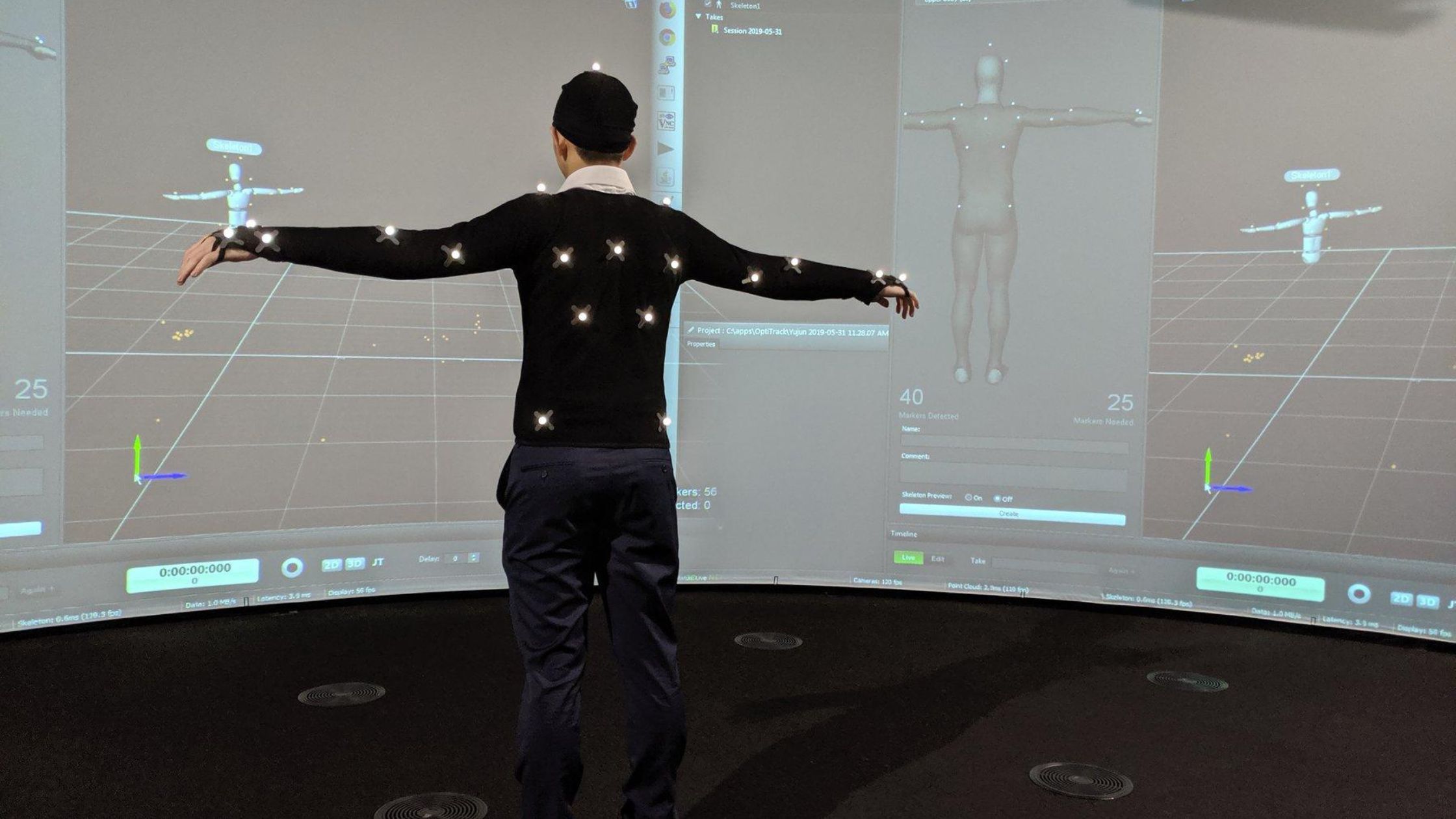
Rapid growth in AI-powered wearables and healthcare innovation is driving a transition from static datasets to continuous movement intelligence
South Korea’s rapidly evolving artificial intelligence and wearable technology ecosystem is accelerating a shift toward real-world movement data as a new frontier in digital health.
Traditionally, healthcare AI systems have relied on historical datasets, clinical records, and survey-based inputs. However, these sources often provide only partial visibility into how physical conditions develop over time. Increasingly, industry players are turning to continuous, real-world data—captured through sensors and connected devices—to enable more proactive and personalized health insights.
South Korea is emerging as a key hub in this transition, supported by strong consumer adoption, advanced hardware capabilities, and government-backed AI initiatives. Companies such as Samsung Electronics continue to expand AI-powered wearable capabilities, integrating biometric tracking, health monitoring, and predictive analytics into consumer devices.
From Activity Tracking to Movement Intelligence
While wearable devices have traditionally focused on metrics such as step counts and activity levels, the next phase of innovation is shifting toward deeper analysis of how people move. This shift is already visible across the industry. Global players such as Apple and Samsung Electronics have expanded their wearable platforms beyond basic fitness tracking to include gait stability, fall detection, posture-related insights, and mobility trends. These features signal a move toward interpreting movement patterns rather than simply recording activity.
At the same time, digital health companies like Hinge Health are incorporating motion tracking and computer vision into rehabilitation programs, while startups focused on biomechanics and posture are developing sensor-based systems to monitor physical behavior in real-world environments.
Despite these advances, most systems still operate within narrow parameters—tracking isolated metrics or functioning within controlled use cases—rather than capturing continuous, full-body movement data across everyday settings.
“For example, current systems track steps, but they don’t assess what kind of steps those are—are they quality steps, or just movement back and forth?” said William Choi, CEO of Neurabody.ai. “From neck movement that can lead to strain all the way down to gait and walking behavior, we’re looking at how people move throughout the day. That kind of data hasn’t really been captured at the level we’re going after.”
This emerging focus on movement quality reflects a broader transition toward continuous, behavior-driven datasets—often described as digital biomarkers—that can be used by AI systems to identify early risk signals, monitor physical health over time, and enable more personalized interventions.
Bridging Hardware, Software, and Data Gaps
Despite advances in wearables and digital health platforms, the ecosystem remains fragmented across hardware devices, software platforms, and clinical tools.
Choi pointed to a lack of integration across these layers as a key limitation in current systems.
“You either have a SaaS platform or a hardware product,” he said. “Some devices are static and don’t collect data, others are limited in what they can track, and some wearables only work in controlled environments. What’s missing is a system that can capture movement continuously, across different parts of the body, in real-world settings.”
This fragmentation has created opportunities for new approaches that combine sensors, devices, and AI-driven analytics into unified systems capable of capturing multidimensional movement data.
The shift toward real-world movement data aligns with a broader transformation in healthcare—from reactive treatment to preventive and continuous monitoring. Instead of addressing issues after symptoms appear, continuous tracking enables earlier identification of risk factors such as poor posture, repetitive strain, and inefficient movement patterns.
A Strategic Opportunity for South Korea
As digital health moves beyond static records and episodic measurements, continuous movement data is emerging as a foundational input for next-generation AI systems. Unlike traditional datasets, which are often reused and limited in scope, movement data is dynamic, high-frequency, and deeply contextual—capturing how physical behavior evolves over time.
For South Korea, this shift aligns closely with its strengths across semiconductors, sensor technologies, and consumer electronics. The ability to integrate hardware, real-time data capture, and AI processing into cohesive systems could enable a new class of health technologies—ones that move beyond monitoring toward prediction and early intervention.
At the same time, this transition introduces new challenges. Making sense of continuous, multidimensional movement data requires advances in edge computing, data standardization, and AI model training. Interoperability between devices and platforms will also be critical in turning fragmented data streams into usable insights.
As these capabilities mature, the competitive landscape is likely to shift. The advantage will not lie solely in device innovation or data collection, but in the ability to translate real-world behavior into actionable intelligence. In that context, movement intelligence may emerge not just as a feature of digital health systems, but as a core layer shaping the future of preventive care.