

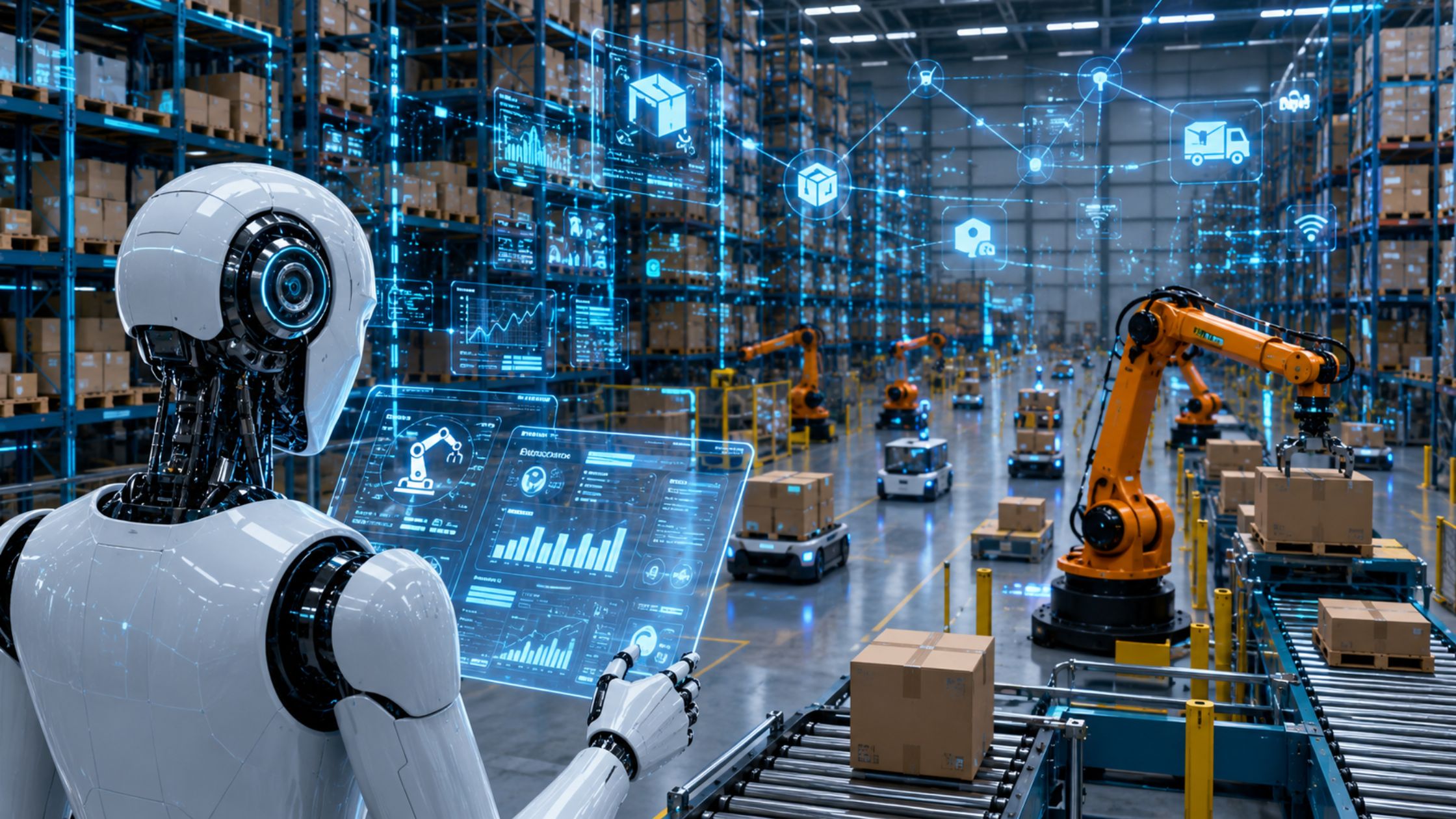
As warehouse software evolves into agent-based systems capable of predicting demand, optimizing workflows, and assisting human operators in real time, South Korea’s high-pressure fulfillment ecosystem may become a critical testing ground for the next generation of logistics AI.
For years, logistics software primarily functioned as a monitoring and management tool. Warehouse management systems tracked inventory, coordinated workflows, generated reports, and helped operators oversee increasingly complex supply chains. Human managers remained responsible for interpreting data, identifying problems, and making decisions.
That model is beginning to shift.A growing number of logistics technology companies are moving beyond analytics and automation toward a new category of enterprise software often described as agentic AI. Unlike traditional software systems, AI agents are designed to analyze operational environments, identify patterns, recommend actions, and increasingly perform certain tasks autonomously. Rather than simply showing warehouse managers what is happening, these systems aim to help determine what should happen next.
The transition is already underway. Research conducted by the MIT Intelligent Logistics Systems Lab and Mecalux found that artificial intelligence is now integrated into approximately 60% of warehouses globally, reflecting a significant acceleration in logistics digitization. The study suggests that AI is increasingly moving from experimental deployments into operational infrastructure.
As companies push deeper into AI-powered logistics, South Korea may emerge as one of the most important environments for testing how far intelligent warehouse systems can go. The reason is simple. Few logistics markets operate under more demanding conditions.
Warehouses Are Becoming Decision-Making Systems
The logistics industry has undergone several technological transitions over the past two decades. The first wave focused on digitization. Companies replaced manual processes with warehouse management software capable of providing real-time inventory visibility.
The second wave centered on automation. Robotics, automated storage systems, and intelligent material-handling technologies improved efficiency while reducing dependence on repetitive manual tasks.
The next phase appears increasingly focused on operational intelligence. Instead of simply collecting information, warehouse systems are being designed to actively participate in decision-making.
This shift is evident in Mecalux’s recent investment in high-performance computing infrastructure designed to support AI agents across its software ecosystem. According to the company, the platform will allow organizations to activate and configure intelligent entities capable of supporting warehouse decision-making and monitoring operations continuously.
The development reflects a broader trend across enterprise technology. Companies are increasingly exploring software systems capable of monitoring workflows, identifying anomalies, optimizing resource allocation, and recommending actions without requiring constant human intervention.
In logistics environments where delays can ripple across entire supply chains, the value of faster decision-making continues to grow.
The Shift From Reactive to Predictive Logistics
One of the most significant changes occurring inside modern warehouses involves the transition from reactive operations to predictive management.
Historically, logistics teams responded to events after they occurred. Inventory shortages, labor bottlenecks, order spikes, and shipping delays were addressed as operational issues emerged.
Artificial intelligence is increasingly changing that model.
While speaking with KoreaTechToday, José Luis Santiago, Director of Mecalux Software Solutions, explained that the company’s AI initiatives are focused on helping warehouse operators anticipate problems before they disrupt operations.
“Easy AI helps logistics managers move from reactive decision-making to predictive execution by analyzing operational data in real time and identifying patterns that can anticipate demand, workload peaks, and order-preparation needs,” Santiago said.
The distinction is important.
Predictive logistics systems attempt to identify signals that human operators may overlook. By continuously analyzing operational data, AI systems can forecast inventory demand, estimate workload surges, identify potential congestion points, and recommend adjustments before service levels are affected.
Instead of responding to warehouse bottlenecks after they appear, operators can take preventive action.
According to Santiago, this capability becomes especially valuable in environments where fulfillment speed is directly linked to customer expectations.
“Instead of waiting for bottlenecks to appear, warehouse teams can use AI-driven insights to optimize picking strategies, prioritize urgent orders, allocate resources more efficiently, and reduce response times.”
The evolution from reactive management toward predictive execution may become one of the defining characteristics of next-generation logistics systems.
Why South Korea Presents a Unique Challenge for AI
If AI agents are going to prove their value, there may be few better testing grounds than South Korea.
The country’s ecommerce ecosystem operates under some of the highest fulfillment expectations in the world. Services such as Dawn Delivery have fundamentally reshaped consumer behavior by making overnight and early-morning delivery a standard expectation rather than a premium service.
This model places extraordinary pressure on warehouse operations. Inventory must be processed rapidly, fulfillment accuracy must remain extremely high, and logistics networks must operate with minimal disruption despite fluctuating demand patterns.
According to Santiago, these conditions make South Korea particularly relevant to the future of warehouse AI.
“South Korea’s Dawn Delivery model requires extremely precise, high-speed warehouse operations.”
The demands of such systems extend beyond simple automation. Warehouses supporting rapid fulfillment networks must continuously coordinate inventory positioning, workforce allocation, picking routes, transportation schedules, and order prioritization in real time.
As ecommerce volumes continue to increase, the complexity of these decisions grows exponentially. AI agents are increasingly being positioned as a solution capable of managing that complexity. Rather than functioning solely as analytical tools, these systems may become operational assistants capable of continuously evaluating warehouse conditions and recommending the most efficient course of action.
Generative AI Is Becoming the New Warehouse Interface
The emergence of AI agents is also changing how warehouse employees interact with software. Traditional warehouse management systems often rely on dashboards, reports, menus, and predefined workflows. Accessing operational insights can require significant training and familiarity with complex software environments.
Generative AI is beginning to simplify that process. Mecalux recently integrated generative AI capabilities into its Easy WMS platform through a conversational system known as Easy AI. The technology enables users to interact with warehouse software through natural language rather than relying exclusively on conventional interfaces.
Santiago believes this represents a major shift in warehouse operations.
“Generative AI improves the way warehouse teams interact with the WMS by making information easier to access, interpret, and act on.”
Instead of manually navigating reports or dashboards, warehouse operators can request information conversationally, generate insights more quickly, and receive contextual recommendations based on real-time operational data.
In Santiago’s view, generative AI is increasingly acting as an intermediary between human decision-makers and complex logistics systems.
“Generative AI acts as an intelligent layer between the WMS and the user, making advanced warehouse management capabilities more accessible and supporting faster, better-informed decisions.”
The implication is significant.
Future warehouse managers may spend less time searching for information and more time evaluating recommendations generated by intelligent systems.
Can AI Agents Be Trusted With Operational Decisions?
Despite growing enthusiasm surrounding agentic AI, important questions remain. Warehouses are not consumer applications. Operational errors can affect inventory accuracy, order fulfillment, transportation schedules, and customer satisfaction. In highly automated logistics environments, even minor mistakes can generate significant costs.
This raises concerns about reliability, transparency, and oversight. Industry experts increasingly argue that AI agents should augment human decision-making rather than replace it entirely, particularly in mission-critical environments. Many logistics companies continue to approach autonomous decision-making cautiously, emphasizing human supervision and gradual deployment.
The challenge is not simply making AI systems intelligent. It is making them dependable. As AI agents assume larger operational roles, companies will need to address issues including data quality, model accuracy, explainability, cybersecurity, and accountability. The future warehouse may be more autonomous, but it is unlikely to become entirely human-free.
The Next Evolution of Logistics Infrastructure
For decades, warehouse technology focused on visibility. Companies wanted better information about inventory, orders, and operational performance. Today, visibility alone is no longer enough. The growing complexity of ecommerce, omnichannel fulfillment, and global supply chains is creating demand for systems capable of transforming information into action.
This is where AI agents are beginning to enter the picture. Mecalux’s investment in AI-agent infrastructure reflects a broader industry belief that logistics software is evolving beyond process management toward operational intelligence. Warehouses are increasingly becoming environments where software does not simply record activity but actively participates in running it.
For South Korea, the implications may be particularly significant. The country’s logistics ecosystem already operates at a pace that pushes traditional warehouse systems to their limits. As fulfillment expectations continue to rise, companies may increasingly rely on predictive AI, generative interfaces, and intelligent agents to maintain efficiency. Whether AI agents can fully manage warehouse operations remains uncertain. What appears increasingly clear, however, is that the next generation of logistics software will be expected to do far more than monitor the warehouse.