KoreaTechToday - Korea's Leading Tech and Startup Media Platform
  • Topics
    • Naver
    • Kakao
    • Nexon
    • Netmarble
    • NCsoft
    • Samsung
    • Hyundai
    • SKT
    • LG
    • KT
    • Retail
    • Startup
    • Blockchain
    • government
  • Lists
KoreaTechToday - Korea's Leading Tech and Startup Media Platform
  • Topics
    • Naver
    • Kakao
    • Nexon
    • Netmarble
    • NCsoft
    • Samsung
    • Hyundai
    • SKT
    • LG
    • KT
    • Retail
    • Startup
    • Blockchain
    • government
  • Lists
KoreaTechToday - Korea's Leading Tech and Startup Media Platform
No Result
View All Result
Home AI

COMEUP 2020 Day 2: Remote Work: The Great Reset after COVID-19

James Jung by James Jung
PUBLISHED: November 20, 2020 UPDATED: November 24, 2020
in AI, ComeUp, South Korea, Tech Industry
0
Gary Bolles, Chair for the Future of Work of Singularity, focused on what he calls “The Great Reset,” on the work environment post COVID-19 pandemic.
During COMEUP 20202, Gary Bolles, Chair for the Future of Work of Singularity, focused on what he calls “The Great Reset,” on the work environment post COVID-19 pandemic.

During COMEUP 20202, Gary Bolles, Chair for the Future of Work of Singularity, focused on what he calls “The Great Reset,” on the work environment post COVID-19 pandemic.

The Ministry of SMEs and Startups launched this year’s biggest startup festival in South Korea, the COMEUP 2020, from November 19-21. The three-day event aims to connect startups and business ventures under the theme “Meet the Future – Post Pandemic.”

The second day took on quantum computing, open innovation, robotics, artificial intelligence, remote work, and the future of manufacturing.

Remote Work: The Great Reset after COVID-19

In his talks, Gary Bolles, Chair for the Future of Work of Singularity, focused on what he calls “The Great Reset,” on the work environment post-COVID-19 pandemic. Even today, various industries witnessed the shift of how people do jobs, meetings, and conferences to “remote work.”
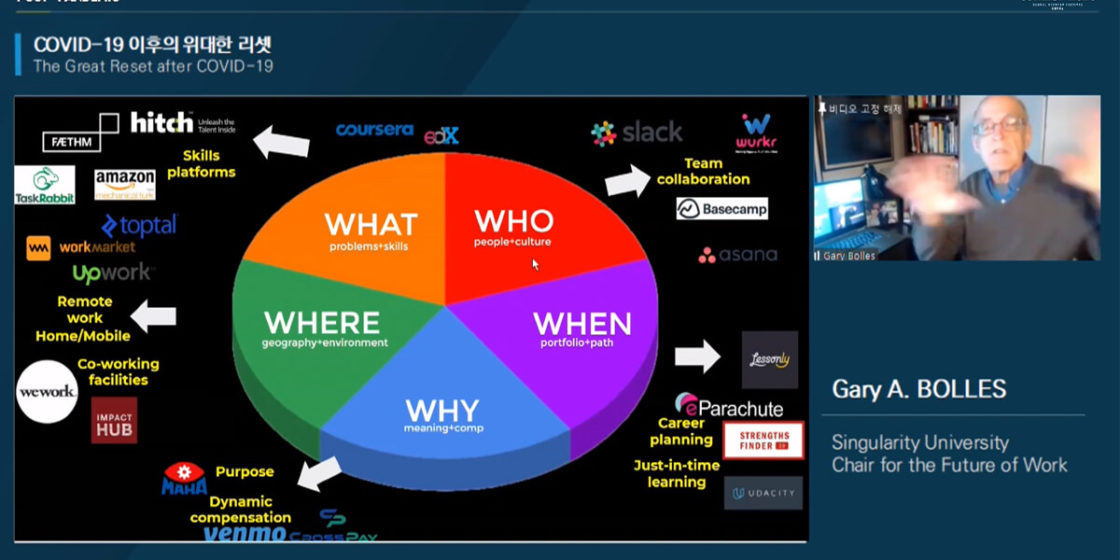
Gary Bolles, Chair for the Future of Work of Singularity, focused on what he calls “The Great Reset,” on the work environment post COVID-19 pandemic.

Gary Bolles is a lecturer, writer, and consultant on the future of work, learning, and organization. He focuses on helping individuals, organizations, communities, and countries to flourish in digital transformation.

The COVID-19 pandemic created opportunities to reset how people worked and conducted their routines. Bolles discussed how firms, startups, and institutions could reset the definition of work, teams, workplaces, and organizations.

Even before the pandemic, jobs were already becoming unbundled with various platforms’ emergence to accomplish work. Team collaborations could be performed with Slack, Asana, Basecamp, and Wurkr; portfolios could be made with eParachute, Lessonly, and Udacity; skills could be applied through platforms such as Upwork, Toptal, and TaskRabbit; co-working facilities through WeWork, and Impact Hub; and compensation through Venmo, CrossPay, and Maha.

These platforms create a new norm of distributed talent, which companies, startups, and institutions could leverage and benefit. Bolles said that to innovate continuously, organizations should seek new approaches to utilize suddenly distributed talents globally.

Panel Discussion: The New Era of Remote Work: Strategies for the Distributed Enterprise

Along with experts, Gary Bolles held a remote video conference to discuss strategies for the new era of distributed enterprise. The panelists included principal at international firm Woods Bagot Amanda Stanaway, founder and CEO of VR company Kololux, Christian Glessner, and CEO of messaging platform Sendbird, John Kim. The panel discussion covered topics on how the work system changed during the pandemic and how it could affect the workforce post-pandemic.
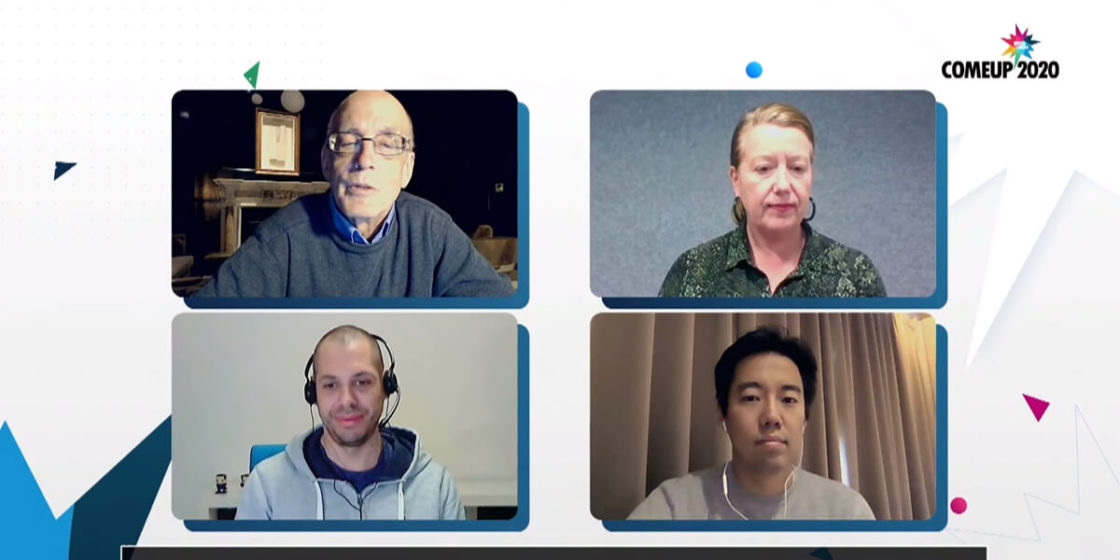
(top left) Gary Bolles (Chair for the Future of Work of Singularity), (top right) Amanda Stanaway (Principal at Woods Bagot), (bottom left) Christian Glessner (CEO of VR company Kololux), John Kim (CEO of Sendbird).
(top left) Gary Bolles (Chair for the Future of Work of Singularity), (top right) Amanda Stanaway (Principal at Woods Bagot), (bottom left) Christian Glessner (CEO of VR company Kololux), John Kim (CEO of Sendbird) discussing strategies for a distribute enterprise at the COMEUP 2020 event.

Amanda Stanaway talked about improving the workspace and creating a “smart space” to deal with the changing work environment. For instance, in South Korea, office spaces became hotspots for coronavirus outbreaks, prompting future offices’ design to significantly consider health and safety. She added that what people missed during the lockdowns is the social interaction and human part of work, so designing spaces to ensure longevity would be the norm.

Meanwhile, Christian Glessner discussed how leaders and workers could integrate virtual reality (VR) to create new and safer workplaces. VR could allow users to bridge communication gaps, such as presentations in designs and spaces. John Kim presented examples of firms adapting to remote work by utilizing a common online platform.

Panel Discussion: Future of Work: Collaborating with AI

The next panel discussion on remote work focused on how artificial intelligence could shape the future of workspaces and jobs. The executive director of Korea Startup Forum, Sung Jin Choi, moderated the talk on emerging technologies based on AI.
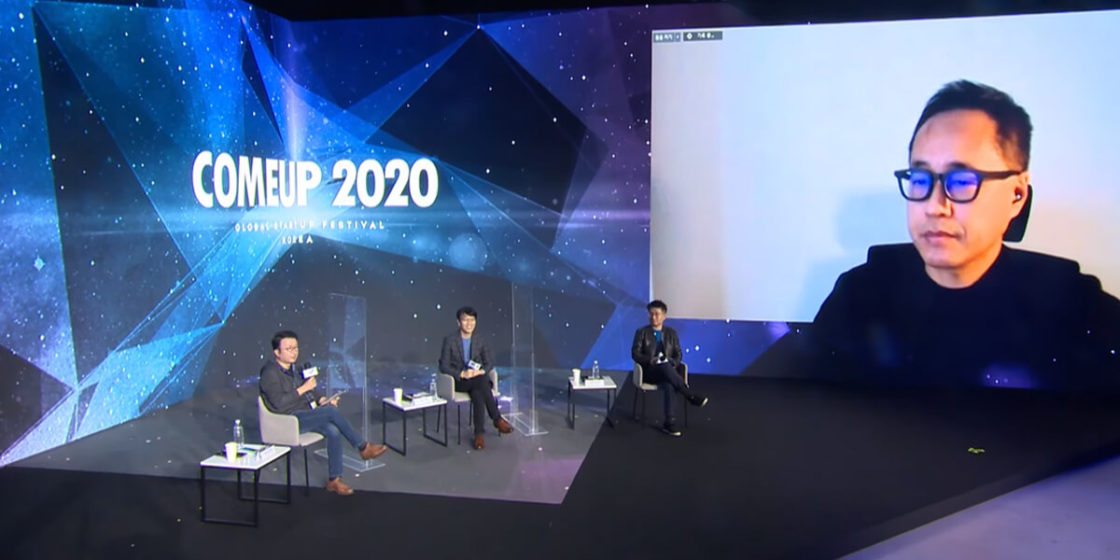
(Left) Sung Jin Choi (executive director of Korea Startup Forum), Channy Yun (Principal Tech Evangelist at Amazon Web Services (AWS)), Jun Seung Lee (CEO of Shopl & Company), and Bo Hwang (Vice President of Saltlux) discussing the future of work in collaboration with AI during COMEUP 2020.

The panelists included Channy Yun, Principal Tech Evangelist at Amazon Web Services (AWS), Jun Seung Lee, CEO of Shopl & Company, and Bo Hwang, Vice President of Saltlux.

The pandemic forced people to work from home, creating an accelerated learning curve to apply AI in various administrative activities. Companies also saw the opportunity to develop various automation technologies to go along with remote work. The experts concluded the panel discussion by saying that people should learn to live and work with AI technology in the post-pandemic era.

Check out other must-read articles from KoreaTechToday:

  • COMEUP 2020: Climate Change, The Biggest Threat We Face
  • South Korea Launches Global Startup Festival COMEUP 2020
  • COMEUP 2020 Day 2: Open Innovation: Creating and Profiting from Technology
  • COMEUP 2020 Day 2: Quantum Computing and the Future of Technology
Tags: ComeUp 2020COVID-19post-COVID-19remote workThe Greatest Reset

Related Posts

Seoul to Establish AI Government Bureau to Lead Public Sector Digital Transformation
During COMEUP 20202, Gary Bolles, Chair for the Future of Work of Singularity, focused on what he calls “The Great Reset,” on the work environment post COVID-19 pandemic.
AI

Seoul to Establish AI Government Bureau to Lead Public Sector Digital Transformation

November 8, 2025
Naver to Invest Over $690 Million in GPUs from 2025 to Boost Physical AI Ambitions
During COMEUP 20202, Gary Bolles, Chair for the Future of Work of Singularity, focused on what he calls “The Great Reset,” on the work environment post COVID-19 pandemic.
AI

Naver to Invest Over $690 Million in GPUs from 2025 to Boost Physical AI Ambitions

November 6, 2025
Samsung SDI in Talks with Tesla to Supply Energy Storage Batteries Worth $2.1 Billion
During COMEUP 20202, Gary Bolles, Chair for the Future of Work of Singularity, focused on what he calls “The Great Reset,” on the work environment post COVID-19 pandemic.
AI

Samsung SDI in Talks with Tesla to Supply Energy Storage Batteries Worth $2.1 Billion

November 6, 2025
Hyundai Motor Group and Singapore EDB Partner to Accelerate Low-Carbon Technologies and Hydrogen Innovation
During COMEUP 20202, Gary Bolles, Chair for the Future of Work of Singularity, focused on what he calls “The Great Reset,” on the work environment post COVID-19 pandemic.
Hyundai

Hyundai Motor Group and Singapore EDB Partner to Accelerate Low-Carbon Technologies and Hydrogen Innovation

November 4, 2025
The Real AI Bottleneck: Why South Korea’s Power Grid Could Decide Its AI Future
During COMEUP 20202, Gary Bolles, Chair for the Future of Work of Singularity, focused on what he calls “The Great Reset,” on the work environment post COVID-19 pandemic.
AI

The Real AI Bottleneck: Why South Korea’s Power Grid Could Decide Its AI Future

November 1, 2025
NVIDIA Deepens Partnership with South Korea to Build Global AI Powerhouse
During COMEUP 20202, Gary Bolles, Chair for the Future of Work of Singularity, focused on what he calls “The Great Reset,” on the work environment post COVID-19 pandemic.
South Korea

NVIDIA Deepens Partnership with South Korea to Build Global AI Powerhouse

November 1, 2025
No Result
View All Result

Most Popular

  • Ride-Hailing Rivalry: Kakao and Uber Bet on Membership Services in Korea

    0 shares
    Share 0 Tweet 0
  • Kakao Mobility Faces $10.5 Million Fine for Limiting Competitors’ Access to Taxi Platform

    0 shares
    Share 0 Tweet 0
  • Korea’s Navigation Battle Heats Up: Naver and Kakao vs. Google maps

    0 shares
    Share 0 Tweet 0
  • AI-Powered Dejaview: Predicting Crime Before It Happens in South Korea

    0 shares
    Share 0 Tweet 0
  • Seoul to Establish AI Government Bureau to Lead Public Sector Digital Transformation

    0 shares
    Share 0 Tweet 0
  • What SK Group’s ‘AI Now & Next’ Summit Reveals About the Future of Intelligent Korea

    0 shares
    Share 0 Tweet 0
  • Naver Video Streaming Service V Live to Go Global

    0 shares
    Share 0 Tweet 0
  • South Korea Tightens Cyber Defenses After Detecting Government Hacking Attempt

    0 shares
    Share 0 Tweet 0
  • Inside KT and Palantir’s Next Move: Building the Future of AI-Powered Enterprises in Korea

    0 shares
    Share 0 Tweet 0
  • South Korea’s $2.26 Billion Vision: A Robotic Revolution by 2030

    0 shares
    Share 0 Tweet 0

PRODUCTS

[ads_amazon]

TOPICS

  • Naver
  • Kakao
  • Nexon
  • Netmarble
  • NCsoft
  • Samsung
  • Hyundai

FREE NEWSLETTER

FOLLOW US

  • About Us
  • Cookie policy
  • home
  • homepage
  • mainhome
  • Our Services
  • Privacy Policy
  • Terms of Use

Copyright © 2024 KoreaTechToday | About Us | Terms of Use |Privacy Policy |Cookie Policy| Contact : [email protected] |

No Result
View All Result
  • Topics
    • Naver
    • Kakao
    • Nexon
    • Netmarble
    • NCsoft
    • Samsung
    • Hyundai
    • SKT
    • LG
    • KT
    • Retail
    • Startup
    • Blockchain
    • government
  • Lists

Copyright © 2024 KoreaTechToday | About Us | Terms of Use |Privacy Policy |Cookie Policy| Contact : [email protected] |