
As AI-powered skincare platforms proliferate, South Korea’s licensed estheticians are emerging as an unexpected competitive advantage, helping bridge the gap between computer vision and consumer trust through human expertise.
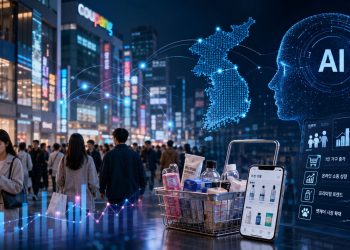
Artificial intelligence has rapidly become one of the beauty industry’s most influential technologies. From facial scanning applications and personalized skincare recommendations to ingredient analysis and virtual consultations, AI is reshaping how consumers discover products and manage their skincare routines. Analysts estimate that the global AI in beauty and cosmetics market is expected to grow at a double-digit annual rate over the coming years, driven by advances in computer vision, machine learning, and personalized digital experiences. At the same time, South Korea continues to strengthen its position as one of the world’s leading beauty innovation hubs, with K-beauty exports reaching record levels and Korean skincare routines influencing consumers across Asia, North America, Europe, and the Middle East.
Yet as beauty technology becomes increasingly automated, one challenge continues to separate successful AI platforms from those struggling to earn long-term user confidence: trust. Consumers may appreciate AI’s ability to analyze wrinkles, pigmentation, pores, or hydration levels within seconds, but beauty decisions extend far beyond measurable skin conditions. Personal preferences, lifestyle, evolving skincare goals, cultural expectations, and individual experiences remain difficult for algorithms to interpret on their own.
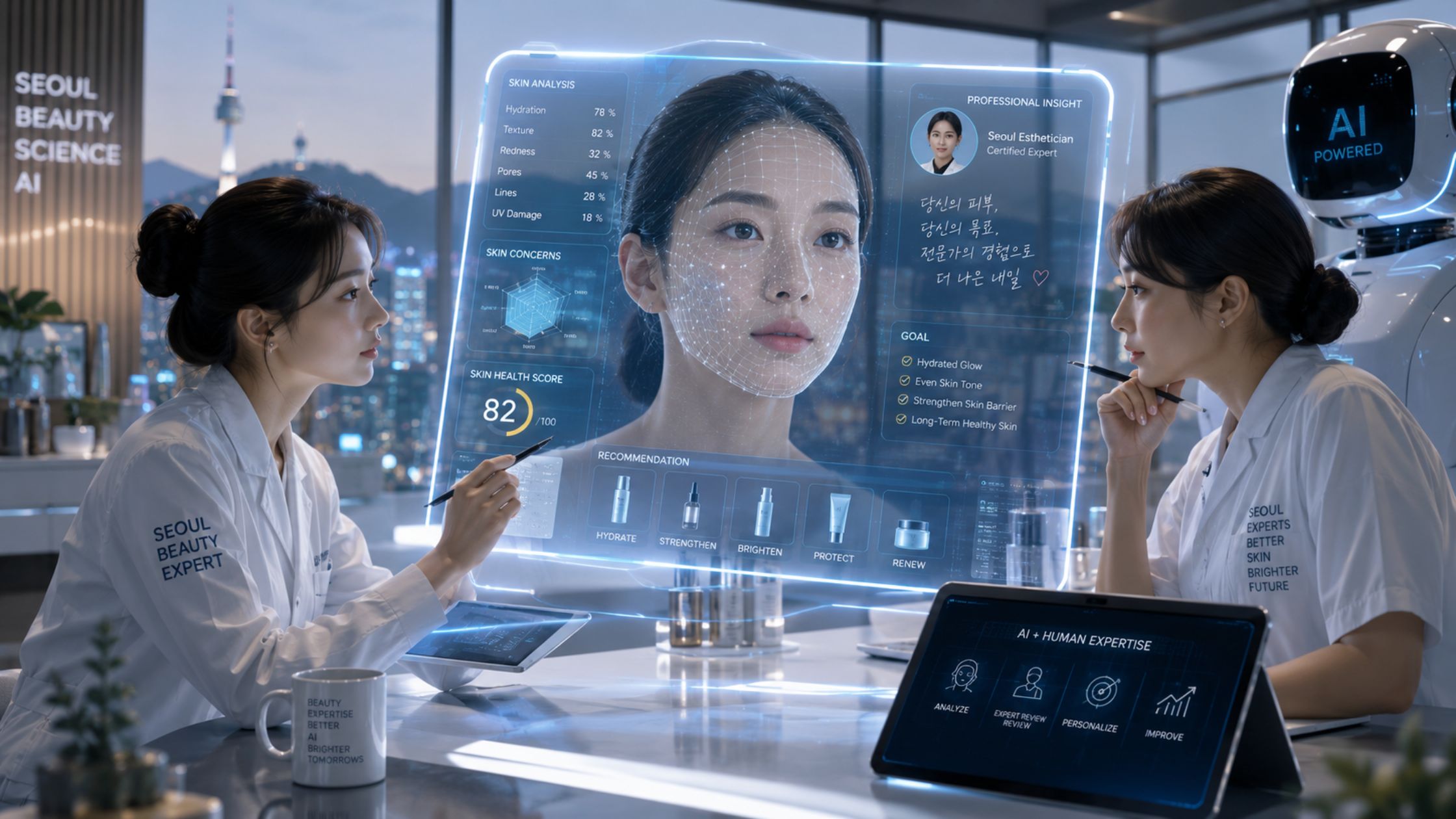
That reality is prompting a noticeable shift across the beauty technology industry. Rather than positioning AI as a replacement for human expertise, a growing number of companies are designing systems where licensed professionals help train, validate, and refine AI recommendations. In this evolving model, South Korea’s highly regarded beauty professionals are becoming as valuable as the technology itself.
From Exporting K-Beauty Products to Exporting K-Beauty Knowledge
South Korea’s influence in the global beauty industry has traditionally been measured through cosmetics, dermatological innovation, advanced skincare formulations, and aesthetic treatments. Korean brands have built worldwide recognition by introducing innovative ingredients, sophisticated skincare routines, and rapid product development cycles that have reshaped consumer expectations.
The next phase of this influence, however, may be less about exporting physical products and more about exporting professional expertise.
As AI becomes embedded into beauty consultations, the knowledge accumulated by Seoul’s licensed estheticians is increasingly being incorporated into digital systems. Instead of relying solely on large datasets or historical training models, newer AI platforms are beginning to integrate real-world expertise from professionals who understand evolving skincare practices, ingredient interactions, seasonal skin concerns, and individual treatment goals.
This represents an important shift in how Korean beauty expertise creates value. Rather than remaining confined to clinics, salons, or consultation rooms, professional judgment can now become part of intelligent software serving consumers around the world.
The result is a new form of knowledge export where Korean beauty expertise helps shape AI recommendations long after a product has been sold.
Why Beauty Presents a Unique Challenge for Artificial Intelligence
Unlike many enterprise AI applications where outputs can be measured against objective metrics, beauty remains inherently personal. Computer vision systems have become increasingly sophisticated at identifying visible skin characteristics, including:
- Fine lines and wrinkles
- Acne severity
- Pigmentation
- Redness
- Pore visibility
- Overall skin texture
However, recognizing skin conditions is only one part of personalized beauty advice. Consumers often seek answers to questions that extend beyond image recognition. Should they prioritize hydration over brightening? Is reducing redness more important than addressing early signs of aging? Should sensitive skin tolerate stronger active ingredients for faster results?
These decisions require interpretation rather than detection. Beauty is influenced by age, lifestyle, environmental exposure, cultural preferences, product tolerance, budget, and personal aspirations. Two individuals with nearly identical skin conditions may receive entirely different recommendations depending on what they hope to achieve. This is where human expertise continues to play an important role.
Human-in-the-Loop AI Is Becoming an Industry Trend
The growing emphasis on expert oversight in beauty reflects a much broader transformation taking place across artificial intelligence. Industries including healthcare, finance, legal services, and education are increasingly adopting human-in-the-loop AI models, where algorithms assist professionals instead of operating independently. Rather than viewing AI as a substitute for domain expertise, organizations are positioning technology as a decision-support tool that remains accountable to qualified specialists.
Beauty technology appears to be following a similar trajectory. This approach offers several advantages:
- Professional oversight helps improve recommendation quality and reduce inappropriate outputs.
- Continuous expert feedback enables AI systems to evolve alongside changing skincare research and consumer trends.
- Human validation increases transparency and confidence, particularly for consumers making decisions about products they apply directly to their skin.
For an industry built on credibility and long-term customer relationships, these benefits are becoming increasingly significant.
Why Seoul’s Estheticians Matter
South Korea occupies a unique position within this conversation. Seoul has developed an internationally recognized beauty ecosystem supported by dermatology research, cosmetic science, advanced skincare clinics, and licensed estheticians with extensive practical experience. Korean skincare trends often influence global product development, while international brands closely monitor consumer preferences emerging from the country’s highly competitive beauty market.
That expertise has become an attractive resource for companies developing AI-powered beauty platforms.
Speaking with KoreaTechToday, Jacob Hand, founder of Venus Labs, argued that while AI computer vision can effectively detect visible skin concerns, beauty itself cannot be reduced to algorithmic analysis alone.
“AI computer vision can detect patterns and quantify visible concerns, but beauty is subjective and deeply contextual. An algorithm may struggle to understand someone’s personal aesthetic goals, preferences, and definition of what looks or feels better. That is why pairing AI with licensed Seoul estheticians is so important.”
Rather than treating AI as a self-contained system, Hand believes qualified Korean professionals play an essential role in improving how recommendations are generated and refined over time.
“Their expertise helps us train, validate, and continuously refine the system so that it reflects current Korean beauty knowledge rather than relying solely on static datasets or generic recommendations.”
His comments reflect a broader movement within applied AI, where continuous human feedback increasingly becomes part of the product rather than an external quality-control process.
Trust May Become Beauty AI’s Greatest Differentiator
As AI-powered beauty platforms become more accessible, technological capabilities alone are unlikely to determine market leaders. Facial analysis, image recognition, and recommendation engines are becoming widely available across the industry. What will increasingly distinguish one platform from another is the quality of the knowledge embedded within those systems and the level of confidence consumers place in their recommendations.
According to Hand, that confidence comes from knowing the technology has been shaped by experienced professionals rather than operating as an isolated algorithm.
Speaking with KoreaTechToday, he explained:
“For consumers, that creates a fundamentally different level of trust. They are not receiving advice from a black-box algorithm that claims to have all the answers. They are using technology shaped and informed by qualified professionals based in Seoul, one of the world’s leading beauty capitals.”
The emphasis on transparency and expert validation aligns with broader conversations taking place across AI governance, where explainability and responsible deployment are becoming central to user adoption.
South Korea’s Next Competitive Advantage Could Be Its Expertise
South Korea has spent decades establishing itself as a global leader in beauty innovation through cosmetics, ingredients, and skincare science. Artificial intelligence may now be creating an opportunity to extend that leadership into an entirely new domain.
As beauty technology evolves, the country’s greatest contribution may no longer be limited to the products it manufactures or the trends it creates. Increasingly, it could be the expertise of Korean beauty professionals that becomes embedded within AI systems used by consumers worldwide.
That evolution reflects a broader shift occurring across artificial intelligence. The most effective AI systems are proving to be those that combine computational efficiency with human judgment, continuously learning from experts rather than attempting to replace them.
For South Korea, this presents a strategic opportunity. In the age of intelligent software, exporting knowledge may prove just as valuable as exporting products. If human expertise becomes a defining ingredient in next-generation AI, Seoul’s estheticians may find themselves influencing global beauty decisions not only from consultation rooms, but also from the algorithms quietly shaping millions of personalized recommendations every day.