
Semiconductors and platform innovation drive gains, but concentration risks remain
South Korea has strengthened its position in the global technology landscape, ranking third worldwide in total brand value among the top 100 tech brands, according to the Brand Finance Technology 100 2026 report. The country’s five leading technology brands recorded a combined value of $135.3 billion, marking an 8% year-on-year increase and placing Korea behind only the United States and China.
While the headline ranking reflects steady growth, a closer look reveals a more nuanced picture—one shaped by AI-driven semiconductor demand, platform competition, and a heavy reliance on a small number of dominant players.
Semiconductors Remain the Core Engine of Growth
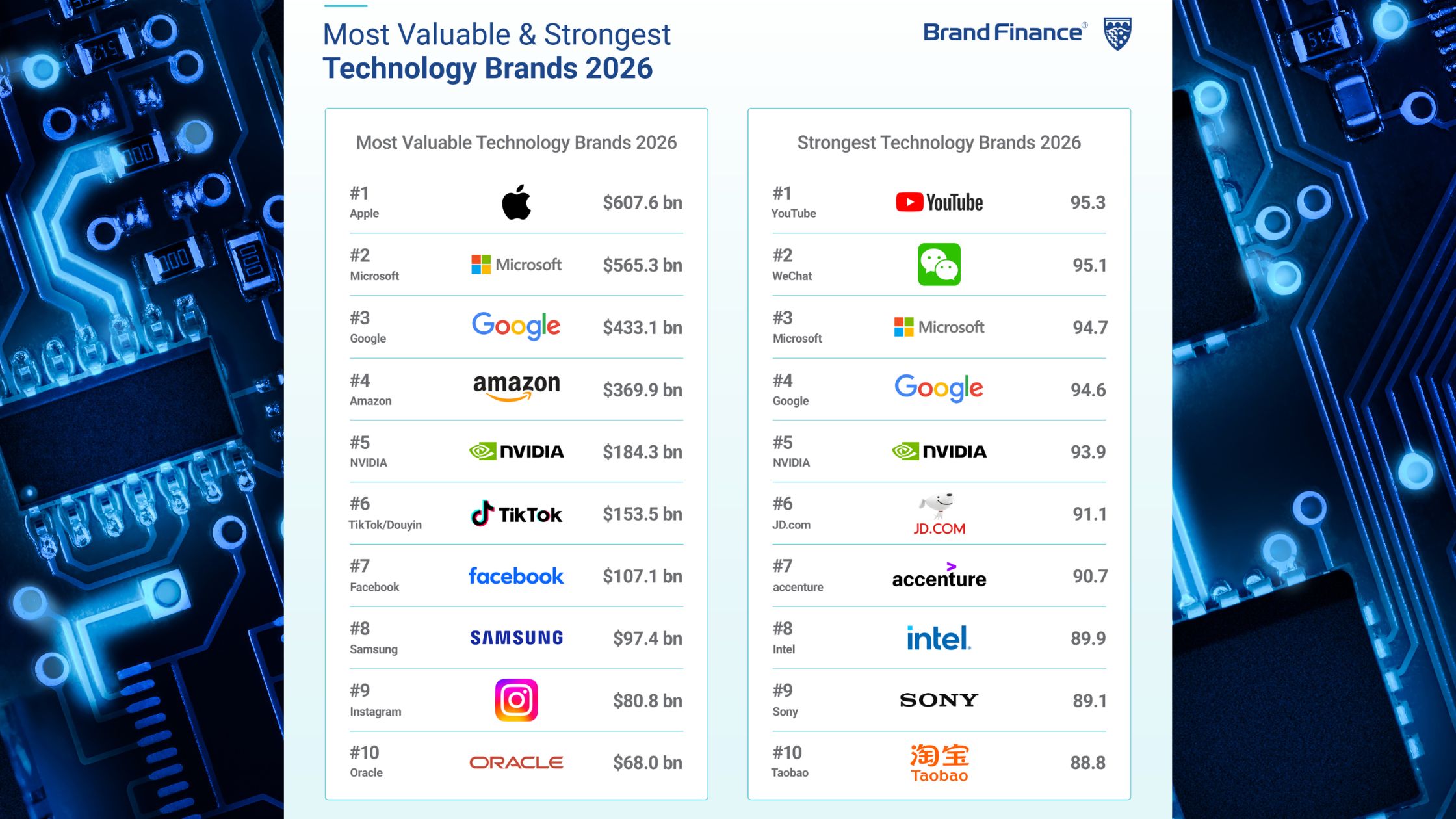
At the center of South Korea’s global tech standing is Samsung, which remains the country’s most valuable tech brand at $97.4 billion, up 9% year-on-year. It is also the only Korean company in the global top 10.
The company’s growth is closely tied to its leadership in memory chips and semiconductors, particularly as demand surges for high-performance chips used in AI systems and data centers.
Similarly, SK hynix posted one of the strongest gains among Korean firms, with brand value rising 15% to $15.8 billion, moving up to 28th globally. The increase reflects strong revenue performance and growing demand for AI-focused memory solutions, including high-bandwidth memory (HBM), which has become critical for training and running advanced AI models.
Together, these two companies highlight a key structural reality:
South Korea’s global tech brand strength is still heavily anchored in semiconductors.
Platform and Consumer Tech Players Gain Ground
Beyond hardware, platform-driven companies are also contributing to Korea’s brand value expansion—though at a smaller scale.
Coupang saw its brand value rise 10% to $8.8 billion, alongside a notable improvement in its Brand Strength Index (BSI), which increased from 72 to 75.8. The gains reflect continued investment in logistics infrastructure and expansion into services such as online grocery, strengthening its position in Korea’s highly competitive e-commerce market.
According to Alex Haigh, Managing Director at Brand Finance Asia Pacific:
“South Korea’s technology brands are shaping a stronger global presence, with operational excellence, technological innovation, and customer-focused strategies fuelling brand value growth.”
He added that Coupang’s improved brand strength stems from expanding its delivery ecosystem and service offerings, while Samsung and SK hynix continue to represent “South Korean ingenuity and technological prowess.”
Meanwhile, Naver recorded an 11% increase in brand value to $3.7 billion, reflecting steady growth in its digital platform ecosystem, including search, content, and AI-driven services.
Mixed Performance Highlights Structural Gaps
Despite overall gains, not all Korean tech brands are moving in the same direction. LG saw its brand value decline 9% to $9.6 billion, pointing to ongoing challenges in maintaining global brand momentum across its diverse business lines.
In the semiconductor segment, Samsung SDI experienced a sharp 29% drop in brand value, even as its brand strength score improved. This divergence suggests that financial performance and market conditions are weighing more heavily on valuations than brand perception alone.
At the same time, companies like Coway posted strong growth, with brand value rising 30% to $1.4 billion, driven by expansion in Southeast Asia. However, such gains remain relatively small in scale compared to Korea’s semiconductor giants.
One of the most important takeaways from the data is the high concentration of brand value within a few companies.
Samsung alone accounts for a dominant share of South Korea’s total tech brand value, with SK hynix contributing a significant portion of the remainder. This concentration raises questions about the diversity and resilience of Korea’s broader tech ecosystem.
While the country has made progress in areas such as e-commerce, digital platforms, and consumer technology, these segments have yet to match the global scale or influence of its semiconductor leaders.
Global Context: AI Reshaping Brand Value Rankings
Globally, the total brand value of the top 100 technology companies reached $3.7 trillion in 2026, underscoring the scale of the sector.
The top positions remain dominated by U.S. firms, with Apple, Microsoft, and Google retaining their lead. Meanwhile, companies such as NVIDIA have emerged as the fastest-growing brands, reflecting the rapid expansion of AI-driven demand.
In this context, South Korea’s rise to third place is significant—but also highlights the intensifying competition in AI and advanced technologies, where scale, ecosystem depth, and global reach are increasingly critical.
South Korea’s third-place ranking reflects a clear strength: the country remains one of the world’s most important players in the hardware foundation of the AI economy. However, the next phase of growth may depend on whether Korean companies can:
- expand beyond semiconductors into AI platforms and software,
- build globally competitive digital ecosystems,
- and reduce reliance on a narrow set of dominant firms.
The current trajectory shows progress—but also underscores a structural challenge.
As AI reshapes the global technology landscape, maintaining a top-tier position will require not just excellence in components, but a broader presence across the entire value chain of innovation.