
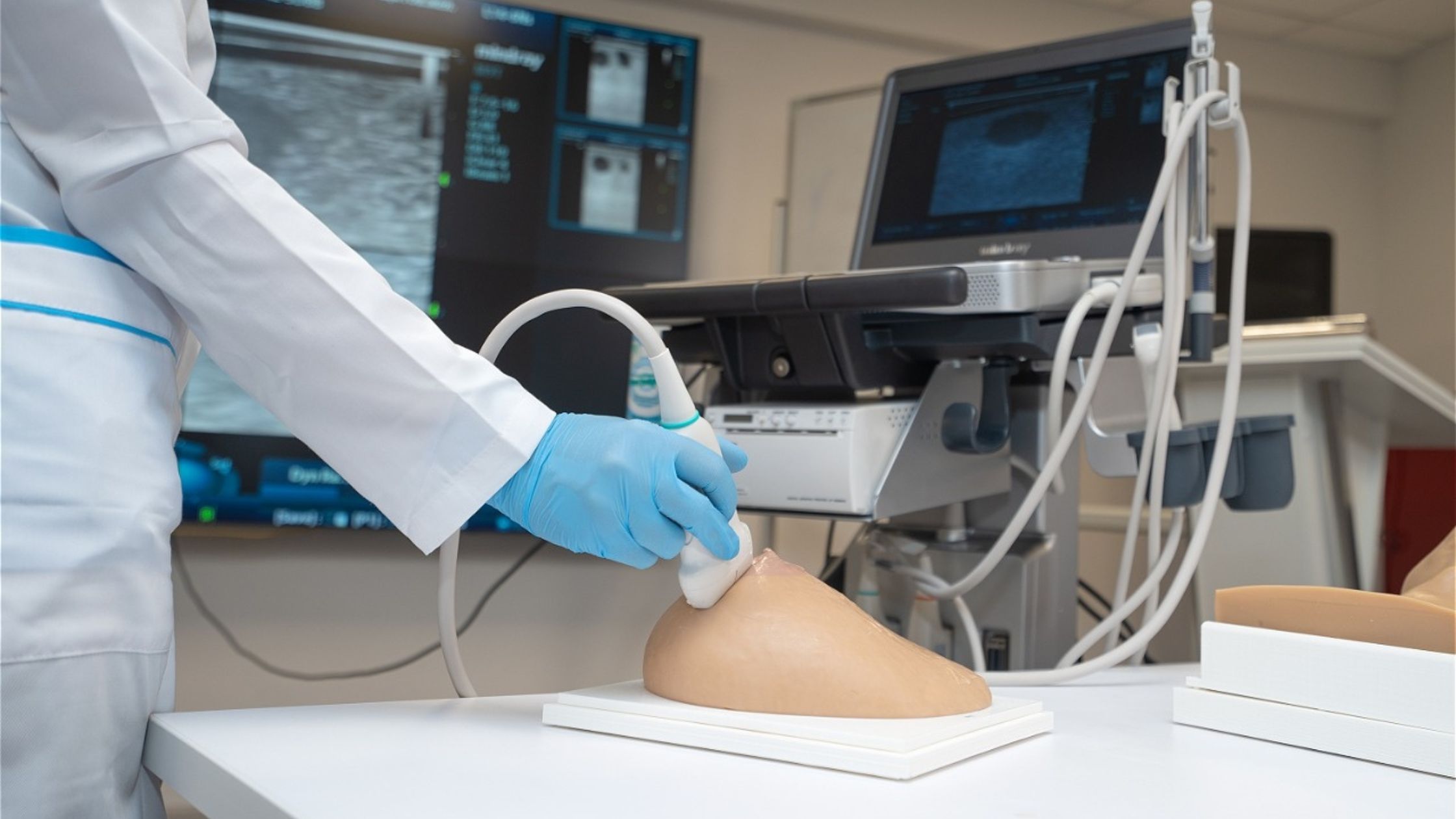
As healthcare systems invest heavily in AI diagnostics and precision medicine, simulation-based training and reusable medical phantoms are emerging as an important layer of infrastructure supporting oncology accuracy, clinician readiness, and standardized care.
Hospitals worldwide are investing in AI-assisted imaging, precision oncology platforms, advanced radiology systems, and digital pathology tools capable of identifying abnormalities faster and more accurately than ever before. Governments and healthcare providers increasingly view AI-powered diagnostics as a critical component of the future healthcare ecosystem, particularly as aging populations and rising cancer burdens place growing pressure on healthcare systems. Yet a parallel challenge is becoming increasingly apparent.
Advanced diagnostic systems still depend heavily on physician expertise. Even the most sophisticated imaging platforms and AI-driven tools cannot improve outcomes if clinicians lack the procedural skills required to interpret findings accurately and perform interventions effectively.
As healthcare systems accelerate the adoption of AI-powered medicine, medical simulation technologies are emerging as an increasingly important layer of healthcare infrastructure. This shift is visible in Moscow, where the Moscow Department of Healthcare recently launched a specialized oncology training initiative using reusable self-healing breast phantoms designed for ultrasound-guided core biopsy training. The program, developed through the Personnel Center of the Moscow Healthcare Department and the Center for Diagnostics and Telemedicine, aims to train more than 300 oncologists using simulation-based procedural education.
While speaking with KoreaTechToday, the program’s spokesperson emphasized that technological progress alone cannot transform healthcare outcomes.
“Modern technologies create vast opportunities in medicine, but their clinical impact depends critically on the competence of the clinicians who deploy them. Consequently, advances in diagnostic hardware, imaging platforms, and AI-powered tools must be matched by ongoing enhancement of physicians’ professional skills,” the spokesperson said.
The statement reflects a growing realization across global healthcare systems. As medicine becomes increasingly data-driven and AI-assisted, workforce readiness and procedural competency are becoming strategic priorities alongside technology investment itself.
Why Procedural Accuracy Matters More in Modern Oncology
Cancer diagnostics have become increasingly dependent on minimally invasive, image-guided procedures. Core biopsy, one of the most important diagnostic tools in oncology, requires physicians to extract tissue samples using imaging guidance systems such as ultrasound. Unlike screening technologies including mammography or ultrasound scans, biopsy provides histopathological confirmation that determines whether a lesion is benign or malignant.
Precision during the procedure is critical. Even small deviations in needle placement can affect sample quality, increase the likelihood of repeat procedures, delay diagnosis, or complicate treatment planning. As oncology workflows become more technologically sophisticated, procedural consistency is becoming increasingly important for healthcare systems focused on improving patient outcomes.
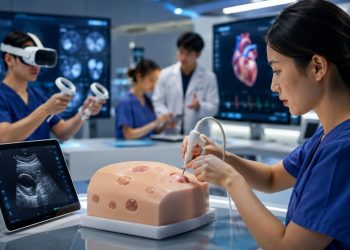
This is one reason simulation-based training is attracting growing attention globally. The Moscow initiative allows clinicians to repeatedly practice the complete procedural workflow, including lesion visualization, trajectory selection, puncture technique, and tissue sampling under ultrasound guidance. According to the press release, the reusable phantoms are designed to replicate both cystic and solid lesions while closely mimicking the acoustic properties of human tissue.
The objective is not simply theoretical education. It is competency-based procedural training. According to the spokesperson, the simulation systems allow physicians to practice under conditions that closely resemble real clinical scenarios.
“The phantoms enable systematic practice of all procedural stages, from lesion visualization during ultrasound examination and selection of the optimal needle insertion trajectory, to puncture performance and sample collection. This approach fosters the development of robust practical skills, enhances the precision of specialist actions, and reduces the likelihood of technical errors during real-world procedures,” the spokesperson told KoreaTechToday.
Simulation-Based Training Is Becoming Healthcare Infrastructure
Medical simulation is no longer confined to surgical residency programs or isolated academic centers. Healthcare systems increasingly use simulation technologies across multiple specialties, including radiology, emergency medicine, robotic surgery, interventional cardiology, and oncology. The broader shift reflects growing demand for standardized, repeatable, and risk-free procedural training environments.
This trend accelerated significantly during the pandemic, when healthcare institutions expanded digital learning and simulation-based education to maintain workforce readiness while limiting patient exposure.
Today, simulation technologies are evolving beyond simple training tools. Increasingly, they are being treated as infrastructure assets that support long-term healthcare system performance.
One of the most notable aspects of the Moscow initiative is the use of reusable self-healing phantoms. Traditional biopsy simulators often degrade after repeated punctures, reducing realism and increasing replacement costs. The newer models are designed to recover structurally after multiple needle insertions, allowing repeated use without significant deterioration.
The Personnel Center currently operates approximately 100 of these simulators as part of its oncology training programs.
According to Yuri Vasiliev, Chief Officer of Radiology at the Moscow Health Care Department and Medical Director of the Center for Diagnostic and Telemedicine, the systems were designed specifically to reflect real-world clinical requirements.
“The phantoms were developed on the principle ‘by doctors for doctors,’ reflecting real-world clinical needs,” Vasiliev said in the press release.
The use of durable materials and tissue-mimicking acoustic properties allows the simulators to maintain clinical realism even under intensive use conditions. As healthcare systems face increasing demand for specialist training, reusable simulation systems may offer a more cost-effective and standardized approach to workforce development.
AI Diagnostics Still Depend on Human Competency
The rapid expansion of AI in healthcare has generated widespread discussion about automation and machine-assisted diagnosis. However, many healthcare experts increasingly argue that AI may actually increase the importance of highly trained clinicians rather than reduce it.
AI systems can assist with pattern recognition, anomaly detection, workflow prioritization, and imaging analysis. Yet physicians remain responsible for procedural execution, contextual interpretation, patient communication, and clinical decision-making.
The spokesperson highlighted this balance while speaking with KoreaTechToday.
“Advances in diagnostic hardware, imaging platforms, and AI-powered tools must be matched by ongoing enhancement of physicians’ professional skills.”
“Continuing medical education enables practitioners to adopt new diagnostic and therapeutic approaches rapidly, appreciate the capabilities and limitations of new technologies, and apply them safely and effectively in patient care,” the spokesperson commented.
This dynamic is becoming particularly important in oncology, where earlier diagnosis often has a direct impact on treatment outcomes and survival rates. As precision medicine expands, healthcare systems increasingly require specialists capable of operating within highly digitized clinical environments that combine imaging systems, AI-assisted diagnostics, molecular testing, and minimally invasive interventions.
Technology alone cannot guarantee accuracy. Healthcare systems increasingly recognize that workforce competency may become one of the most important determinants of how effectively AI-driven medicine performs in real-world clinical environments.
Why South Korea Is Relevant to This Shift
South Korea is one of the world’s most technologically advanced healthcare markets. The country has invested heavily in:
- AI-assisted radiology
- smart hospital infrastructure
- digital health platforms
- precision oncology
- medical robotics
- advanced imaging technologies
Korean hospitals and medical AI companies are increasingly developing diagnostic systems capable of improving screening accuracy and accelerating clinical workflows. The country has also become an important market for AI-driven imaging analysis, particularly in radiology and cancer diagnostics.
At the same time, South Korea faces structural healthcare pressures that mirror global trends. An aging population, increasing cancer incidence, and growing demand for specialized oncology care are intensifying the need for scalable specialist training systems. As healthcare technologies become more sophisticated, ensuring consistent physician competency across institutions is becoming increasingly important.
The Future of Precision Medicine May Depend on Training Infrastructure
For years, healthcare innovation focused primarily on improving diagnostic technologies. Hospitals invested in better imaging systems, faster computing platforms, robotic surgical tools, and increasingly sophisticated AI software capable of assisting physicians in clinical decision-making. Those technologies continue to reshape medicine.
However, healthcare systems are increasingly recognizing that the effectiveness of precision medicine depends not only on advanced tools, but also on the ability of clinicians to use those tools accurately and consistently. Simulation-based education is emerging as an important response to that challenge.
As oncology procedures become more technologically sophisticated and AI becomes more deeply embedded within healthcare workflows, simulation systems may become a foundational component of workforce readiness infrastructure.
The future of cancer care may therefore depend on more than algorithms and imaging platforms alone. It may also depend on how effectively healthcare systems train the physicians operating within increasingly AI-driven clinical environments.