
Push to build domestic AI chip ecosystem highlights ambitions—and structural constraints
South Korea is stepping up efforts to build a domestic artificial intelligence (AI) chip industry, with the government planning to invest around 10 trillion won ($7.5 billion) this year in companies selected under its “K-Nvidia” initiative. The funding, to be deployed through the National Growth Fund, will include equity stakes in participating firms, signaling a more direct role for the state in shaping the country’s semiconductor landscape.
The initiative reflects growing concern over dependence on a small number of global players—particularly Nvidia—in the rapidly expanding AI market. As demand for AI computing infrastructure rises, governments and companies are increasingly seeking to secure local capabilities in both chip design and deployment.
The government’s push is not limited to semiconductor firms. Alongside direct funding, South Korea is expanding its national computing infrastructure to support AI research and development.
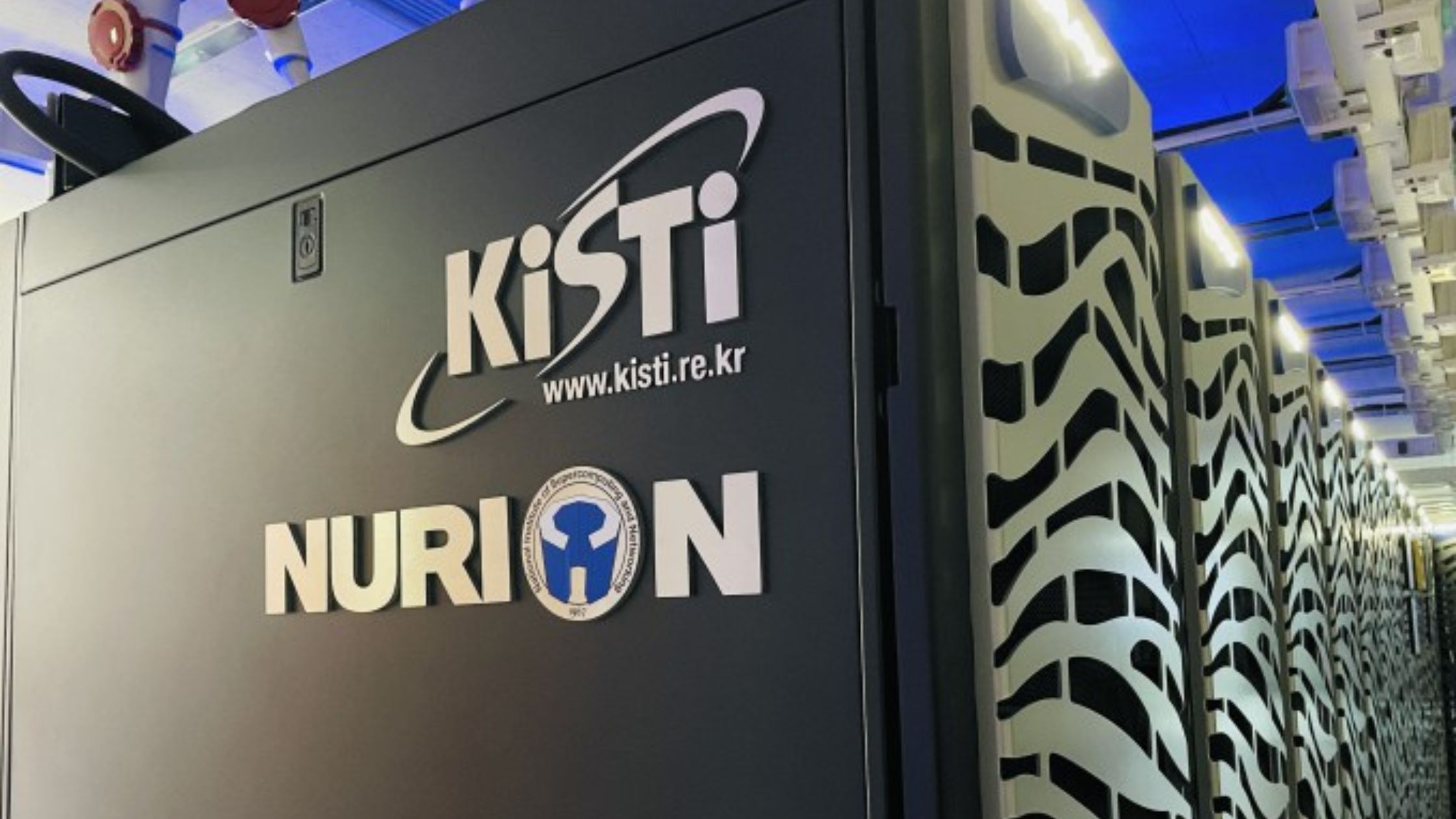
The Korea Institute of Science and Technology Information (KISTI) is building a new high-performance computing environment centered on its next-generation supercomputer, “Hangang,” which is expected to be installed later this year. Equipped with more than 8,500 GPUs, the system is designed to rank among the top global supercomputers and support large-scale AI workloads.
KISTI is also working with Nvidia, Hewlett Packard Enterprise (HPE), and IonQ to integrate the supercomputer with a quantum computing system, “Tempo.” The hybrid setup is intended to combine conventional high-performance computing with quantum capabilities, allowing researchers to tackle complex problems that are difficult to address using existing methods.
“Next-generation computing technologies like supercomputers and quantum computers are key infrastructures leading the paradigm shift towards AI-based scientific research,” said Kim Sung-soo, director general for R&D policy at the Ministry of Science and ICT.
‘K-Moonshot’ links AI to national research priorities
These infrastructure efforts are tied to the government’s broader “K-Moonshot Initiative,” which aims to apply AI to major scientific and industrial challenges. The program targets multiple sectors, including biotechnology, energy, semiconductors, and quantum computing, with long-term goals extending to areas such as drug discovery and advanced materials.
The strategy reflects a shift toward using AI not only as a standalone industry, but as a foundational tool across research domains. By combining large-scale computing resources with targeted policy support, the government is attempting to accelerate outcomes in areas that traditionally require long development cycles.
Private sector momentum underscores continued reliance on global players
Recent developments in the private sector suggest that South Korea’s expanding AI ecosystem remains closely tied to foreign technology providers, even as the government promotes domestic alternatives. A prominent example is a planned multi-billion-dollar data center led by an Nvidia-backed startup, in partnership with local conglomerate Shinsegae Group. The project is designed to support AI models tailored to the Korean language and market, but its core infrastructure will rely heavily on Nvidia’s GPUs.
This reflects a broader pattern across Korea’s AI landscape. Despite efforts to build local chip capabilities, much of the current computing infrastructure—particularly at the high-performance layer—continues to depend on foreign hardware. Nvidia, in particular, remains deeply embedded, supplying large volumes of AI accelerators to both public and private initiatives, including supercomputing systems and enterprise data centers.
At the same time, foreign companies are not only supplying hardware but also influencing how Korea’s AI ecosystem evolves. By supporting data center projects and collaborating with local partners, firms like Nvidia are positioning themselves as key enablers of AI infrastructure, rather than just component providers.
There is also a geopolitical dimension to this trend. Some of these investments are aligned with broader efforts to strengthen U.S.-linked AI ecosystems in the region, particularly as competition with Chinese open-source models intensifies. This suggests that Korea’s AI development path is being shaped by both domestic policy and external strategic interests.
Taken together, these dynamics point to a central challenge in Korea’s AI strategy. While the government is investing heavily to build a domestic semiconductor and AI ecosystem, the current growth of the sector remains closely intertwined with global supply chains.
In the near term, this interconnected model may accelerate development by leveraging established technologies. However, achieving greater technological independence will require sustained progress not only in chip design, but also in building a competitive hardware, software, and infrastructure stack over time.
Structural challenges remain for ‘K-Nvidia’ ambitions
The “K-Nvidia” initiative underscores South Korea’s ambition to move beyond its traditional strengths in memory and manufacturing into AI chip design and platforms. However, the path to building a globally competitive AI chip company remains uncertain.
Key challenges include:
- Limited presence in AI chip design: Korea lacks a dominant fabless company comparable to Nvidia
- Software ecosystem gap: Competing platforms require not only hardware, but also mature software frameworks and developer ecosystems
- Late entry into AI accelerators: Global competitors have already established strong positions in both hardware and software
These factors suggest that financial investment alone may not be sufficient to close the gap in the near term.
Korea’s strengths and its position in the AI value chain
Despite these challenges, South Korea remains a critical player in the global AI supply chain. Companies such as Samsung Electronics and SK hynix dominate the production of high-bandwidth memory (HBM), a key component for AI systems.
This positions Korea as an essential supplier of core technologies, even as it seeks to expand into higher-value segments such as chip design and AI platforms. The current strategy can be seen as an attempt to move up the value chain, rather than remain focused on components.
The scale of investment and infrastructure development signals a long-term commitment to building domestic AI capabilities. However, the coexistence of national initiatives and reliance on global partners suggests that Korea’s transition toward a “K-Nvidia” will be gradual.
Rather than replacing existing players, the near-term outcome may be a more hybrid ecosystem, where domestic firms expand their role while continuing to depend on global technologies in critical areas.
In this context, the “K-Nvidia” drive reflects both ambition and constraint—highlighting the opportunities in AI, as well as the structural challenges involved in building a fully integrated semiconductor ecosystem.