
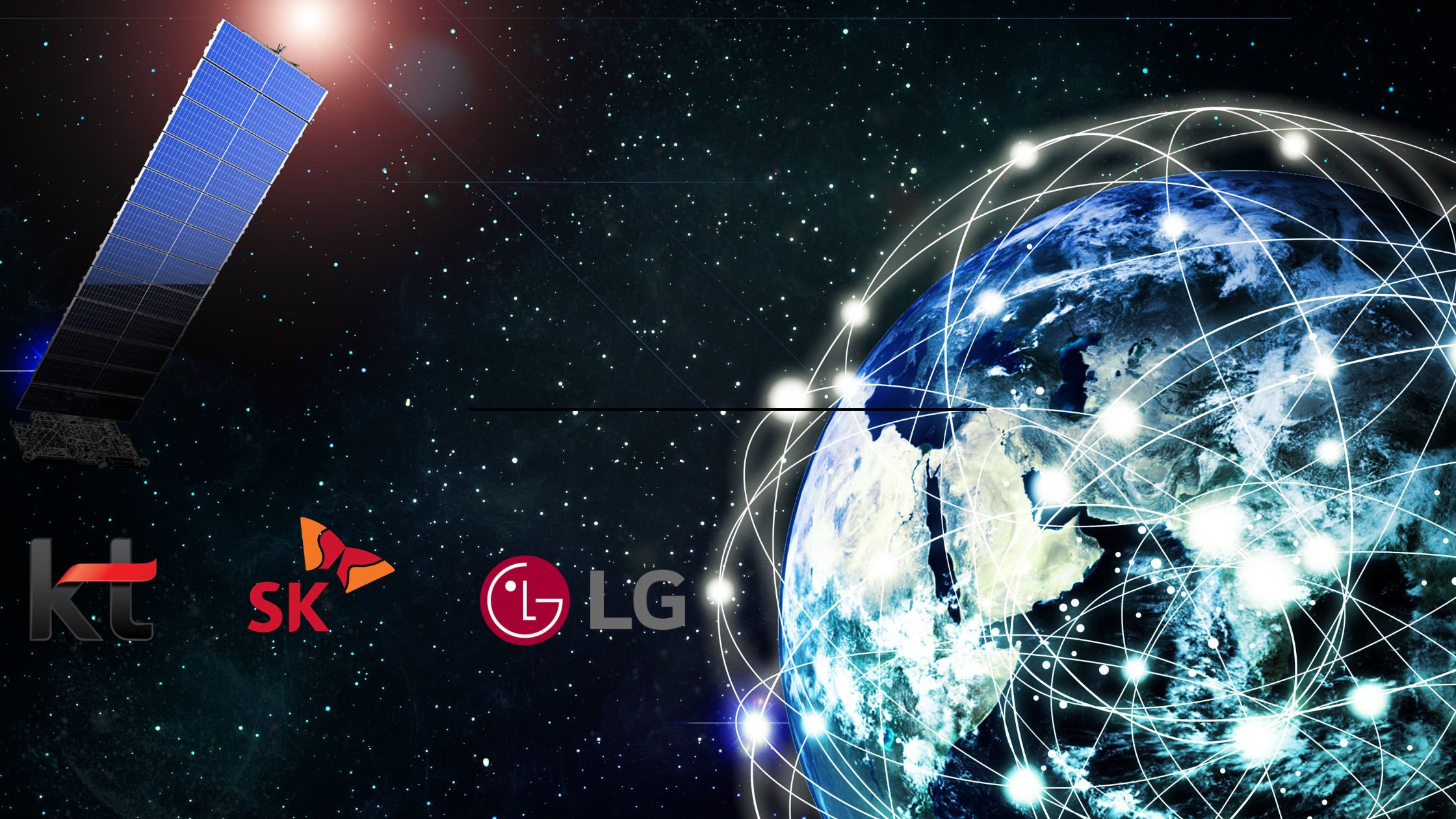
At MWC 2026, SK Telecom, KT, and LG Uplus revealed fundamentally different bets on where value will emerge in the AI era
At Mobile World Congress 2026, South Korea’s three major telecom operators—SK Telecom, KT Corporation, and LG Uplus—delivered a clear message: the era of a unified telecom playbook is over.
Instead, each company is pursuing a distinct path to remain relevant in an industry increasingly reshaped by artificial intelligence. What is emerging is not just strategic variation, but a structural divergence, with each operator targeting a different layer of the AI value chain.
For decades, telecom operators competed primarily on network quality, pricing, and subscriber growth. But as connectivity becomes commoditised and growth slows, AI is rapidly redefining where value lies.
The challenge is existential: Should telcos remain infrastructure providers, evolve into platform companies, or move up into applications and services? At MWC 2026, Korea’s telecom giants offered three different answers.
SK Telecom: Rebuilding as a Full-Stack AI Company
SK Telecom is making the most radical shift—positioning itself not as a telecom operator, but as an AI-native company.
At MWC, the company showcased a full-stack approach spanning:
- AI infrastructure, including data centres and compute capacity
- Proprietary AI models
- AI-integrated telecom services
This is not an incremental upgrade. It is an attempt to redefine the company’s core identity. By overhauling internal systems and investing in AI infrastructure, SK Telecom is betting that telcos can evolve into end-to-end AI platforms, capturing value across the stack—from compute to applications.
The risk, however, is execution complexity. Competing across multiple layers pits SK Telecom not only against telecom peers, but also against hyperscalers and AI-native firms.
KT Corporation: Owning the Network Layer of the AI Economy
In contrast, KT Corporation is doubling down on what it knows best: networks. Its focus at MWC 2026 centred on 6G development and AI-integrated network infrastructure, positioning next-generation connectivity as the foundation of the AI economy.
The underlying thesis is clear: If AI depends on ultra-fast, low-latency, and highly reliable networks, then control over those networks remains a powerful strategic position.
Rather than moving up the stack, KT is reinforcing its role at the infrastructure layer, aiming to become indispensable as AI workloads grow more demanding. This approach is more focused—but also more exposed to long-term commoditisation pressures if network differentiation diminishes.
LG Uplus: Chasing Value at the Application Layer
Meanwhile, LG Uplus is taking a different route—targeting the application and services layer.
Its MWC strategy emphasised:
- AI-powered software platforms
- conversational and voice-based interfaces
- integration across IoT and smart devices
Rather than investing heavily in infrastructure or foundational models, LG Uplus is focusing on user-facing AI experiences, with an eye toward global software expansion.
The logic is straightforward:
As AI matures, the greatest value may accrue not to those who build the infrastructure, but to those who control the end-user interface and services.
However, this strategy places LG Uplus in more direct competition with global tech companies and software-first players.
A Preview of the Global Telecom Future
While the developments were showcased in Barcelona, their implications extend far beyond South Korea. Globally, telecom operators are grappling with the same question: how to remain relevant in an AI-driven economy where traditional connectivity is no longer enough.
The Korean case offers an early preview of what may come next:
- some operators will attempt full-stack transformation
- others will double down on infrastructure
- and some will pivot toward services and software
There is no clear winner yet—but the divergence itself signals that the rules of competition are being rewritten.
If there is one takeaway from MWC 2026, it is this: telecom operators can no longer afford strategic ambiguity. The transition to AI is forcing hard choices about where to compete—and, just as importantly, where not to. For South Korea’s telecom giants, those choices are now clearly defined. What remains uncertain is which of these paths will prove most sustainable as the AI economy continues to evolve.