
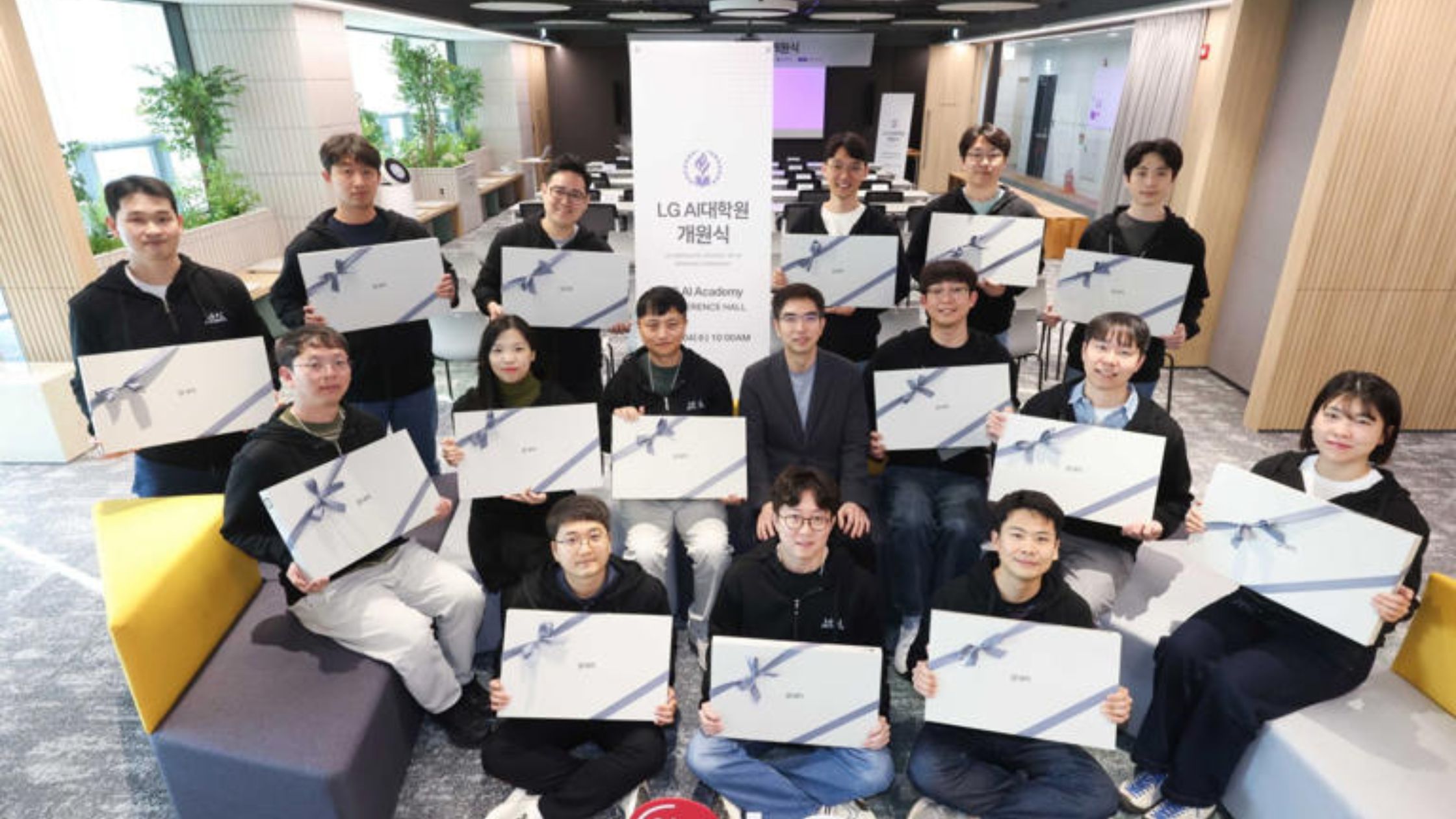
Corporate-led degrees raise questions about the future of higher education and research
LG’s launch of South Korea’s first corporate-run graduate school marks a notable shift in how advanced technical talent is developed. Unlike traditional in-house training programs, the new institution offers officially recognized master’s and doctoral degrees, placing it closer to a university than a corporate academy.
While the move reflects growing demand for advanced skills in areas such as artificial intelligence (AI), it also signals a deeper structural change. By bringing degree-granting education inside a corporation, LG is beginning to blur the long-standing boundary between academia and industry—two systems that have historically operated with different goals and incentives.
For decades, universities and corporations have maintained a complementary relationship. Universities focused on foundational research and education, while companies applied that knowledge to commercial products and services. Collaboration typically took the form of joint research projects, internships, or hiring pipelines.
LG’s model moves beyond collaboration toward integration. Its graduate school is designed not only to educate but also to align research directly with the company’s operational needs. Students—drawn from LG affiliates—are expected to work on applied research topics that can be translated into real-world solutions.
This shift suggests a more tightly controlled innovation cycle, where research, development, and application are increasingly housed within a single organizational structure.
Degrees tied to business needs
One of the most distinctive features of LG’s graduate school is the direct link between academic output and business priorities. Unlike traditional universities, where research agendas are often driven by academic inquiry, the corporate model places greater emphasis on practical outcomes.
The curriculum focuses on applied AI fields such as data intelligence, language and vision models, and industrial applications in materials and biotechnology. Students are required to publish research, but their work is closely connected to the company’s technological roadmap.
This raises a broader question about how the purpose of advanced education may evolve. If degree programs become more closely aligned with corporate needs, the balance between theoretical exploration and application could shift.
The emergence of corporate graduate schools introduces new competition for traditional universities, particularly in high-demand fields like AI. Companies may be able to offer more direct access to real-world data, infrastructure, and problem sets—resources that are often limited in academic settings.
At the same time, universities have traditionally played a key role in advancing fundamental research, including areas that may not have immediate commercial value. A shift toward corporate-led education could, over time, reduce the space for such research if funding and talent increasingly move toward industry-aligned programs.
This creates a potential divergence: universities as centers of long-term inquiry, and corporations as hubs of applied, outcome-driven research.
A shift in how talent is produced
LG’s initiative has been made possible by recent policy changes that allow companies to establish accredited graduate-level programs in strategic technology fields. This reflects a broader effort by the South Korean government to address talent shortages and strengthen competitiveness in areas such as AI.
By enabling corporations to take a more active role in education, policymakers are effectively expanding the range of institutions involved in talent development. However, this also shifts part of the responsibility for advanced education from public institutions to private entities.
The long-term impact of this approach will depend on how widely the model is adopted and how it interacts with existing academic systems.
The corporate graduate school model represents a change not just in where education takes place, but in how talent is produced. Instead of training individuals who later enter the workforce, companies like LG are developing talent within their own organizational context from the outset.
This approach may reduce the gap between education and employment, as students are trained using the tools, data, and problems they will encounter in their roles. It also allows companies to shape skill sets more precisely according to their needs.
At the same time, it may limit exposure to broader academic perspectives, particularly if research topics are narrowly defined by corporate priorities.
Open questions around independence and innovation
As corporate-led education expands, questions are likely to emerge around academic independence and the diversity of research agendas. If more advanced research is conducted within corporate environments, the scope of inquiry may become more closely tied to commercial interests.
There is also the question of mobility. Graduates trained within a specific corporate ecosystem may develop highly specialized skills, but it remains unclear how transferable these skills will be across industries or institutions.
These uncertainties highlight the need to consider not only the efficiency of the model, but also its long-term impact on innovation.
Early signal of a broader shift
LG’s graduate school is still at an early stage, with a small initial cohort and a focused set of research areas. However, it may serve as an early signal of a broader shift in how advanced technical education is structured, particularly in countries seeking to strengthen their position in emerging technologies.
If other large corporations follow a similar path, the traditional boundaries between universities and industry could become increasingly fluid. In that scenario, the future of higher education may involve a more hybrid model—one where academic and corporate systems operate not just in partnership, but in overlap.
For now, LG’s move highlights a key transition: education, once largely confined to universities, is beginning to take shape within the corporate sector itself.