

Government increases funding and pushes for closer industry alignment, but execution challenges remain
South Korea’s government has outlined its policy direction for state-led research and development (R&D) in 2027, placing artificial intelligence (AI) at the center of its innovation strategy. The Ministry of Science and ICT said the approach will prioritize projects that deliver tangible, near-term results, with outcomes that are “felt by the public,” rather than long-cycle research.
The policy direction, which will be reflected in next year’s budget, was confirmed during the 13th meeting of the Special Committee on National Strategic Technologies. At the same meeting, the government approved its 2026 implementation plan under a broader framework aimed at strengthening national competitiveness in key technologies.
The shift in direction comes alongside a steady increase in R&D spending. South Korea allocated a record 35.5 trillion won ($23.9 billion) to R&D in 2026, up 19.9 percent from a year earlier, as the government moves to rebuild research capacity after earlier reductions.
Spending on national strategic technologies has increased significantly, with this year’s allocation reaching 8.6 trillion won—around 30 percent higher than last year—and further growth expected in the coming years through 2027. Separately, the government has set aside 46.6 T won in policy financing to back both the development and commercialization of key technologies across priority sectors.
While the scale of funding is significant, the latest policy signals a shift in expectations: faster returns, clearer outcomes, and closer links to economic impact.
Shorter R&D cycles reflect pace of AI development
A key element of the policy is the decision to shorten project timelines, particularly in AI-related programs. The ministry said it aims to reduce the duration of AI transformation R&D projects in order to produce earlier results.
“Considering the rapid pace of development in AI technology, the government aims to shorten the project period… to deliver early results,” the ministry said.
This marks a departure from traditional government-led R&D models, which have often focused on longer-term research. The change reflects growing pressure to keep pace with private-sector innovation, where development cycles are significantly shorter.
However, the approach may also raise questions about whether shorter timelines could limit more fundamental or high-risk research that typically requires sustained investment.
The government’s broader goal is to position South Korea among the world’s top three AI powers. Alongside AI, the policy highlights continued investment in sectors such as biotechnology, space, aviation, and marine technologies.
Rather than treating these as separate domains, the strategy increasingly frames AI as an enabling layer across industries. This suggests a shift toward integrated industrial policy, where advancements in AI are expected to support progress in multiple sectors simultaneously.
At the same time, this approach places greater importance on infrastructure, data availability, and domestic capability building—areas where global competition remains intense.
Another notable aspect of the policy is its emphasis on linking public research more directly with industrial use. The government plans to accelerate the application of privately developed technologies, including in defense.
It also aims to strengthen coordination across ministries in 19 common technology areas, covering more than 500 strategically important technologies.
This reflects a broader effort to address a long-standing challenge in Korea’s innovation system: the gap between research output and commercialization. By aligning R&D more closely with industry demand, the government is seeking to improve the practical impact of its investments.
Expanded support for startups and commercialization
The implementation plan also includes targeted support for startups and research institutions in strategic technology fields. Funding has been allocated to encourage commercialization of public technologies, support deep-tech ventures, and develop core materials.
Additional investment will go toward regulatory science and systems to support the wider adoption of R&D outcomes, including the designation of institutions to promote technology transfer.
These measures indicate a growing focus on the broader innovation ecosystem, rather than R&D funding alone, as a driver of economic returns.
“K-Science” signals attempt at differentiation
Alongside its focus on global competitiveness, the government introduced the “K-Science” initiative, which aims to incorporate Korea’s cultural, historical, and environmental context into research.
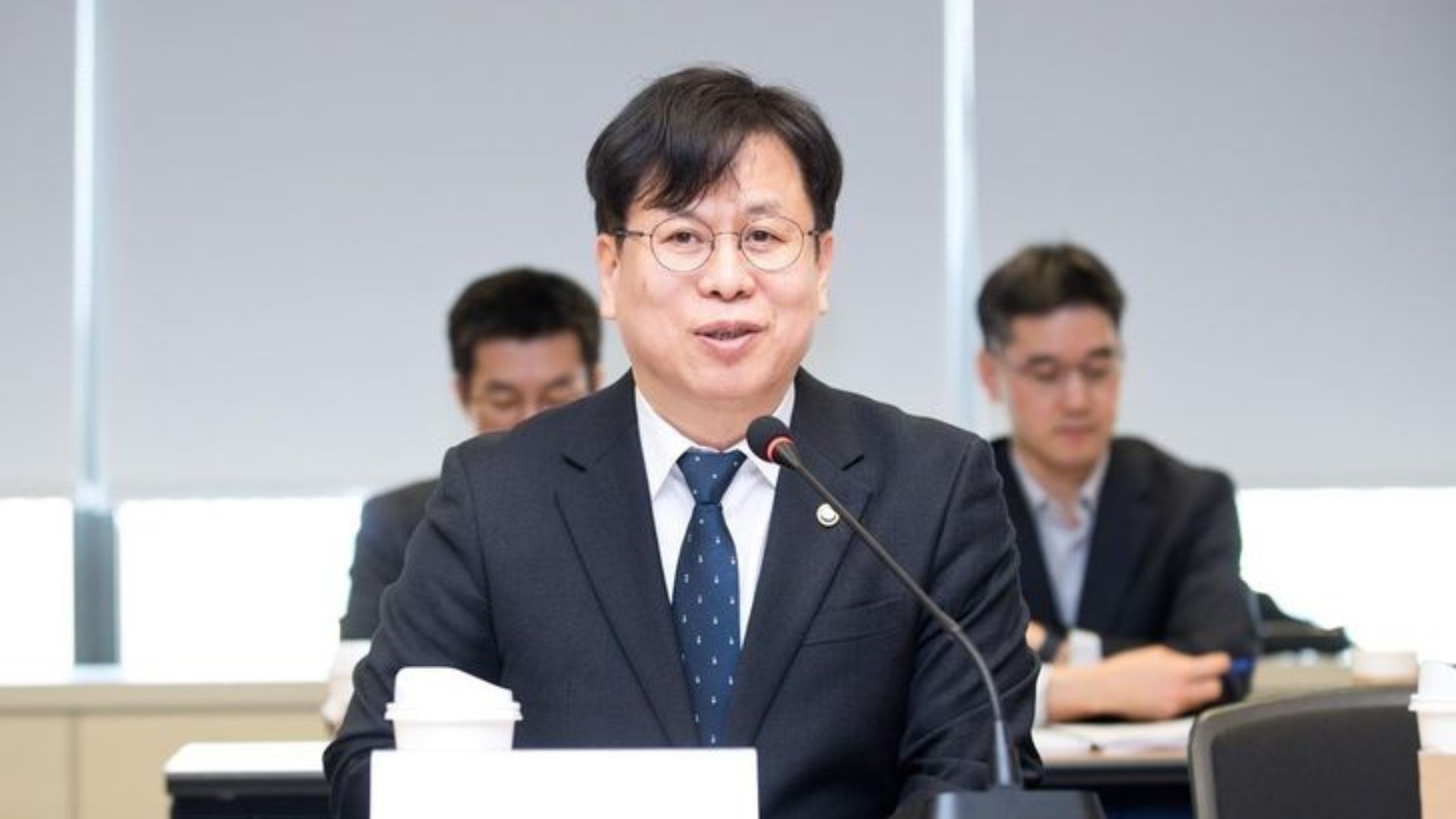
“There are areas of research that only Korean scientists are willing to take interest in,” said Park In-kyu, vice minister for science, technology and innovation, adding that further details will be released in the second quarter.
While still at an early stage, the initiative suggests an attempt to differentiate Korea’s research agenda in areas where it may have unique advantages, rather than competing solely in globally crowded fields.
The 2027 R&D vision forms part of a broader mid- to long-term strategy under the Master Plan for Fostering National Strategic Technologies. The government plans to revise its roadmap in the first half of 2026 to respond more quickly to shifts in global technology trends and policy environments.
“Amid rising geopolitical conflicts, strategic technology is becoming a key asset that determines a nation’s economy and security,” Park said.
The emphasis on coordination across ministries and faster policy adjustment reflects the increasingly strategic role of technology in economic and security policy. However, the effectiveness of the approach will depend on execution, particularly in balancing speed with depth in research and ensuring that increased funding translates into measurable outcomes.