
As AI-powered diagnostics become increasingly integrated into clinical practice, healthcare systems are placing greater emphasis on simulation-based medical education to ensure physicians can safely and effectively apply new technologies.
Artificial intelligence has transformed healthcare over the past decade. Hospitals worldwide are deploying AI to assist with radiology, pathology, cardiology, ophthalmology, and cancer screening, while governments continue investing in digital health infrastructure to improve diagnostic accuracy and patient outcomes. South Korea has emerged as one of the global leaders in this transformation, supported by a thriving medical AI ecosystem that includes companies such as Lunit, VUNO, Deepnoid, JLK, and Coreline Soft, alongside strong government backing for digital healthcare innovation.
Yet as AI becomes increasingly embedded in clinical practice, another challenge is attracting growing attention: ensuring physicians are equipped to use these technologies effectively. Accurate diagnosis depends not only on advanced algorithms and sophisticated imaging systems, but also on clinicians who possess the procedural skills and confidence to interpret findings, perform interventions, and make informed clinical decisions.
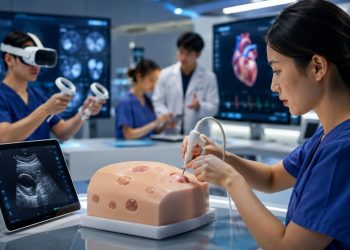
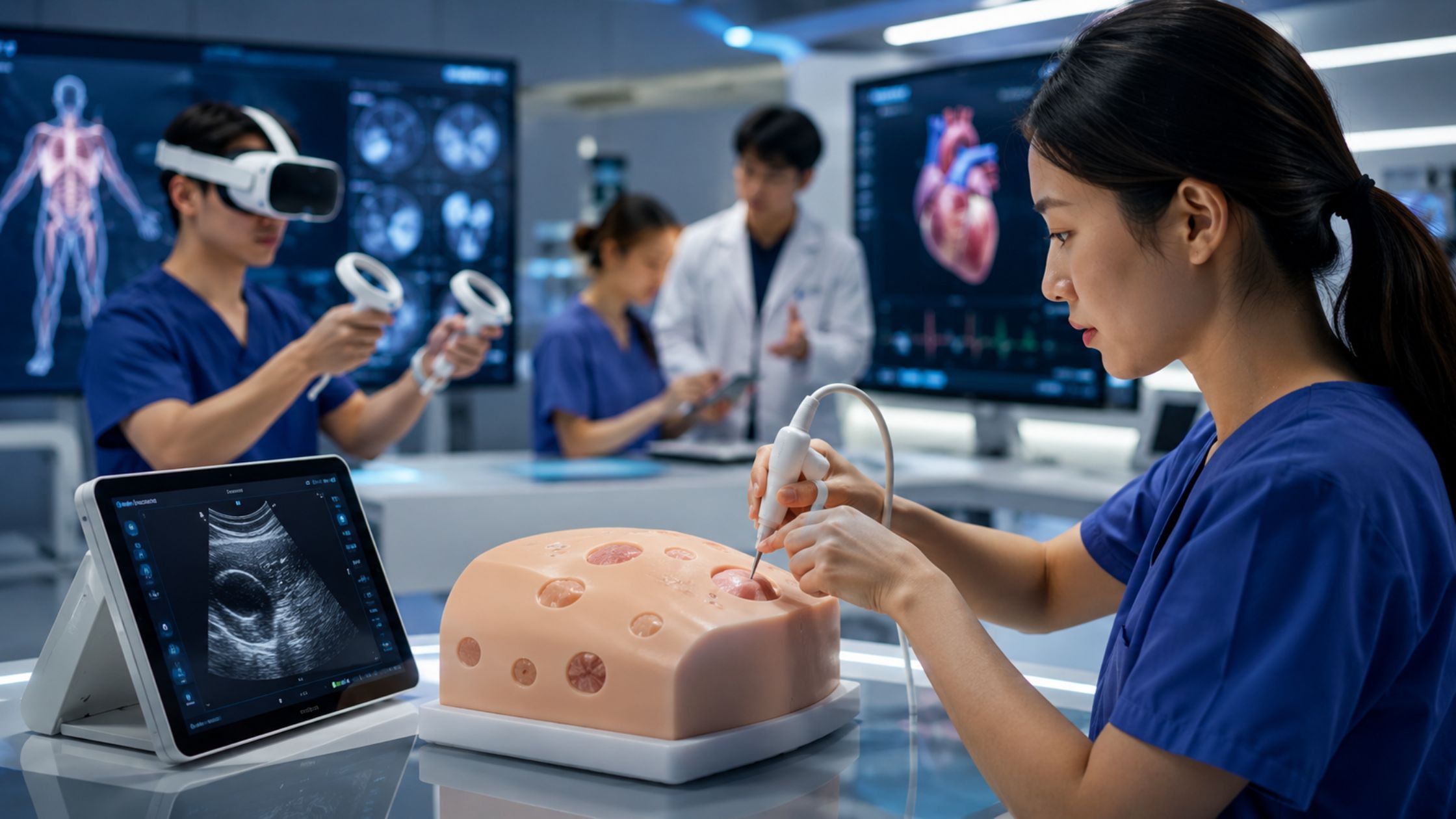
This shift is gradually changing how healthcare systems approach medical education. Beyond investing in AI-assisted diagnostics, hospitals and research institutions are increasingly adopting simulation-based training, virtual learning environments, and high-fidelity medical simulators that allow clinicians to repeatedly practice complex procedures before treating patients.
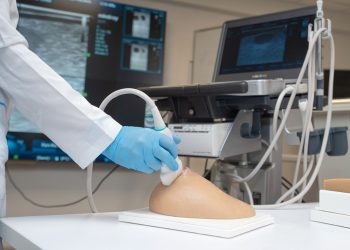
A recent initiative by the Moscow Healthcare Department illustrates this broader transition. The department has introduced a specialized training program using reusable self-healing ultrasound phantoms to help oncologists practice ultrasound-guided core biopsy procedures. While the technology itself represents a significant advancement in medical simulation, the larger story extends beyond a single training program. It reflects a growing international recognition that simulation-based education is becoming an essential pillar of modern healthcare.
During an exclusive conversation with KoreaTechToday, the Center for Diagnostics and Telemedicine of the Moscow Health Department (MHD) shared its perspective on how simulation technologies are reshaping physician training and why their importance is expected to grow alongside advances in AI.
AI has transformed diagnostics. Simulation is transforming physician education
Much of the recent conversation around healthcare innovation has focused on artificial intelligence diagnosing disease faster and more accurately. AI algorithms now assist physicians in detecting lung cancer, breast cancer, strokes, retinal diseases, and cardiovascular conditions, often analyzing medical images within seconds.
However, AI is only one component of healthcare delivery. Physicians must still perform biopsies, conduct ultrasound-guided procedures, interpret imaging findings within broader clinical contexts, communicate treatment options to patients, and manage increasingly complex medical workflows. As technologies evolve, maintaining procedural competency has become just as important as adopting new diagnostic tools.
According to experts from the Moscow Health Department, simulation-based education has evolved from a supplementary training method into a fundamental component of medical education.
“Simulation-based training has become an integral component of medical and continuing professional education in numerous countries. Advances in technology have enabled the development of realistic simulators and phantoms that permit safe training of practical skills and complex clinical scenarios without risk to patients.
In the coming years, the importance of simulation-based technologies is expected to grow further, given their capacity to support repeated, high-fidelity practice of medical procedures under conditions closely resembling actual clinical settings. Future developments will focus on enhancing simulator realism and broadening capabilities to mimic rare and complex clinical situations. Such progress will further align specialist training with practical, competency-based requirements and improve the effectiveness of skill acquisition,” the organization told KoreaTechToday.
Their observations mirror a broader trend taking shape across healthcare systems worldwide, where competency-based education is increasingly replacing traditional “see one, do one, teach one” models that historically dominated medical training.
Realistic simulation is becoming a strategic healthcare investment
Medical simulation has evolved considerably over the past decade. Earlier training models often relied on static anatomical replicas or limited practice opportunities. Today’s simulators combine advanced materials, digital imaging, artificial intelligence, and increasingly sophisticated software capable of reproducing realistic clinical conditions. The reusable biopsy phantoms introduced in Moscow represent one example of this evolution.
Unlike conventional training models that degrade after repeated needle punctures, the new self-healing phantoms recover their structure after multiple procedures while closely replicating the ultrasound characteristics of human tissue. This enables clinicians to repeatedly practice lesion visualization, needle positioning, biopsy techniques, and sample collection without compromising patient safety.
The technology also reflects a broader shift toward experiential learning. Rather than limiting education to classroom instruction, healthcare institutions increasingly emphasize repeated procedural practice, allowing physicians to refine technical skills, improve hand-eye coordination, and develop confidence before performing procedures on patients. This approach is particularly valuable for complex interventions where precision directly influences diagnostic accuracy and treatment outcomes.
South Korea is well positioned for the next phase of medical education
South Korea already possesses many of the building blocks supporting this transition. The country combines advanced digital hospitals, widespread adoption of robotic surgery, internationally recognized medical research institutions, and one of Asia’s most dynamic medical AI industries. Hospitals including Samsung Medical Center, Seoul National University Hospital, Asan Medical Center, and Severance Hospital have invested extensively in digital operating rooms, simulation centers, minimally invasive surgery, and AI-assisted clinical workflows.
At the same time, South Korea continues expanding AI applications across radiology, pathology, cardiology, and emergency medicine. As these technologies become routine, physician education must evolve alongside them.
Medical simulation offers a practical bridge between technological innovation and clinical implementation. It enables healthcare professionals to safely learn new procedures, become familiar with AI-assisted workflows, and prepare for increasingly specialized interventions without exposing patients to unnecessary risk.
For countries facing aging populations, growing healthcare demands, and physician shortages, simulation-based education may also improve workforce readiness by standardizing procedural training and supporting continuous professional development throughout a clinician’s career.
The future of healthcare depends on technology and human expertise
One of the most significant lessons emerging from today’s healthcare transformation is that innovation cannot rely solely on algorithms. Artificial intelligence can assist physicians by identifying abnormalities, prioritizing cases, and supporting clinical decisions. However, successful healthcare still depends on highly trained professionals capable of integrating technology with clinical judgment, technical expertise, and patient-centered care.
Simulation-based education strengthens that human element. Whether through reusable biopsy phantoms, virtual reality surgical environments, AI-powered simulation platforms, or digital twins that replicate complex physiological conditions, the objective remains consistent: enabling clinicians to practice repeatedly, learn safely, and develop competencies before treating real patients.
The growing investment in simulation technologies therefore represents more than an educational trend. It reflects an evolution in how healthcare systems define quality and patient safety.
From diagnosis to competency
Healthcare innovation has entered a new phase. For years, the industry’s focus centered on improving diagnosis through artificial intelligence, advanced imaging, and digital health platforms. Those investments continue to reshape modern medicine and remain central to healthcare transformation. Increasingly, however, attention is expanding beyond diagnostic capability toward physician competency.
The introduction of advanced simulation technologies, including reusable medical phantoms such as those recently deployed in Moscow, highlights how healthcare systems are investing not only in smarter technologies but also in better-prepared clinicians. For South Korea, where AI healthcare, medical imaging, robotics, and digital hospitals continue to advance rapidly, simulation-based education offers an opportunity to ensure that technological innovation is matched by equally sophisticated clinical training.
Ultimately, the future of healthcare will not be defined by artificial intelligence alone. It will depend on how effectively healthcare systems combine cutting-edge technologies with continuous physician education, allowing clinicians to develop the skills needed to deliver safer, more accurate, and higher-quality patient care.