
As employers grapple with rising healthcare costs, aging workforces, and productivity challenges, AI-powered technologies are shifting workplace health strategies from treatment to prevention.
For decades, employers have measured workforce health through a relatively simple metric: absenteeism. If employees were missing work because of illness, injury, or burnout, productivity suffered. Human resources departments tracked sick leave, healthcare claims, and employee turnover as indicators of workforce wellbeing. The assumption was straightforward. Employees who showed up to work were productive. Employees who stayed home were not. That assumption is increasingly being challenged.
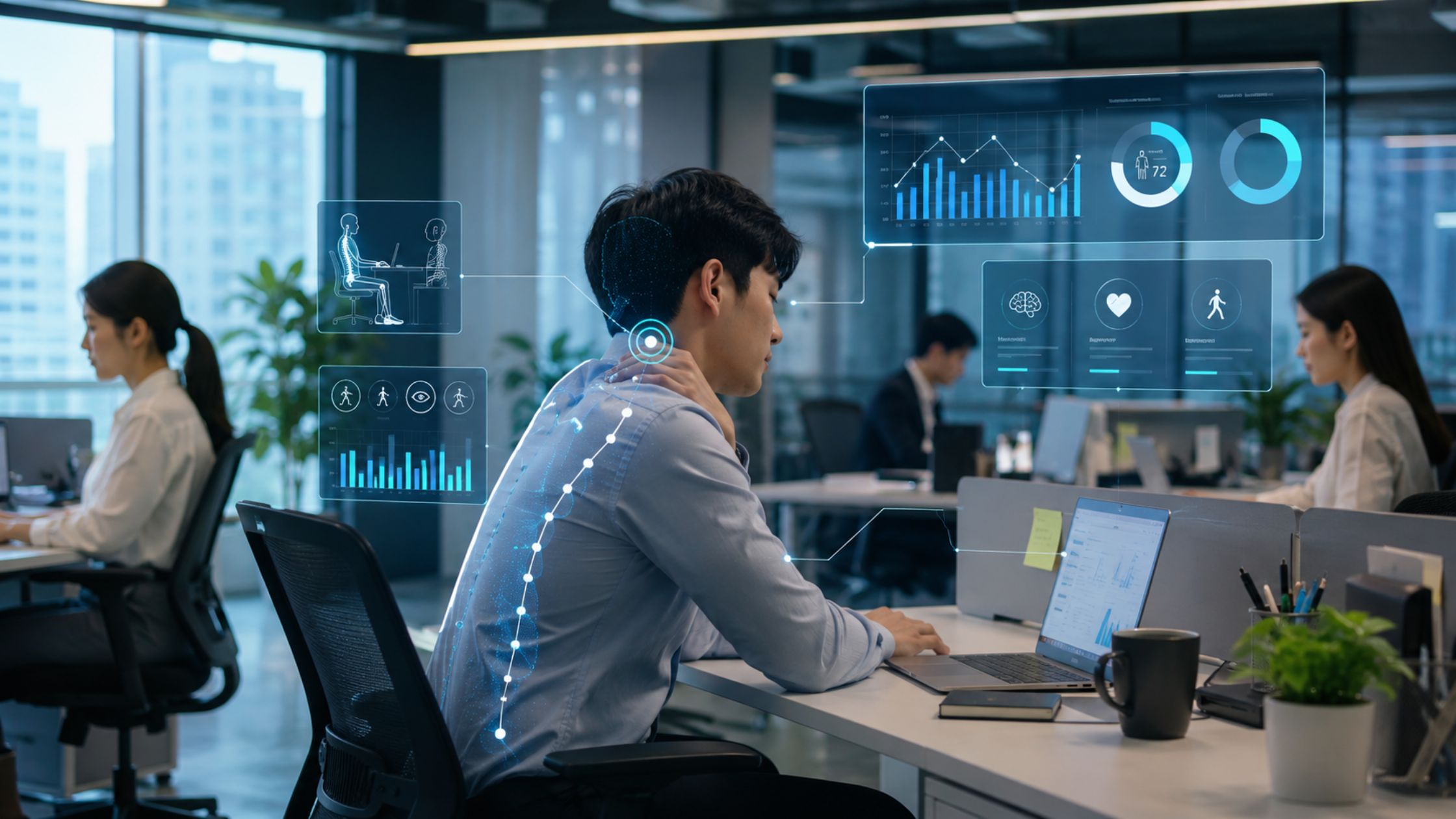
A growing body of workplace research suggests that the economic impact of presenteeism, employees who are physically present but unable to perform at their full capacity due to pain, discomfort, fatigue, or health-related issues, may exceed the cost of absenteeism itself. Workers suffering from chronic back pain, neck strain, poor posture, repetitive stress injuries, and even mental health challenges often remain at their desks, yet experience reduced concentration, lower productivity, and diminished overall performance.
The issue is becoming particularly relevant as knowledge workers spend longer hours in front of screens and as aging populations place new pressures on labor markets.
For South Korea, where long working hours, digital work environments, and demographic shifts are converging, presenteeism is emerging as an increasingly important workplace challenge. It is also creating a new opportunity for artificial intelligence, sensors, and workplace health technologies to move beyond traditional wellness programs and become part of the productivity infrastructure itself.
While speaking with KoreaTechToday, William Choi from Neurabody.ai argued that workplace health strategies need to move beyond episodic care.
“Rather than being episodic, meaning reactive care after you’re in pain, we focus on presenteeism. We focus on prevention,” he said.
That distinction reflects a broader shift taking place across workplace technology. The next generation of tools may be designed not only to improve how employees work, but also to help prevent the physical conditions that silently undermine performance.
The Hidden Cost of Being Present
Unlike absenteeism, presenteeism is difficult to measure. Employees who arrive at work despite experiencing discomfort are often viewed positively. They are fulfilling their responsibilities, attending meetings, and maintaining their schedules. However, occupational health researchers have long argued that the cumulative productivity losses associated with untreated physical conditions can be substantial.
Musculoskeletal disorders remain among the leading causes of disability worldwide. According to the World Health Organization, lower back pain is one of the most common health conditions affecting working-age adults and a major contributor to years lived with disability.
For employers, the challenge extends beyond medical expenses. Physical discomfort affects concentration, decision-making, energy levels, and workplace engagement. Chronic pain has also been linked to increased stress, sleep disruption, and mental health challenges, creating a ripple effect across employee performance.
The shift toward digital work has intensified these concerns. Millions of employees now spend between eight and twelve hours a day sitting, often in ergonomically imperfect environments. While organizations have invested heavily in productivity software, collaboration platforms, and AI-powered workplace tools, comparatively little attention has been paid to how physical health influences workplace performance. That dynamic is beginning to change.
Why Prevention Is Becoming More Valuable Than Treatment
One of the most notable developments in workplace health technology is the growing emphasis on prevention rather than treatment. Historically, most healthcare interventions have been reactive. Employees experience pain, seek medical assistance, undergo treatment, and eventually return to work. The model focuses on managing problems after they occur.
A new generation of health technology companies is attempting to reverse that process. Preventive systems aim to identify behavioral patterns, movement habits, and ergonomic risks before they develop into more serious conditions. Rather than waiting for employees to report discomfort, these systems attempt to continuously monitor physical behavior and provide interventions in real time.
The approach reflects a broader shift occurring across healthcare, where predictive technologies are increasingly being used to identify risks before symptoms become severe. For employers, the appeal is straightforward. Preventing a problem is often less costly than treating one.
The Rise of Workplace Intelligence
Artificial intelligence has already transformed many aspects of workplace productivity. The first wave focused primarily on digital workflows. AI assistants helped employees draft documents, summarize meetings, automate repetitive tasks, and analyze business data.
An emerging wave of workplace technologies is beginning to focus on physical wellbeing and performance, extending AI’s role beyond digital workflows. Companies are increasingly exploring technologies capable of monitoring posture, movement, fatigue, mobility, and workplace ergonomics. The objective is not surveillance but optimization.
William describes its approach as a form of physical AI, using sensors and AI systems to understand how people move throughout the day and how those movements influence health outcomes.
According to the company, existing workplace data largely focuses on digital behavior. Detailed, continuous movement data collected across multiple daily activities remains a relatively underexplored category compared with traditional digital behavioral data.
“The data being collected has actually never been done before at the level we’re going after,” William told KoreaTechToday. “We are collecting new data, and thanks to AI, we’re able to compound that data, make it even more valuable and more personalized.”
This observation points to a broader trend.
As generative AI companies compete for increasingly saturated digital datasets, some innovators are turning their attention toward real-world human behavior. Physical movement, posture, mobility patterns, and ergonomic habits represent an entirely different category of data that has historically been difficult to capture at scale.
Why South Korea Could Become a Key Market
South Korea presents a particularly compelling environment for workplace health innovation.
Several structural trends are converging:
- One of the world’s fastest-aging populations
- Highly digitized workplaces
- Extensive adoption of connected devices and smart technologies
- Growing corporate interest in employee wellbeing and productivity
The country also faces increasing pressure to maintain workforce productivity as demographic changes reduce the available labor pool.
In this context, preserving employee health becomes an economic issue as much as a healthcare issue.
A healthier workforce can potentially remain productive for longer, reduce healthcare expenditures, and minimize disruptions associated with chronic health conditions. South Korea’s position as a global leader in consumer electronics, connected devices, and digital health technologies may also provide advantages for the development and adoption of workplace wellness solutions.
Neurabody.ai has signed an agreement with Samsung and plans to integrate aspects of its AI-powered exercise and mobility platform into Samsung smart TV environments. These developments suggest that workplace wellness technologies may increasingly move beyond standalone applications and become embedded within broader digital ecosystems.
The Economic Case for Fighting Presenteeism
The business rationale behind preventive workplace health is becoming harder to ignore. Employers face rising healthcare costs, increasing insurance expenditures, and growing concerns about employee burnout. At the same time, knowledge-based industries depend heavily on sustained cognitive performance, concentration, and engagement.
Research consistently links improvements in employee wellbeing to reduced healthcare costs, lower turnover, and higher productivity, although outcomes vary by industry and implementation. This is one reason why corporate wellness programs are evolving from optional benefits into strategic investments.
Organizations are increasingly asking new questions:
- Can physical discomfort be detected before it affects performance?
- Can workplace environments adapt dynamically to employee needs?
- Can AI identify risks before they lead to injuries or healthcare claims?
The answers remain uncertain, but the direction of travel is becoming clearer. Workplace health is moving closer to workplace technology.
Beyond Wellness: The Emergence of Physical AI
Perhaps the most interesting implication of this trend lies beyond healthcare. The emergence of physical AI suggests a future where computing is not limited to screens, keyboards, and digital interfaces. Instead, technology becomes increasingly capable of understanding and responding to the physical state of the human body.
William describes this vision in particularly ambitious terms.
“We turn the body into a computing surface,” he told KoreaTechToday.
While the concept may sound futuristic, it aligns with broader developments across artificial intelligence, robotics, wearables, and ambient computing. As sensors become more sophisticated and AI systems become better at interpreting real-world behavior, the human body itself may become a source of continuous interaction and insight.
For workplace technology, this could represent a significant shift. The next generation of productivity tools may not simply help employees work faster. They may help employees work healthier.
A New Frontier in Workplace Innovation
For years, the workplace technology industry focused on digital efficiency. Software platforms helped employees communicate more effectively, automate workflows, and access information more quickly. Those innovations transformed how work is performed.
The next frontier may involve understanding how employees function physically while they work. Presenteeism highlights an uncomfortable reality of modern work. Being present does not necessarily mean performing at one’s best. As organizations seek new ways to improve productivity, reduce healthcare costs, and support workforce wellbeing, technologies capable of identifying and addressing hidden performance barriers are likely to attract growing attention.
For South Korea, where demographic pressures and technological innovation continue to intersect, the rise of preventive workplace intelligence may represent more than a health trend. It may become a strategic economic priority.
The battle against presenteeism is still in its early stages. Yet as AI expands beyond software and into the physical world, it could become one of the most important workplace technology stories of the decade. Rather than focusing solely on helping employees work more efficiently, the next generation of workplace technologies may increasingly focus on helping them remain healthier, more productive, and more resilient throughout their working lives.