

Samsung to supply HBM4 for AMD’s next-generation AI accelerators as both companies deepen integration across memory, compute, and rack-scale systems.
Samsung Electronics and AMD have signed a memorandum of understanding (MOU) to expand their collaboration on next-generation AI memory and computing technologies, underscoring intensifying competition in the AI infrastructure market.
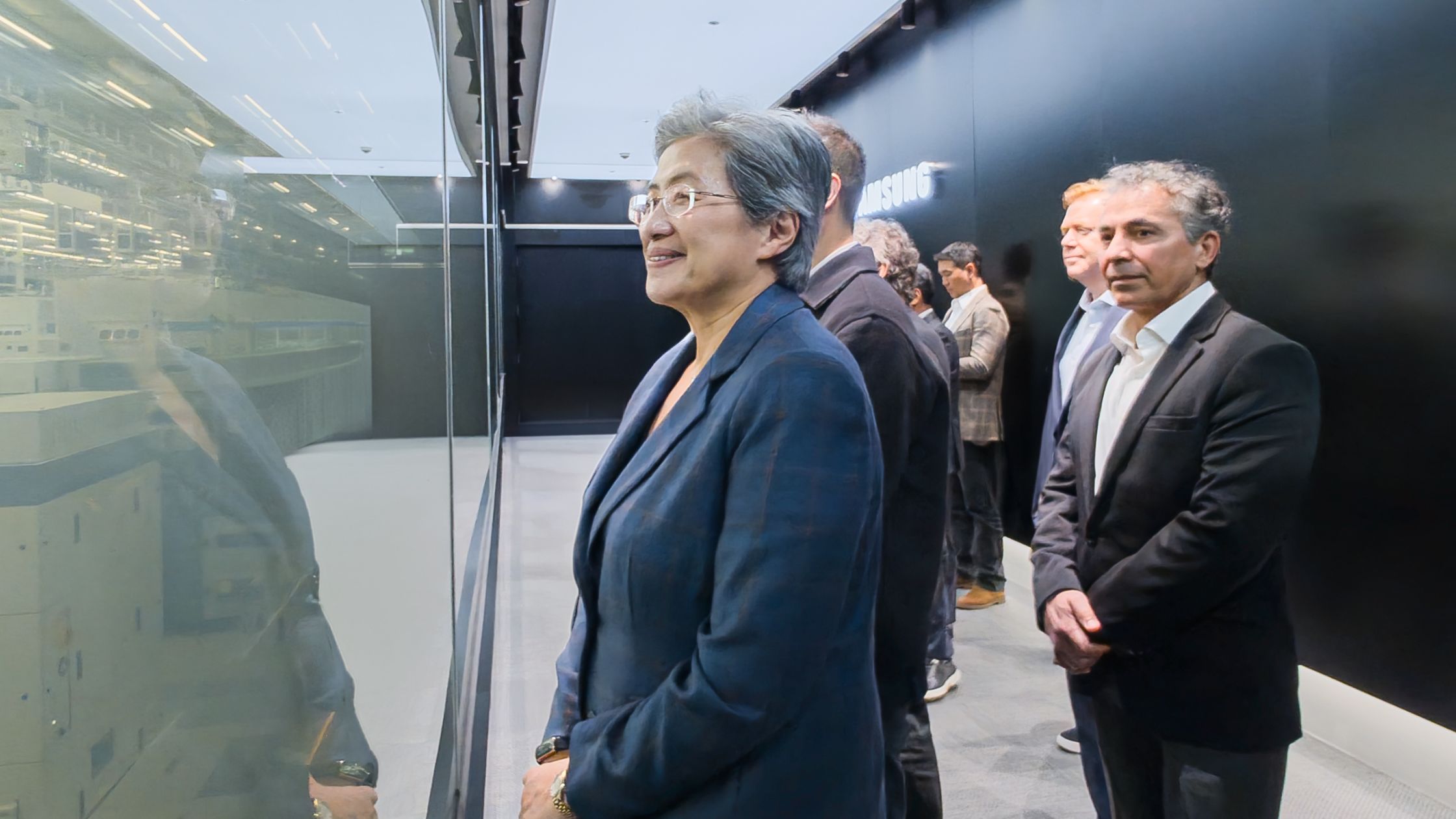
The agreement, formalized at Samsung’s semiconductor complex in Pyeongtaek, brings together two long-time partners aiming to tighten integration across memory, processors, and system-level architectures for AI workloads. The move reflects a broader industry shift toward vertically coordinated design as demand for high-performance AI systems accelerates.
At the center of the partnership is Samsung’s next-generation high-bandwidth memory, HBM4, which will serve as a primary memory solution for AMD’s upcoming AI accelerator, the Instinct MI455X GPU. The companies will also collaborate on advanced DRAM solutions for AMD’s sixth-generation EPYC CPUs, codenamed “Venice,” and explore system-level optimization for rack-scale platforms such as AMD’s Helios architecture.
Samsung said its HBM4 is built on a sixth-generation 10-nanometer-class DRAM process and incorporates a 4nm logic base die, enabling speeds of up to 13 Gbps and bandwidth of up to 3.3 TB/s. These specifications position HBM4 as a critical component in addressing one of AI computing’s primary bottlenecks: memory bandwidth.
The collaboration signals a deeper alignment between memory and compute design, as AI workloads increasingly demand tight coupling between GPUs, CPUs, and memory subsystems. AMD’s Instinct MI455X GPU is expected to anchor high-performance AI systems for both training and inference, while also serving as a key component of its Helios rack-scale infrastructure strategy.
Beyond HBM, the companies plan to co-develop high-performance DDR5 memory tailored for EPYC processors, further extending their collaboration across the data center stack. Samsung and AMD also indicated they are exploring potential foundry cooperation, which could position Samsung as a manufacturing partner for future AMD products.
The partnership builds on nearly two decades of collaboration between the two companies across graphics and computing technologies. Samsung has previously served as a key supplier of HBM3E memory for AMD’s Instinct MI350X and MI355X accelerators.
Strategic Context: Competing in the AI Memory Race
The expanded alliance comes as competition intensifies in the high-bandwidth memory market, where suppliers such as SK hynix and Micron are racing to secure design wins with leading AI chipmakers. HBM has emerged as a critical differentiator in AI system performance, particularly as large language models and generative AI workloads place increasing strain on memory throughput and energy efficiency.
For Samsung, the partnership represents an opportunity to strengthen its position in the premium memory segment, where it has faced strong competition despite its scale in the broader DRAM market. Securing a primary role in AMD’s next-generation AI accelerators could help reinforce its standing in the rapidly growing AI data center ecosystem.
For AMD, closer integration with a leading memory supplier supports its strategy to compete more aggressively in AI infrastructure, where it faces dominant incumbents. By aligning memory, compute, and system architecture, AMD is aiming to deliver end-to-end performance gains that extend beyond individual chip improvements.
Industry observers note that such collaborations are becoming increasingly necessary as AI systems evolve into tightly integrated platforms rather than discrete components. The Samsung-AMD agreement reflects this shift, emphasizing co-optimization across the full computing stack—from silicon to system to rack.
While the MOU outlines broad areas of cooperation, further details on timelines and commercial deployment are expected as both companies advance their next-generation AI product roadmaps.