
Telecom operators deploy autonomous systems to manage extreme data traffic at large-scale event
South Korea’s three major mobile carriers are preparing to deploy advanced network technologies during the BTS comeback concert on March 21, as they seek to manage an expected surge in mobile data traffic. The event, titled “BTS The Comeback Live: Arirang,” will take place at Gwanghwamun Square and nearby Seoul City Hall Plaza, where more than 260,000 people are expected to gather.
The scale of the event, combined with heavy use of livestreaming and social media, is turning the concert into a real-world test of how artificial intelligence (AI) can be used to manage network congestion in dense urban environments. Operators are positioning the deployment as both a technical trial and a demonstration of next-generation network capabilities.
Mass gatherings such as concerts and festivals have long posed challenges for telecom networks, where sudden spikes in data usage can lead to slow speeds or service disruptions. Traditional approaches have relied heavily on adding temporary base stations and increasing capacity in advance.
However, the growing volume of high-definition video uploads and real-time streaming is making static infrastructure upgrades less effective on their own. This has pushed operators to adopt AI-based systems that can predict traffic patterns and adjust network conditions dynamically.
The BTS concert, with hundreds of thousands of users expected to connect simultaneously, provides a high-pressure environment to test whether these systems can respond quickly enough to prevent bottlenecks.
SK Telecom focuses on predictive and zone-based network control
SK Telecom plans to deploy its AI-based network operation system, A-One (Access All-in-One), at the event for the first time. The platform analyzes historical data and real-time network conditions to forecast demand and optimize resource allocation.
One of its key features is the division of the venue into multiple zones based on expected user behavior. Areas close to the stage are likely to generate heavy uploads of photos and videos, while outer zones are expected to see more livestream viewing.
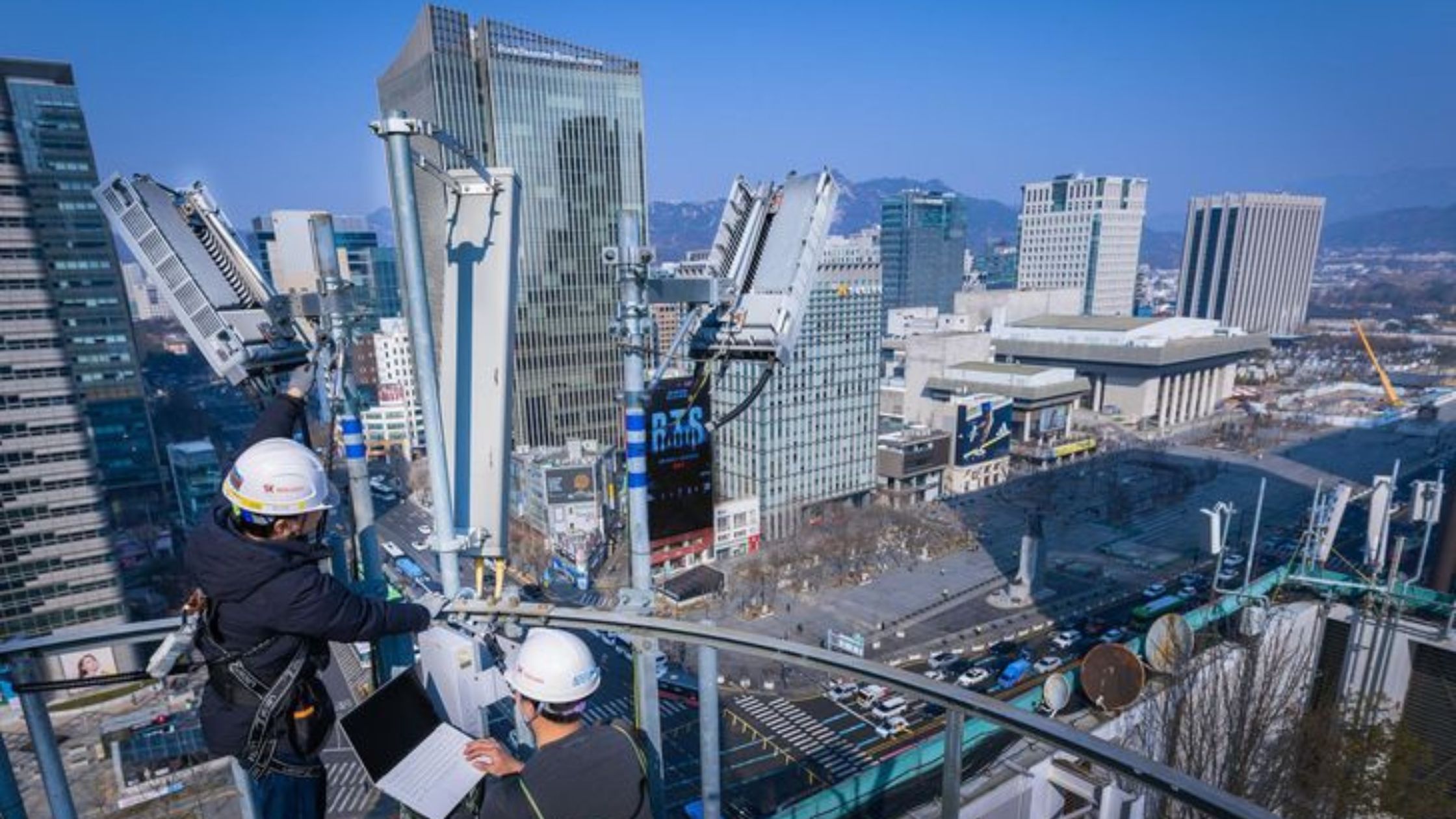
By applying different network configurations to each zone, the company aims to improve efficiency and reduce localized congestion. Temporary base stations and relay equipment will also be installed across the venue, including in areas with high numbers of international visitors.
KT emphasizes real-time response and automated traffic control
KT is taking a slightly different approach, focusing on rapid response through its AI-based traffic management system, W-SDN (Wireless Software Defined Network). The system continuously monitors network conditions and can detect early signs of overload.
When congestion is identified, W-SDN automatically redistributes traffic and adjusts base station output within a short time frame. This allows the network to respond to sudden spikes, such as users initiating livestreams at the same moment.
To support the system, KT has expanded its physical infrastructure around the venue, installing additional mobile base stations, wireless stations, and Wi-Fi access points. Its network control center will operate in emergency mode during the concert, with around 80 personnel monitoring performance in real time.
LG Uplus adopts preemptive and autonomous network adjustments
LG Uplus is focusing on preemptive control through its autonomous network technology. The system sets operational parameters for network cells in advance based on expected traffic patterns and automatically adjusts them during the event.
If traffic becomes concentrated in a specific area, the system can redistribute loads by modifying base station output and connection settings in real time. This reduces the risk of overload in individual cells and helps maintain overall network stability.
The company will also deploy additional mobile base stations and temporary repeaters around the venue, supported by on-site teams and a remote control center operating under emergency conditions.
From infrastructure expansion to intelligent network operations
The approaches taken by the three carriers highlight a broader shift in telecom network management. While infrastructure expansion remains important, there is increasing reliance on software-driven systems that can adapt to changing conditions in real time.
Key capabilities being tested at the event include:
- Predicting traffic demand based on historical and live data
- Dynamically redistributing network loads across base stations
- Adjusting network parameters automatically without manual intervention
This shift reflects the growing complexity of network usage, where user behavior can change rapidly and unpredictably during large events.
A test case for future high-density network environments
Beyond the concert itself, the deployment offers insight into how telecom operators may handle future scenarios involving dense user environments, such as major sports events, urban gatherings, and emergency situations.
It also aligns with broader industry trends toward autonomous networks, where AI plays a central role in optimizing performance and reducing the need for manual control.
However, the effectiveness of these systems in real-world conditions remains a key question. Large-scale events like the BTS concert provide a rare opportunity to test these technologies under extreme demand, where even small failures can quickly affect a large number of users.
As mobile data consumption continues to rise, especially with video-heavy applications, telecom operators are under increasing pressure to maintain consistent service quality. AI-based network management offers a potential solution, but its success depends on how well it can scale and respond in unpredictable conditions.
The upcoming BTS concert will serve as a practical benchmark for these capabilities. While the deployment reflects growing confidence in AI-driven systems, it also underscores the challenges of managing modern communication networks in high-density, high-demand environments.