
On Monday, the Ministry of Science announced that the government will invest 1.2 trillion won ($863.7 million) into developing nuclear fusion technologies. This investment aims to advance the country’s nuclear fusion capabilities, focusing on large-scale reactors centered in Korea and smaller reactors led by international companies.
The initiative, known as ‘Dream Energy,’ involves a plan to participate in nuclear fusion research driven by research institutions and private enterprises. Additionally, the government is launching a 2 trillion won project called ‘Artificial Sun’ to develop nuclear fusion energy technology and build the necessary infrastructure.
The project includes:
- Cooperation with private companies
- Establishing a base for nuclear fusion energy industrialization
- Enhancing specialized education through university programs focused on nuclear fusion
“Fusion power can be a solution to the rising concerns surrounding energy and greater electricity demand, and in the future, only the country with fusion power technology will be able to lead the global energy market,” Science Minister Lee Jong-ho stated. On July 22, the Ministry of Science and Technology convened the 20th National Nuclear Convergence Committee, chaired by Minister Lee, to deliberate and resolve the ‘Nuclear Convergence Energy Acceleration Strategy (Proposition).’
Nuclear fusion involves producing energy through the fusion of deuterium and tritium, mimicking the process that powers the sun. Unlike traditional nuclear power plants that rely on fission reactions, fusion power generates energy without producing greenhouse gases or high-level radioactive waste. This clean energy approach makes nuclear fusion a key component in the global shift towards decarbonization and energy security.
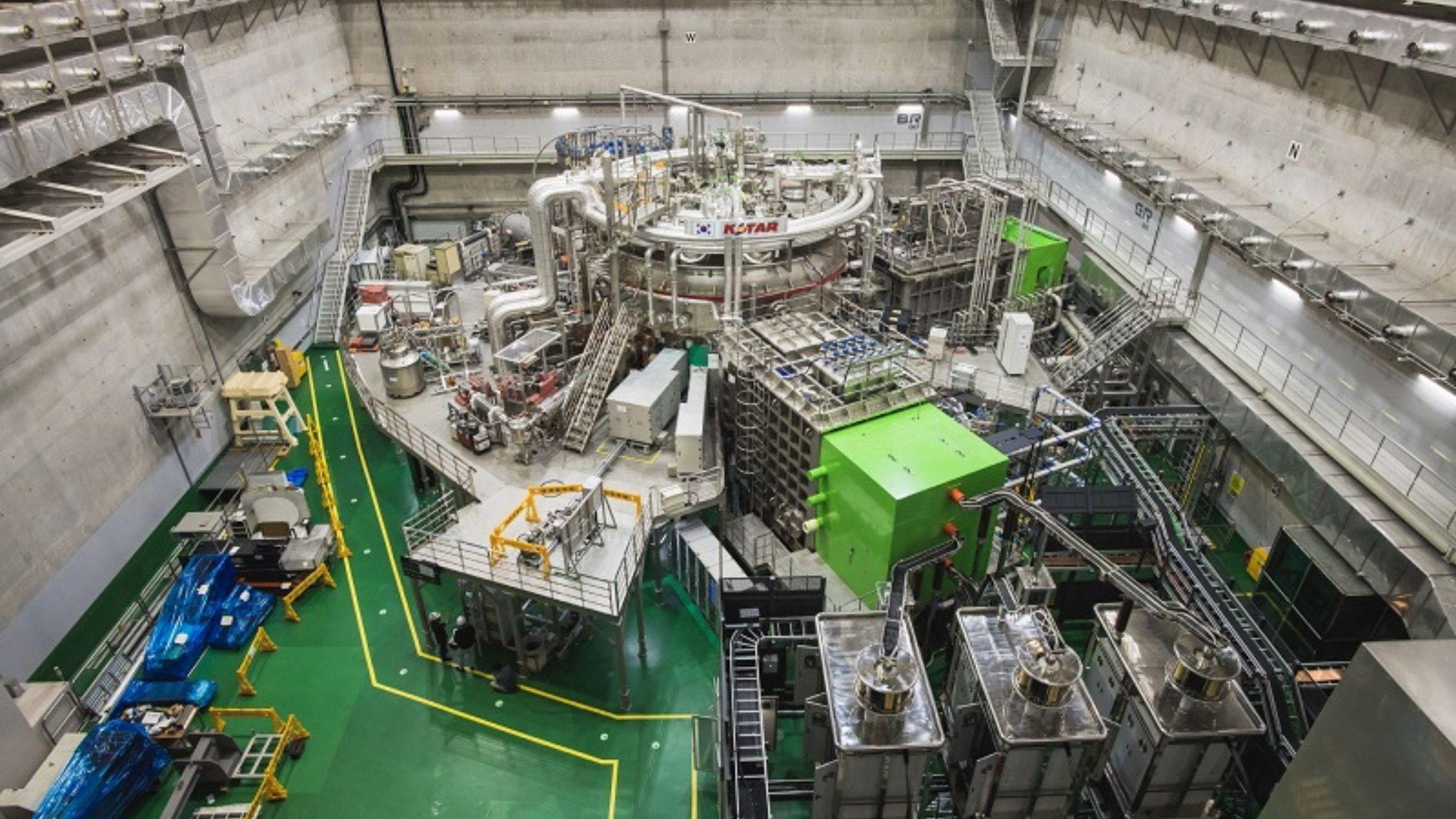
By accelerating the development of fusion energy, the country seeks to secure its energy sovereignty and play a pivotal role in the decarbonized energy landscape. Current research focuses on creating large fusion facilities, including projects at the Korean Superconducting Tokamak Advanced Research (KSTAR) and the International Thermonuclear Experimental Reactor (ITER). The government plans to construct a demonstration nuclear fusion reactor (DEMO) in the 2030s and achieve commercial fusion power by the 2050s.
The government has outlined a comprehensive strategy focused on three main areas: technology innovation, industrialization, and ecosystem development.
First, the government will launch the ‘Fusion Engineering Innovation Project’ to spearhead global fusion research and engineering. This project aims to support the development of critical technologies, such as tritium breeders and blanket modules, essential for constructing fusion reactors.
The project seeks to enhance the practical application and commercialization of fusion technologies by leveraging the advanced engineering capabilities of private sector firms alongside public research institutions.
The government is also introducing a ‘Civil and Public Cooperation Plug-in Program’ to support private sector innovation and link it with public fusion research efforts. Under this program, private consortia will lead research initiatives, with public institutions assisting in applying newly developed technologies to fusion reactors. This collaboration is expected to boost the export potential of domestically developed core components and equipment to international markets.
Furthermore, the government plans to accelerate the digital transformation of nuclear fusion research by utilizing the nation’s advanced digital technologies. This includes the development of virtual fusion reactors using digital twin technology to improve design precision and verification reliability.
Additionally, artificial intelligence will be employed to create standardized operational protocols for fusion reactors. Efforts will also be made to develop remote diagnostic technologies capable of monitoring the status of fusion reactors operating in extreme environments, ensuring safe and efficient reactor management.
Also read:
- AI-Powered Dejaview: Predicting Crime Before It Happens in South Korea
- Hyundai Mobis Unveils World’s First Airbags for Purpose-Built Vehicles
- Ex-Samsung Engineer Sentenced to 6 Years for $24.5M OLED Technology Leak
- LG Electronics Enters Smart Factory Market with $725 Million Sales Goal by 2030
- SK Group Reshapes Energy Sector with Major Merger