
Korean beauty has moved from a niche category discovered online to a mainstream U.S. retail phenomenon. Its next lesson for Korean startups may not be about marketing, but about how product innovation, cultural relevance, digital discovery and local distribution can work together to build demand in a foreign market.
South Korea’s cosmetics exports reached a record US$11.43 billion in 2025, rising 12.3% year over year. The U.S. has become an increasingly important destination, with American consumers now buying Korean beauty products at a scale that has pushed K-beauty beyond its earlier niche status.
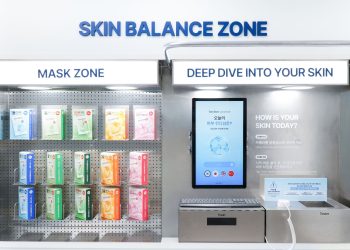
The latest development illustrates how far that journey has progressed. On August 20, Sephora began selling 19 Olive Young-curated Korean beauty brands across more than 500 U.S. stores and Sephora.com. The selection was based on product performance, consumer popularity and trend leadership in Korea. This is more than another retail expansion. It demonstrates that Korean brands can move from being discovered through social media and cross-border e-commerce to becoming part of mainstream American retail.
The bigger question for Korea’s startup ecosystem is whether that playbook can work beyond beauty.
K-Beauty’s Advantage Was More Than K-Culture
It would be easy to attribute K-beauty’s U.S. success entirely to the global popularity of K-pop and Korean entertainment. Cultural familiarity certainly helped, but it does not explain the entire trajectory. Korean beauty companies combined cultural momentum with a product proposition that could stand on its own. Frequent product launches, distinctive formulations, competitive pricing and a strong focus on skincare created reasons for consumers to try Korean products beyond their country of origin.
Digital platforms then provided a relatively inexpensive way to create discovery. Consumers could encounter a Korean product through TikTok, YouTube, creators or user reviews before ever seeing it in a physical store. Once demand became visible, retailers had an incentive to bring those products onto their shelves.
The resulting cycle was powerful:
digital discovery → consumer trial → social validation → retail demand → wider distribution
The current Sephora and Olive Young partnership represents the next stage of that cycle. Olive Young brings knowledge of which products and brands are performing in Korea, while Sephora provides access to a large established U.S. retail network.
The Real Playbook Is About Rebuilding Local Relevance
This is where K-beauty’s experience becomes relevant to Korean startups in other sectors.
Masatsune Shironishi, Vice President and Country Manager for Japan at Nexxen, told KoreaTechToday that “The core lesson extends well beyond Japan: reputation earned in a home market, or even globally within a specific category, doesn’t automatically travel with a brand into a new market. It has to be re-established through consistent presence across the screens and touchpoints that matter in the new market itself.”
His observation points to one of the most difficult parts of international expansion.
A Korean startup can have strong customer reviews, domestic sales and a recognizable name in Seoul, but none of those automatically establish trust with an American customer.
Nexxen’s recent research illustrates the broader problem. While 61% of U.S. consumers surveyed found Japanese brands appealing and 67% considered them more innovative than other international brands, visibility varied significantly by category. The research also found that U.S. consumers considered availability and clear English-language communication important elements of local relevance.
Korean startups face a similar challenge. Being Korean can generate curiosity, but it cannot substitute for local relevance.
Buldak Shows the Model Can Travel Beyond Beauty
Korean food offers evidence that some elements of the K-beauty model can work elsewhere. Samyang Foods’ Buldak became a global phenomenon after gaining traction through user-generated content, mukbang videos and viral challenges. That online attention subsequently helped the product expand into mainstream U.S. grocery retail.
In 2024, Samyang’s U.S. sales increased 127% to approximately US$280 million, according to reporting on the company’s expansion. The brand has also adapted products for American consumers, including Buldak Mac & Cheese launched through Walmart.
The important lesson is not that every Korean company needs to become viral. It is that digital discovery can reduce the distance between an unfamiliar Korean product and a mainstream American consumer. Once demand is established, distribution becomes the next challenge.
What Korean Startups Can Actually Copy
The K-beauty model is transferable in parts, but not wholesale. Other Korean consumer startups can borrow several principles:
- Digital-first discovery: Use creators, communities and social platforms to establish awareness before expensive mass-market expansion.
- Fast consumer feedback: Treat early customers as a source of product and positioning intelligence.
- Local adaptation: Adjust packaging, messaging, product formats and customer experience to the target market.
- Distribution partnerships: Use established retailers and platforms to move from online awareness to physical availability.
But some advantages are difficult to reproduce. K-beauty benefited from an existing cultural ecosystem, Olive Young’s role as a trend curator and years of accumulated consumer awareness. A Korean software startup, healthtech company or hardware brand cannot simply import those advantages. That makes localization much more than translation.
Korea’s Startup Ecosystem Is Already Becoming More Global
The shift is particularly relevant because Korean startups are increasingly entering foreign markets earlier. Startup Alliance’s 2026 analysis of 165 Korean-founded startups headquartered in the U.S. found that 85.5% were founded locally in the United States, rather than moving there later. The report described this as a growing “Born Global” approach in which startups seek to validate products, build networks and access capital in the U.S. from the beginning.
This suggests that the next generation of Korean companies may not follow the traditional path of dominating Korea first and expanding overseas later.
But being born global does not mean being locally understood.
Shironishi told KoreaTechToday that “Deeper localisation, backed by audience insight and pre-campaign testing, remains relatively rare. And growth ambition often runs ahead of the brand-awareness work needed to support it; advertisers prioritise revenue and new customer acquisition before they’ve built the familiarity that makes that growth sustainable.”
For Korean startups, that distinction could become increasingly important as U.S. expansion moves earlier in the company lifecycle.
K-beauty’s U.S. success offers Korean startups an important blueprint, but not a shortcut. Its biggest lesson is not that American consumers automatically want Korean products. It is that product differentiation, cultural familiarity, digital discovery, consumer validation and local distribution can reinforce one another until a foreign product becomes locally relevant.
Buldak suggests that this model can extend into food. Other categories may follow, but each will need to establish its own reason for American consumers to discover, trust and repeatedly choose the product. The challenge for Korea’s next global startups is therefore not to become the next K-beauty brand.
It is to understand which parts of K-beauty’s journey are repeatable and which were unique to the category’s cultural moment. Korean companies increasingly have the technology, products and ambition to compete globally. The next competitive advantage may come from something less obvious: their ability to understand the market they are entering well enough to become locally relevant without losing what made them Korean in the first place.