
Program links leading AI researchers with Kakao’s internal teams as the company pushes forward with its Kanana AI ecosystem
Kakao has launched Kanana Scholar, a new artificial intelligence collaboration initiative aimed at strengthening ties with academic experts and emerging talent. The program is designed to create a structured channel through which the company can exchange ideas with universities and researchers while shaping the future direction of its AI technologies.
The initiative reflects Kakao’s broader effort to expand its AI capabilities at a time when technology companies worldwide are accelerating investment in large-scale models and AI-powered services. By bringing academic researchers into the discussion, Kakao hopes to combine industrial experience with academic research insights to improve both technological development and long-term strategy.
As part of the launch, the company recently held the inaugural meeting for the program’s expert advisory group, where participants discussed the group’s advisory role and finalized the agenda for the year. The program itself will operate around two pillars: an expert advisory council and academic exchange initiatives aimed at students and young researchers.
Advisory group formed with leading Korean AI researchers
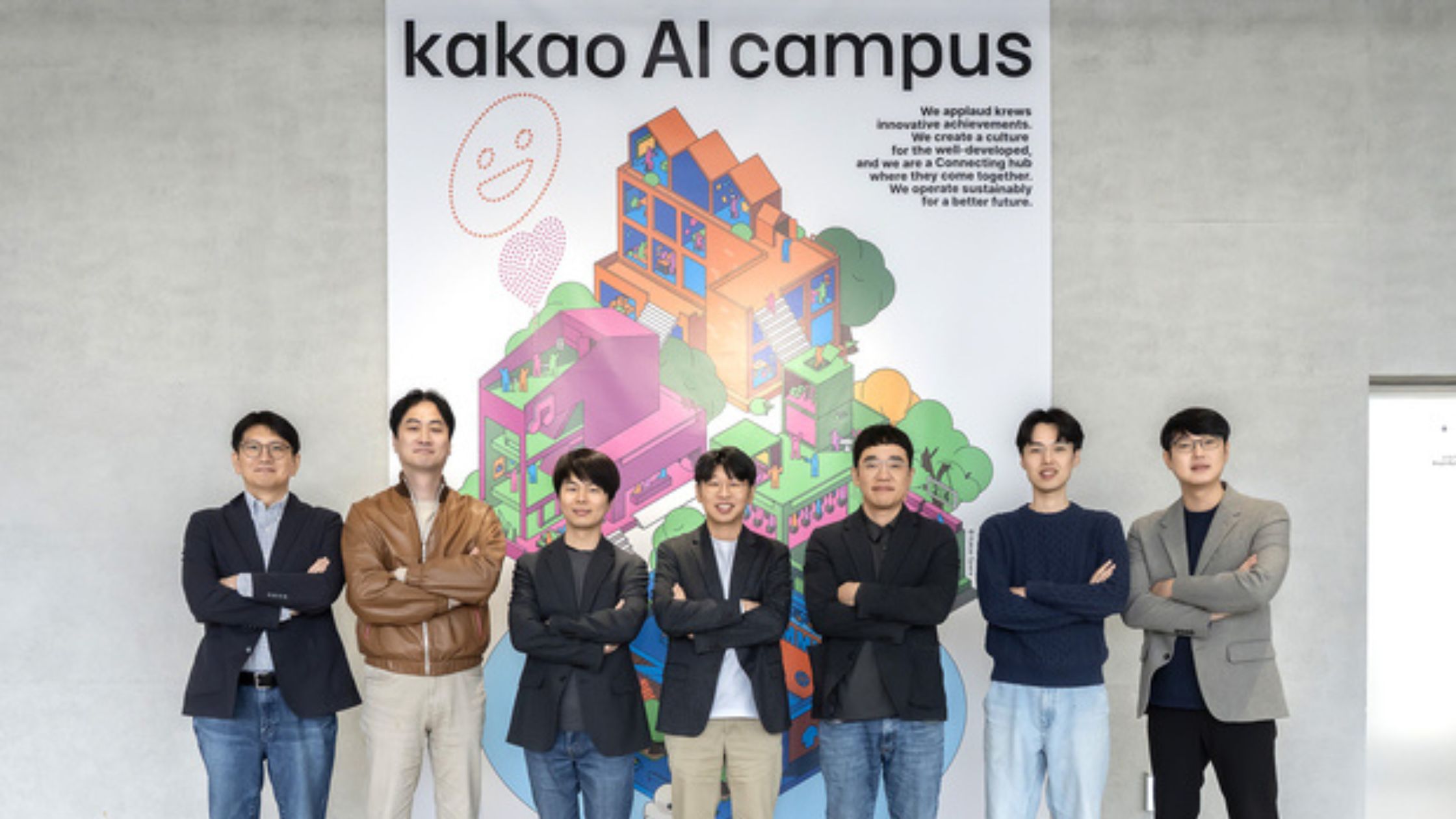
At the core of Kanana Scholar is an advisory group composed of seven professors specializing in artificial intelligence and computing from major South Korean universities. The group will act as a consultative body reviewing Kakao’s AI technologies and services and providing recommendations on future development.
The advisory council includes researchers from several of the country’s leading institutions:
- Professor Kim Sun-joo — Yonsei University
- Professors Lee Joo-ho, Shin Jin-woo, and Kim Seung-ryong — Korea Advanced Institute of Science and Technology (KAIST)
- Professor Jang Jun-hyuk — Hanyang University
- Professors Joo Han-byul and Choi Jong-hyun — Seoul National University
The professors bring expertise across key fields including machine learning, computer vision, and large-scale computing systems. According to Kakao, their role will be to provide advice across the company’s AI technology stack as well as its AI-driven services.
Kakao held the program’s official launch ceremony on March 6 at its AI campus, where participants confirmed the advisory direction and major discussion topics for the year.
Focus on next-generation AI technologies
One of the main goals of Kanana Scholar is to provide strategic input on Kakao’s evolving AI roadmap. Future discussions under the program are expected to focus on several core technologies that the company sees as central to its AI ecosystem.
These include:
- Kanana foundation models, the company’s large-scale AI models designed to power multiple services
- On-device AI, which allows AI capabilities to run directly on smartphones or other devices
- Agentic AI, systems capable of autonomously planning and completing tasks
- AI safety, focusing on reliability, transparency, and responsible deployment
These themes reflect wider global trends in the AI industry, where companies are increasingly focusing not only on powerful models but also on efficiency, safety, and real-world applications.
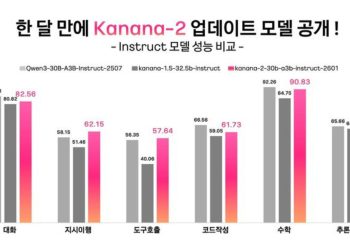
The Kanana models themselves are part of Kakao’s broader push to build an in-house AI ecosystem. The company has been developing several versions of the model and integrating them into services across its platform, including messaging, content, and productivity tools.
Bridging academic research and industry challenges
Researchers who participated in the launch emphasized that closer collaboration between academia and industry is becoming increasingly important as artificial intelligence expands across digital services.
“As AI rapidly spreads across services and platforms, corporate challenges and academic research topics are becoming increasingly intertwined,” participating professors said during the event.
They added that stronger connections between industry needs and academic research could help generate more practical outcomes.
“We expect tangible results when industry problem awareness and academic research are organically connected, and we hope the Kanana Scholar advisory program will provide a foundation for such cooperation,” they said.
Building a long-term AI talent pipeline
Beyond the advisory group, Kakao plans to expand the initiative into broader academic engagement programs aimed at students and young researchers.
The company is preparing a series of exchange activities that may include lectures, research discussions, and networking events featuring speakers from various fields. These programs are intended to provide learning opportunities for students while also helping Kakao build stronger connections with future AI talent.
A Kakao official said the company expects the collaboration with top academic experts to help clarify the strengths and direction of its AI efforts.
“We expect to refine Kakao AI’s strengths and direction through continuous discussions with Korea’s leading AI and ICT experts,” the official said. “We will continue exploring the future development of AI technologies and services together through various programs involving the broader academic community.”
The launch of Kanana Scholar also highlights how South Korean technology companies are strengthening ties with universities as competition in artificial intelligence intensifies globally.
By creating a formal advisory structure with academic researchers, Kakao appears to be aiming for deeper collaboration that goes beyond traditional research partnerships. The approach allows the company to test ideas, evaluate technological directions, and access academic expertise while continuing to develop its own AI models and services.
As AI increasingly becomes a core growth engine for technology companies, initiatives like Kanana Scholar may play an important role in shaping how research insights translate into real-world products.
For Kakao, the program represents both a knowledge exchange platform and a strategic step toward building a stronger domestic AI ecosystem.