
The company outlines how AI-powered warehouse systems are enabling predictive, real-time logistics operations
South Korea’s warehouse automation market is entering a phase of rapid acceleration, projected to grow from $402.4 million in 2023 to $1.54 billion by 2030 at a 22.4% CAGR, as e-commerce giants like Coupang and CJ Logistics push the limits of ultra-fast fulfillment. At the center of this shift is the rise of “dawn delivery”—overnight fulfillment models that demand near-zero latency across warehouse operations.
This transformation is also being driven by advances in artificial intelligence. A joint study by Massachusetts Institute of Technology and Mecalux found that AI is already embedded in 60% of warehouses globally, with organizations increasingly relying on it to improve speed, accuracy, and operational control. As pressure mounts in high-performance markets like South Korea, these capabilities are rapidly shifting from competitive advantage to operational necessity.
Against this backdrop, Spain-based intralogistics firm Mecalux is positioning its AI-enabled warehouse management system (WMS) to address these evolving demands, following its fifth inclusion in the Magic Quadrant for Warehouse Management Systems by Gartner. As South Korea’s logistics and manufacturing sectors accelerate their transition toward smarter, more integrated operations, the role of predictive, AI-driven warehouse systems is becoming increasingly critical.
From Reactive to Predictive Warehousing
In South Korea, the rise of early-morning delivery models—where orders are fulfilled overnight and delivered by 7 AM—has transformed warehouses into high-pressure, real-time execution environments. Traditional systems that simply respond to demand are increasingly inadequate.
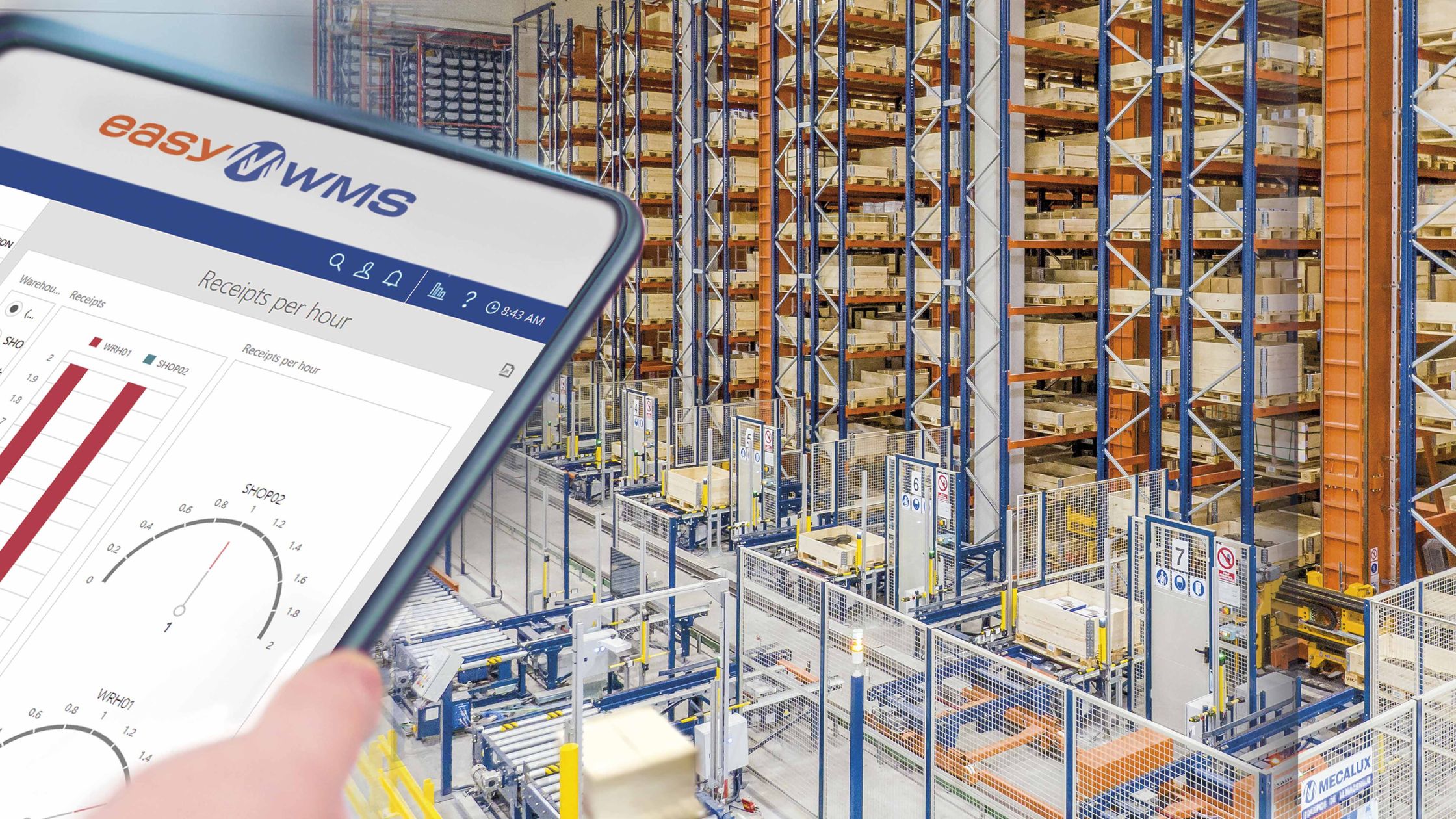
According to José Luis Santiago, Director of Mecalux Software Solutions, the company’s Easy WMS, powered by its generative AI layer “Easy AI,” is designed to address exactly this shift.
“South Korea’s ‘dawn delivery’ model requires extremely precise, high-speed warehouse operations,” Santiago told KoreaTechToday. “Easy AI helps logistics managers move from reactive decision-making to predictive execution by analyzing operational data in real time and identifying patterns that can anticipate demand, workload peaks, and order-preparation needs.”
By anticipating bottlenecks before they occur, such systems allow warehouse operators to optimize picking strategies, prioritize urgent orders, and allocate resources more efficiently—reducing response times in environments where minutes can define service quality.
Generative AI as a Decision-Making Interface
While AI adoption in logistics is not new, much of it has traditionally focused on classification and automation tasks. Mecalux is instead emphasizing the role of generative AI as an interface between humans and warehouse systems.
“Generative AI improves the way warehouse teams interact with the WMS by making information easier to access, interpret, and act on,” Santiago said. “Rather than requiring users to navigate complex dashboards, it enables more intuitive interactions that accelerate decision-making during peak hours.”
In practice, this approach reduces the cognitive burden on operators and managers, enabling faster interpretation of real-time warehouse conditions and quicker responses to operational disruptions—an increasingly important capability in high-volume fulfillment environments like those in South Korea.
Aligning with Korea’s Smart Factory Evolution
The growing complexity of warehouse operations is closely tied to South Korea’s broader push toward smart factories and digitally integrated supply chains. As manufacturing becomes more automated and data-driven, warehouses are evolving from static storage facilities into dynamic, intelligent nodes within the production ecosystem.
This convergence is driving demand for software platforms that can integrate with automation systems, provide real-time visibility, and support increasingly complex fulfillment models.
Mecalux’s Easy WMS is designed to operate across both manual and automated facilities, integrating with warehouse execution systems (WES) and warehouse control systems (WCS) to manage everything from inventory flows to machine-level operations. Its cloud-based architecture also enables real-time monitoring and scalability—key requirements for companies undergoing digital transformation.
Beyond Recognition: What Gartner Signals About Mecalux
Mecalux’s repeated appearance in the Magic Quadrant reflects more than industry recognition; it signals the company’s ability to operate in complex, large-scale logistics environments.
“If we had to highlight one key capability, it would be the ability of our software to adapt to highly complex logistics environments while maintaining operational efficiency, traceability, and integration across the supply chain,” Santiago said.
“Companies today need warehouse technology that can grow with them, connect with automation systems and enterprise platforms, and support increasingly demanding fulfillment models. Mecalux has remained focused on developing a robust, flexible, and innovation-driven WMS that helps customers improve productivity, accuracy, and decision-making in real-world operations. That combination of technological depth and practical impact is what has helped us maintain a strong position across multiple reports,” he added.
As South Korea continues to push the boundaries of logistics performance, such adaptability is becoming a prerequisite rather than a differentiator.
With rising expectations around delivery speed, accuracy, and operational transparency, South Korea is emerging as one of the most demanding environments for warehouse technology providers. As logistics systems grow more complex, the ability to unify data, automation, and decision-making within a single platform is becoming increasingly important. Solutions like Mecalux’s Easy WMS—designed to connect warehouse execution, control systems, and AI-driven insights—reflect a broader industry shift toward tightly integrated, intelligent operations. In markets like South Korea, where fulfillment speed and accuracy are non-negotiable, this convergence is likely to define how next-generation supply chains are built and scaled.