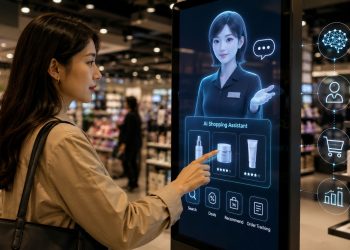


As Korean technology companies move AI agents from recommendation toward transactions and execution, marketplaces could evolve from directories of human capabilities into intelligent systems that coordinate work.
For decades, marketplaces have been built around a relatively simple sequence: users search, compare, select and transact. Whether hiring a freelancer, booking a service or purchasing a product, the marketplace’s primary role has been to reduce the friction of finding the right provider.
AI is beginning to challenge that model. In August, Kakao was selected by South Korea’s Ministry of Science and ICT and the National Information Society Agency to build an AI Agent Marketplace with Kakao Enterprise. The approximately KRW 11 billion project is designed to support the entire agent lifecycle, from registration and verification to discovery, combination, execution and settlement. The platform is also expected to support external APIs and MCP, while AI tools will undergo security reviews, sandbox validation and hallucination controls.
The significance is larger than another AI platform launch. It suggests that the marketplace itself is becoming an execution layer.
The traditional marketplace assumes that users know what they need to search for. AI changes that assumption. Instead of selecting a category and browsing providers, a user can describe an outcome in natural language and allow an AI system to interpret the requirement, identify the capabilities needed and potentially initiate the transaction.
South Korea is already seeing this transition in commerce. NAVER’s AI Shopping Agent has evolved beyond product discovery and summaries toward proactive, context-aware recommendations. Its latest capabilities incorporate real-time delivery information, allowing the agent to narrow choices based on when a customer needs an item and even identify ordering deadlines. NAVER said conversations with the shopping agent increased about 60% between June and September 2026, while transaction value increased 82%.
The distinction matters because recommendation is only one step toward fulfillment.
An AI that can understand intent but cannot act remains a search interface. An AI that can discover, select, transact and coordinate begins to look more like an intermediary.
Korea Is Building the Transaction Layer
Mastercard’s recent demonstration in South Korea illustrates how quickly that boundary is moving. In the country’s first live authenticated agentic transaction announced by Mastercard, an AI agent searched transportation options, booked a ride from Incheon International Airport to a hotel in Gwanghwamun, Seoul, and completed the payment through Mastercard’s Agent Pay infrastructure. The important development is not the ride itself. It is the chain of actions. The user did not simply receive a recommendation. An agent searched, selected, booked and paid.
That creates a new requirement for marketplaces: they need to support not only discovery, but identity, authorization, payment, verification and accountability. Kakao’s planned agent marketplace reflects the same shift by putting verification, execution and settlement alongside discovery.
The Supply Side Is Changing Too
The transformation is not limited to how customers find services. AI is also changing what gets outsourced in the first place. A 2026 KISDI analysis using transaction data from Korean freelance platform Kmong found that outsourcing transactions for freelancers in AI-related design occupations declined approximately 21.73%, while monthly transactions in the AI design category fell around 20%. KISDI concluded that the decline was driven largely by clients bringing more AI-enabled work in-house, rather than simply by increased freelancer competition.
This creates a fundamental tension for marketplaces. AI can increase the efficiency of matching supply and demand, while simultaneously reducing the amount of demand that needs to reach the marketplace. The implication is that marketplaces may need to move upward in the value chain, from helping users locate people to helping them assemble the capabilities required to accomplish an outcome.
The Marketplace as an Orchestration Layer
This is where the emerging model becomes particularly relevant to the future of work. While conversing with KoreaTechToday, Radhouane Alaadeen K, Founder and CEO of TaskiLi and LINIS, described a model that goes beyond separating consumers, freelancers and businesses into different marketplace categories:
“TaskiLi is being built around a simple idea: if you need something done, you should be able to describe what you need and find the right way to get it done. Today, that means individuals looking for services and professionals offering those services. But the platform is not limited to freelancers or everyday local tasks. The longterm vision includes specialists, agencies, businesses, AI services, and eventually more complex projects where humans and AI work together. We are not trying to build three separate marketplaces. We are building one platform around the need itself. The user starts with what they want to accomplish, and TaskiLi determines how that need can be fulfilled. At this stage, our focus is on building the core transaction and execution loop properly, then using real usage to understand where demand and supply develop naturally.”
The idea reflects a broader industry transition. Upwork’s August 2026 launch of its MCP server allows AI tools to access its marketplace directly, turning a request inside tools such as Claude, ChatGPT or Cursor into a potential job post, talent search and offer.
Upwork’s July hiring data also showed clients becoming increasingly specific about the roles and capabilities required to deliver AI-related outcomes, including AI developers, engineers and AI video creators. The emerging model therefore has less to do with replacing marketplaces than changing their function.
The Hardest Problem May Be Trust
If AI becomes responsible for deciding which capability should fulfill a request, the marketplace inherits a much harder responsibility: determining whether that capability is reliable. Kakao’s emphasis on security reviews, sandbox testing, hallucination controls and continuous re-verification demonstrates how verification becomes central once agents can execute actions rather than simply provide information.
For Korean startups and marketplaces, this could become a critical competitive layer. The value of a platform may increasingly depend not on how many listings it contains, but on whether its AI can understand intent, select appropriate capabilities, coordinate execution and provide enough trust for users to delegate decisions.
The Marketplace After Search
The next generation of marketplaces may therefore look very different from today’s platforms. Search made marketplaces efficient by helping users find the right provider. AI could make them more consequential by helping users avoid knowing which provider they need in the first place.
That shift moves the competitive question from Who has the largest supply? to Who can most reliably turn an ambiguous request into a completed outcome? For South Korea’s rapidly developing agent ecosystem, that distinction could determine whether AI marketplaces remain sophisticated search engines or become something more fundamental: infrastructure for getting work done.