
Series of meetings in the US highlights Korea’s push for a stronger role in the global AI ecosystem
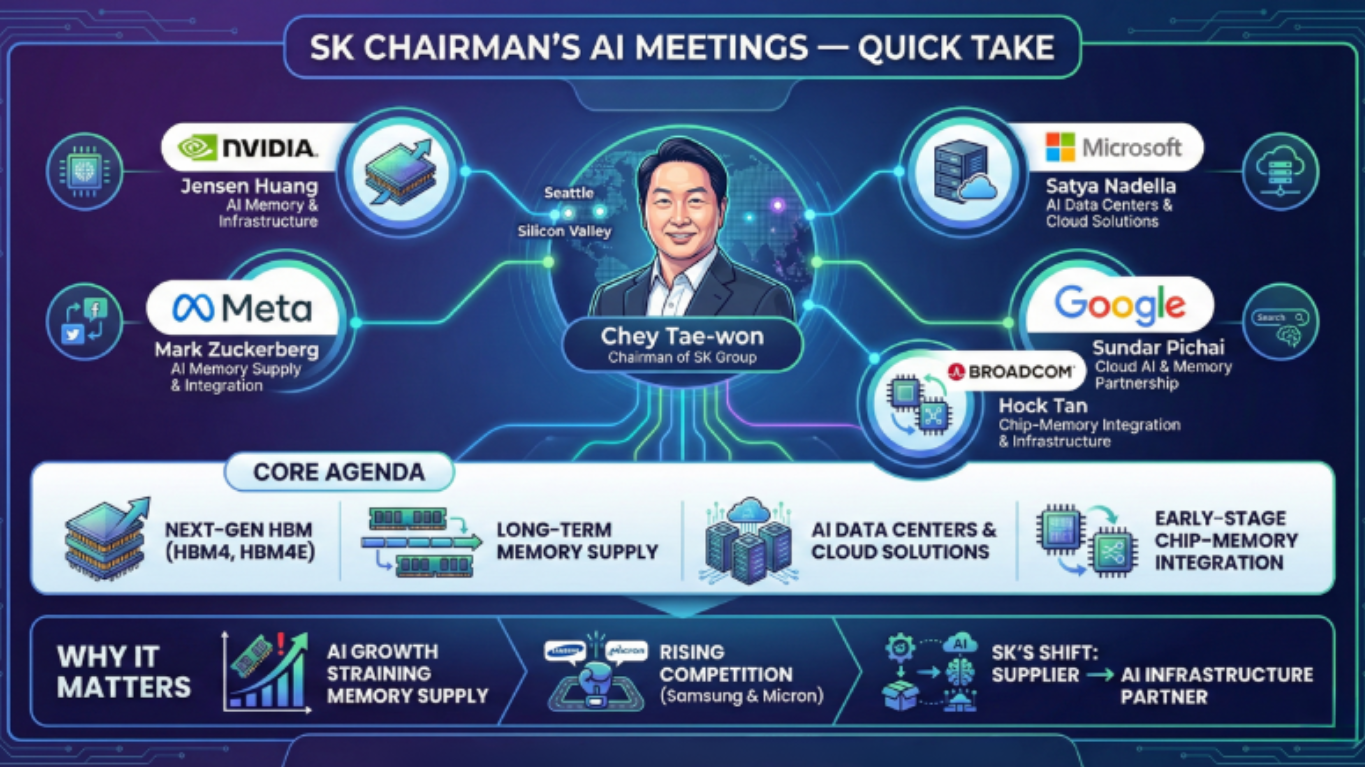
Chey Tae-won, chairman of SK Group, recently met with senior leaders of major U.S. technology companies — including Nvidia, Google and Microsoft — to discuss broader cooperation around artificial intelligence. The meetings, confirmed by SK hynix, took place over several days in Silicon Valley and Seattle earlier this month, and signal a concerted effort by SK to deepen its role in the AI technology ecosystem.
At the core of these talks was high bandwidth memory (HBM), a type of DRAM critical for high-performance AI processing. HBM is a key component in AI accelerators and data-center architectures, and SK hynix is among the world’s leading suppliers.
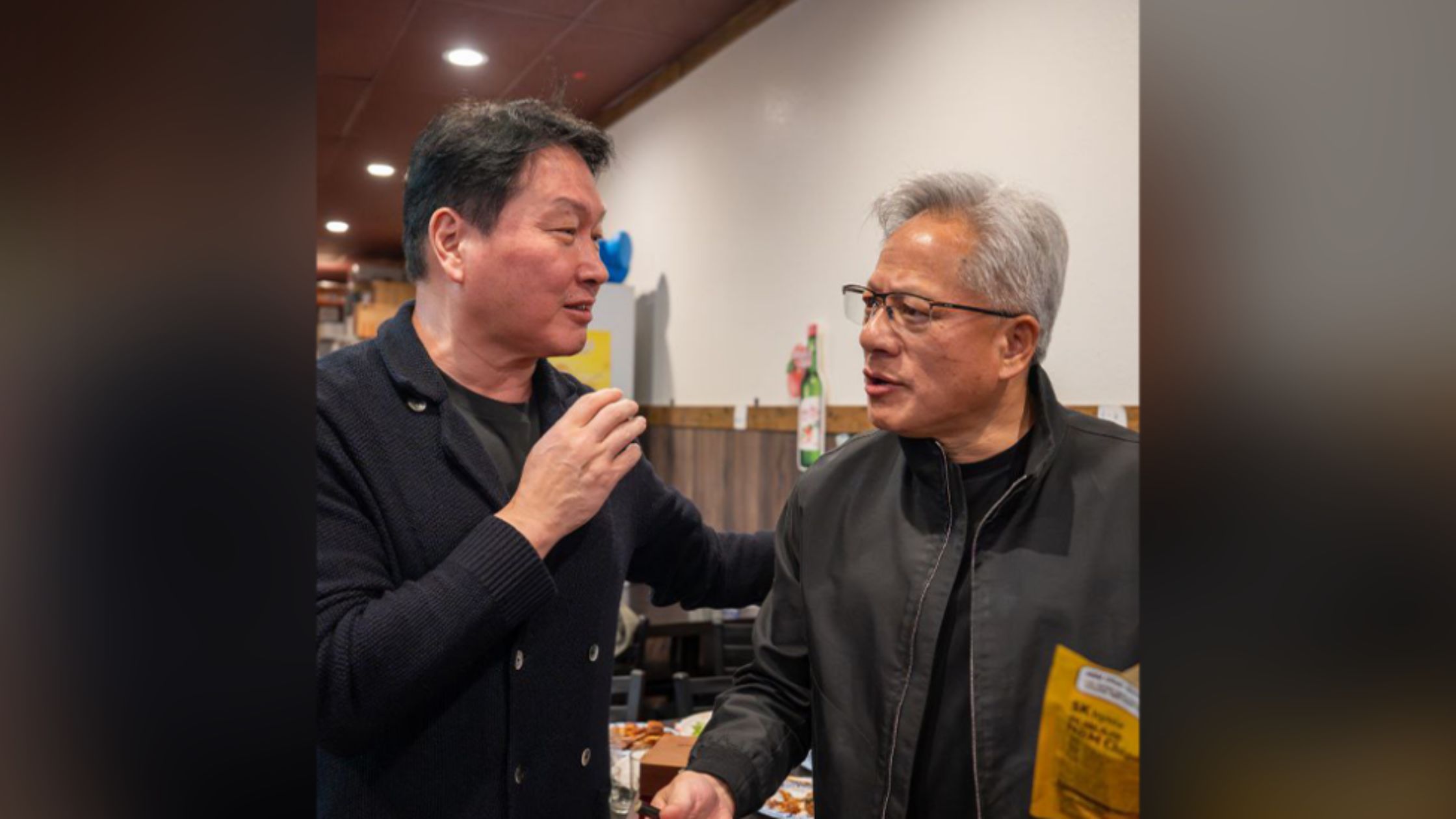
In a statement, SK hynix described its collaboration with Nvidia as having grown from a supply relationship into a strategic partnership.
“The partnership between the two companies, which began in the early days of HBM development when the market was still uncertain, has evolved beyond a simple supplier-buyer relationship into a strategic partnership that prioritizes collaboration from the product planning stage. Looking ahead, SK hynix plans to further expand the deep partnership it has built with NVIDIA in the AI semiconductor field to encompass the broader AI infrastructure landscape.”
It has shown how memory suppliers are trying to move up the AI value chain — from selling discrete components to working on integrated solutions that tie memory, chips and infrastructure together.
Talks Focus on Data Centers and Next-Generation HBM
Chey also held detailed discussions with Microsoft CEO Satya Nadella in Seattle. According to SK’s press materials, the focus was not just on HBM supply but on building stronger ties across AI data centers, cloud solutions and future AI accelerators.
SK’s engagement with Microsoft extended into discussions about Microsoft’s in-house AI hardware initiatives, such as its MAIA 200 AI accelerator. While specific agreements were not announced, both sides underscored the strategic benefit of closer cooperation.
In San Jose, Chey met Meta CEO Mark Zuckerberg to explore long-term memory supply commitments and technical alignment for next-generation AI infrastructure. SK hynix said the conversation covered future memory products, including HBM4 and HBM4E, and how to optimize them for Meta’s evolving data center architectures.
Meeting with Google CEO Sundar Pichai, Chey discussed the importance of stabilising long-term memory supply as a foundation for global AI data center expansion. Both executives acknowledged that securing consistent access to advanced memory chips — which cannot be quickly ramped up in production — is one of the key bottlenecks for AI infrastructure growth worldwide.
This point is increasingly relevant as other major memory manufacturers — such as Samsung Electronics and Micron Technology — begin shipping next-generation HBM4 memory chips, intensifying competition in the AI memory market.
Why Each Partnership Talk Matters
Chey Tae-won’s series of meetings with top U.S. technology executives was not a routine tour — each conversation served a specific strategic purpose within the rapidly changing AI hardware and infrastructure landscape.
🔹 Nvidia — Securing Deep Memory Integration
Chey’s meeting with Nvidia CEO Jensen Huang focused on expanding cooperation around high bandwidth memory (HBM). HBM remains a core bottleneck in AI system performance, supplying high-speed data access for AI accelerators. SK hynix’s ability to align next-generation HBM development with Nvidia’s roadmap helps ensure that SK’s memory products remain essential to the world’s leading AI processors. The relationship has already matured beyond vendor-buyer dynamics to include planning at the product level, reinforcing SK’s role in the broader AI supply chain.
🔹 Microsoft — Moving Into AI Infrastructure and Cloud Services
The talks with Microsoft CEO Satya Nadella went beyond memory supply to discuss AI data center construction, operations, and cloud-based solutions. This reflects SK Group’s desire to position itself not just as a component supplier, but as a partner in building and running AI infrastructure — a segment where major cloud providers are investing heavily as they scale their AI offerings. Cooperation here could translate into closer integration of SK technologies with Microsoft’s cloud and enterprise services.
🔹 Meta — Aligning Memory With Custom AI Platforms
In San Jose, Chey’s meeting with Meta CEO Mark Zuckerberg emphasized long-term HBM supply and optimization for Meta’s bespoke AI accelerator architecture, the Meta Training and Inference Accelerator (MTIA). Such technical alignment can ensure SK’s future memory products — including HBM4 and HBM4E — are designed to work efficiently with Meta’s internal hardware, strengthening SK’s foothold with a major hyperscaler and expanding cooperation beyond traditional DRAM and SSD supply.
🔹 Google — Stability Amid Supply Constraints
The discussion with Google CEO Sundar Pichai centered on securing long-term memory chip supply and potential investment cooperation. With global demand for AI data center capacity rapidly growing and memory production unable to scale instantly, stability of supply has become a strategic priority for hyperscalers like Google. Both sides acknowledged that advanced memory procurement is a key constraint for expanding AI infrastructure, and deeper collaboration could help mitigate these bottlenecks.
🔹 Broadcom — Early-Stage Design Collaboration
Although less publicized, Chey’s meeting with Broadcom CEO Hock Tan is meaningful because it touches on integrating SK’s memory technology into custom AI-dedicated chip architectures at early design stages. Close cooperation with a company focused on AI accelerators and networking solutions can help SK ensure its memory stacks are optimized alongside specialized computing logic — a step toward tighter horizontal integration in AI system design.
What It Means for South Korea’s Tech Industry
Chey’s meetings with leading US technology firms carry broader significance beyond SK Group’s immediate business interests. They reflect South Korea’s effort to preserve its strategic role in the global semiconductor supply chain at a time when AI infrastructure has become a central driver of chip demand. As AI accelerators grow more powerful, advanced memory — particularly high bandwidth memory (HBM) — has become a critical component that directly affects system performance.
For SK hynix, deepening engagement with companies such as Nvidia, Microsoft, Meta and Google is not only about securing purchase orders. It is also about ensuring its memory technology is integrated early into the design of next-generation AI chips and data center architectures. Early-stage collaboration can provide greater visibility into future demand and reduce the risk of being sidelined as chipmakers explore alternative suppliers or new memory technologies.
The timing is also important. Competition in the HBM market is intensifying, with rivals such as Samsung Electronics and Micron racing to supply advanced memory for AI accelerators. Long-term supply agreements and technical alignment with hyperscalers could help SK hynix defend market share and stabilize revenue in what is becoming a cyclical but strategically sensitive segment of the industry.
At a national level, these discussions highlight how South Korea’s semiconductor sector is increasingly tied to the trajectory of global AI development. As the United States pushes to expand domestic AI infrastructure and secure supply chains, Korean memory producers remain essential partners. Whether SK hynix can translate these high-level meetings into sustained technological and commercial advantage will likely influence Korea’s broader position in the evolving AI hardware landscape.