
New policy roadmap adds tougher heat alerts, faster disaster warnings, and AI-driven climate models
South Korea is moving to fundamentally redesign how weather risks are monitored and communicated, placing artificial intelligence at the center of public safety policy. The Korea Meteorological Administration (KMA) said it will integrate AI across its forecasting and analysis systems while tightening disaster alerts for extreme heat, heavy rainfall, and earthquakes, as climate-driven risks grow more frequent and severe.
The plan, outlined in the KMA’s 2026 policy roadmap and presented during a government briefing attended by President Lee Jaemyung, reflects a broader government effort to apply AI to core public services. Weather forecasting has emerged as a priority area, as authorities seek faster, more precise responses to climate-related emergencies.
New Heat Alerts Reflect Rising Health Risks
From June 2026, the KMA will introduce two new heat-related warnings aimed at better capturing extreme temperature conditions. A Severe Heatwave Warning will be issued when the perceived temperature is forecast to reach 38 degrees Celsius, exceeding the current heatwave threshold. A Tropical Night Advisory will also be added for cases where nighttime temperatures remain at or above 25 degrees Celsius for two consecutive days.
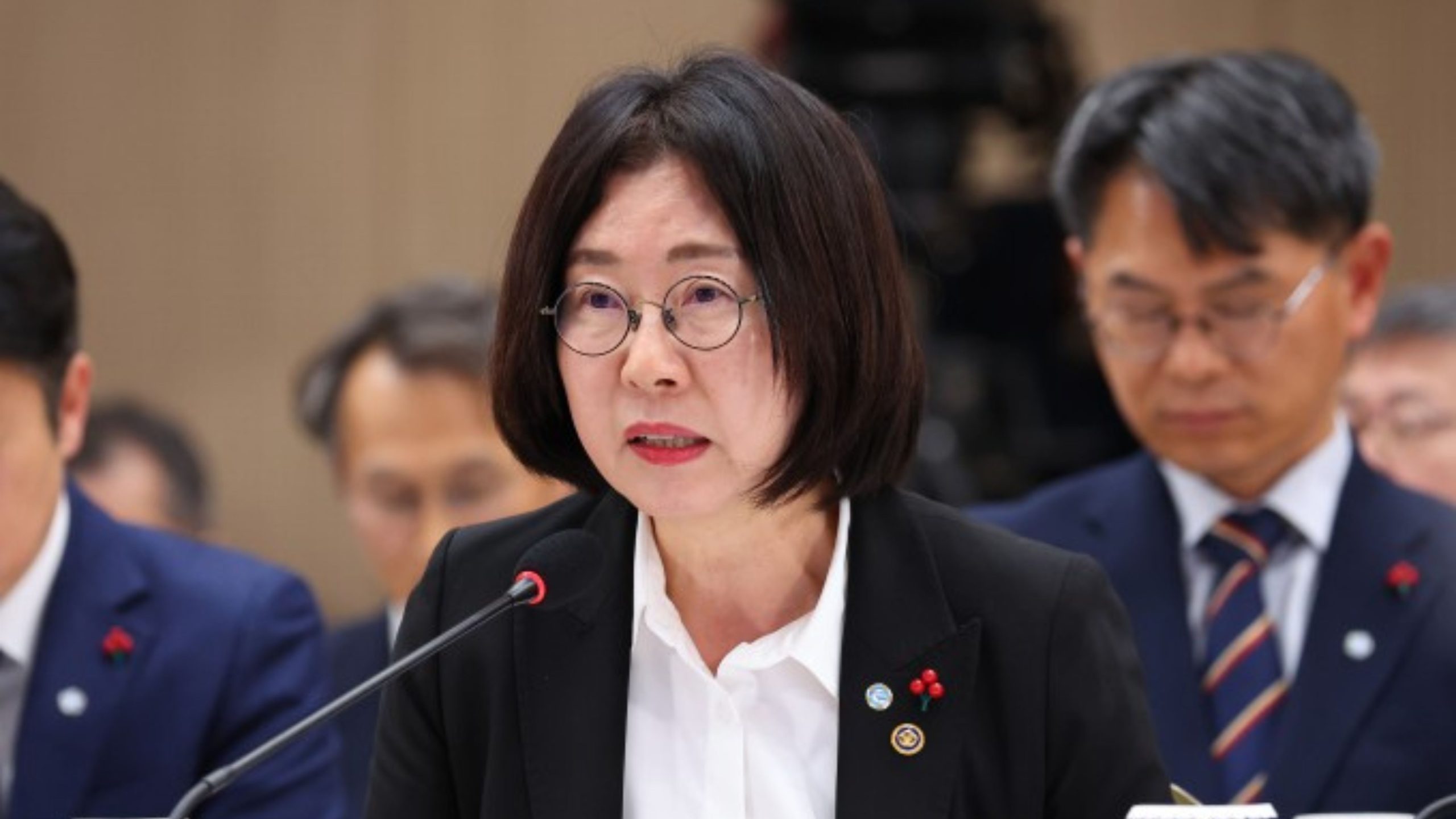
KMA Administrator Lee Mi-sun said the changes reflect growing concern over prolonged heat exposure. “When the body cannot recover from daytime heat during the night, the risk can reach a disaster level that threatens lives,” she said, noting that such conditions increasingly affect elderly and vulnerable populations.
Emergency Rainfall Alerts Raised as Extreme Events Multiply
The agency will also raise the level of emergency alerts for torrential rain, as short, intense downpours become more common. According to the KMA, rainfall exceeding 100 millimeters per hour occurred 16 times in 2024 and 15 times in 2025.
Starting in May, higher-level emergency disaster text messages will be issued when rainfall reaches 80 millimeters per hour with rapid intensification, or exceeds 100 millimeters in a single hour. The aim is to accelerate evacuations and emergency responses during sudden flood events.
More Granular Forecasting and Integrated Monitoring
To improve local accuracy, the KMA will subdivide special weather advisory zones in major regions, including the Seoul metropolitan area and Sejong, starting in June. Radar systems operated by the Ministry of Climate, Energy and Environment will also be integrated from March to strengthen monitoring of heavy rain and snow.
In parallel, development of South Korea’s next-generation numerical weather prediction model, which began in 2020, is scheduled for completion by December 2026, forming the backbone of future forecasting upgrades.
Faster Earthquake Alerts and Expanded Overseas Monitoring
Earthquake warning systems will see a major overhaul. On-site alerts previously limited to critical facilities such as nuclear plants and dams will be merged into the public early warning system, creating a two-tiered alert structure. Notification times will be shortened to within three to five seconds after initial detection.
The KMA will also expand overseas earthquake monitoring to include Japan’s Nankai Trough, an area widely viewed as high risk for a major seismic event. “There are increasing warnings that a large earthquake could occur there at any time,” Lee said.
Weather Data to Support Renewable Energy Policy
As part of South Korea’s climate and energy transition, the KMA will launch customized weather services for renewable energy following confirmation of the country’s 2035 emissions reduction targets. By the end of next year, the agency plans to produce AI-based wind data and renewable energy resource maps to support wind farm site selection.
Forecasts for solar radiation and wind conditions will also be provided to support power generation and demand forecasting through a dedicated renewable energy weather platform set to launch in September.
AI Becomes Core Forecasting Infrastructure
AI will underpin nearly all of the KMA’s reforms. The agency plans to combine its Korean numerical model with AI weather models from major technology firms and complete the design of an AI-based weather and climate foundation model by December. The system is intended to support forecasts ranging from ultra-short-term outlooks to three-month climate predictions, as well as longer-term climate projections.
“We will fully utilize advanced technologies such as AI to ensure that climate response is based on science,” Lee said, adding that the goal is to strengthen public safety as climate risks continue to escalate.
Image credits: Yonhap