
Collaboration signals strategic shift toward non-EV batteries as safety concerns grow in data centers and industrial sites
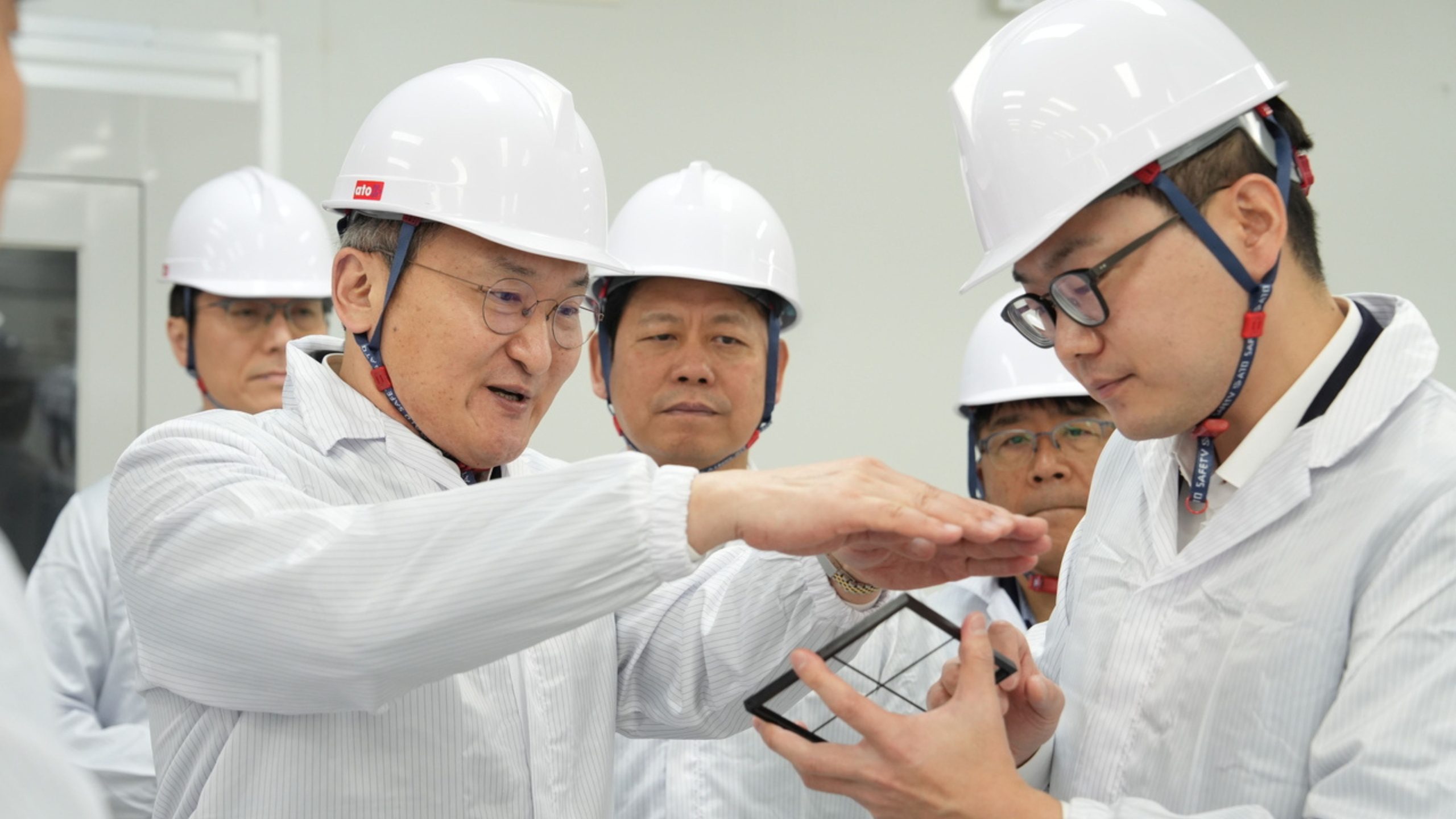
SK On and parent company SK Innovation said they have entered a partnership with domestic energy storage firm Standard Energy to broaden their presence in the energy storage system (ESS) market, responding to rising interest in battery technologies with improved fire safety. The companies formalized the cooperation through a memorandum of understanding signed at Standard Energy’s facility in Daejeon, agreeing to jointly work on the development of vanadium-ion batteries designed for high safety and power output in ESS applications.
A shift beyond lithium-based ESS
The partnership marks a move to diversify SK’s ESS battery portfolio beyond lithium iron phosphate (LFP) batteries by adding vanadium-ion batteries, which are widely viewed as having lower fire risk. The timing is notable, as SK On has been adjusting its broader investment plans amid a slowdown in the global electric vehicle market, including delaying the expansion of its battery plant in Seosan, South Chungcheong Province. The ESS segment is increasingly seen as a stable non-EV growth area, particularly for applications where safety is a top priority.
Why vanadium-ion batteries matter
ESS are widely used in data centers and industrial facilities, where systems must withstand repeated high-power charging and discharging cycles. In such environments, fire safety and operational stability are critical. Vanadium-ion batteries use a water-based electrolyte, which removes the risk of fire or explosion commonly associated with conventional lithium-ion batteries.
They are also well suited for short-duration ESS, which typically store and release electricity for less than four hours. These systems are commonly deployed in data centers and factories, where high output over short periods is required rather than long-term energy storage.
Division of roles under the agreement
The partnership is structured around each company’s technical strengths. Under the agreement:
- SK On will apply its mass-production experience across the battery supply chain, covering raw material sourcing, cell production, battery management systems, and advanced designs such as large-area cells.
- SK Innovation will concentrate on improving materials performance through the development of electrolyte additives and will also examine cost-saving measures, including the potential use of vanadium sourced from its refining operations.
The companies said this approach is intended to improve both performance and price competitiveness, two key barriers to wider adoption of alternative ESS technologies.
Proven technology, broader ambitions
Standard Energy’s vanadium-ion ESS technology has already been deployed in real-world environments. Systems have been installed in busy urban locations, including subway stations and indoor facilities with high foot traffic, under a government regulatory sandbox program, without recorded safety incidents. These deployments have helped validate the technology’s safety and reliability in conditions where lithium-based ESS have faced regulatory and public scrutiny.
Strategic implications
SK On CEO Lee Seok-hee said the collaboration would help expand the company’s ESS product range. “Through this cooperation, we will jointly develop vanadium-ion batteries for ESS with superior fire safety, further strengthening our product portfolio,” he said, adding that the company aims to deliver new value to customers based on globally competitive technology.
Kim Bu-gi, CEO of Standard Energy, said the partnership could help set new benchmarks for ESS safety. He noted that vanadium-ion batteries have complementary characteristics to lithium-ion systems and are particularly suited for environments such as data centers, indoor facilities, and dense urban areas, where both performance and safety are essential.
Taken together, the agreement suggests SK is positioning ESS—especially high-safety systems—as a longer-term growth pillar, at a time when volatility in the EV market is pushing battery makers to reassess where future demand will be most resilient.