
A consortium led by South Korea’s SK Innovation has been selected to develop a major liquefied natural gas (LNG) infrastructure and power project in Nghe An Province, Vietnam, in a move that underscores the company’s broader push into global energy markets. The Nghe An provincial government formally designated the group as developer of the Quynh Lap LNG Power Project, a roughly US$2.3 billion investment that combines power generation, LNG import capacity, and port infrastructure.
The consortium includes SK Innovation, PetroVietnam’s power generation affiliate PV Power, and Vietnamese partner Nghe An Sugar (NASU). The project is being described by local authorities as one of the largest foreign-invested energy ventures in the region to date.
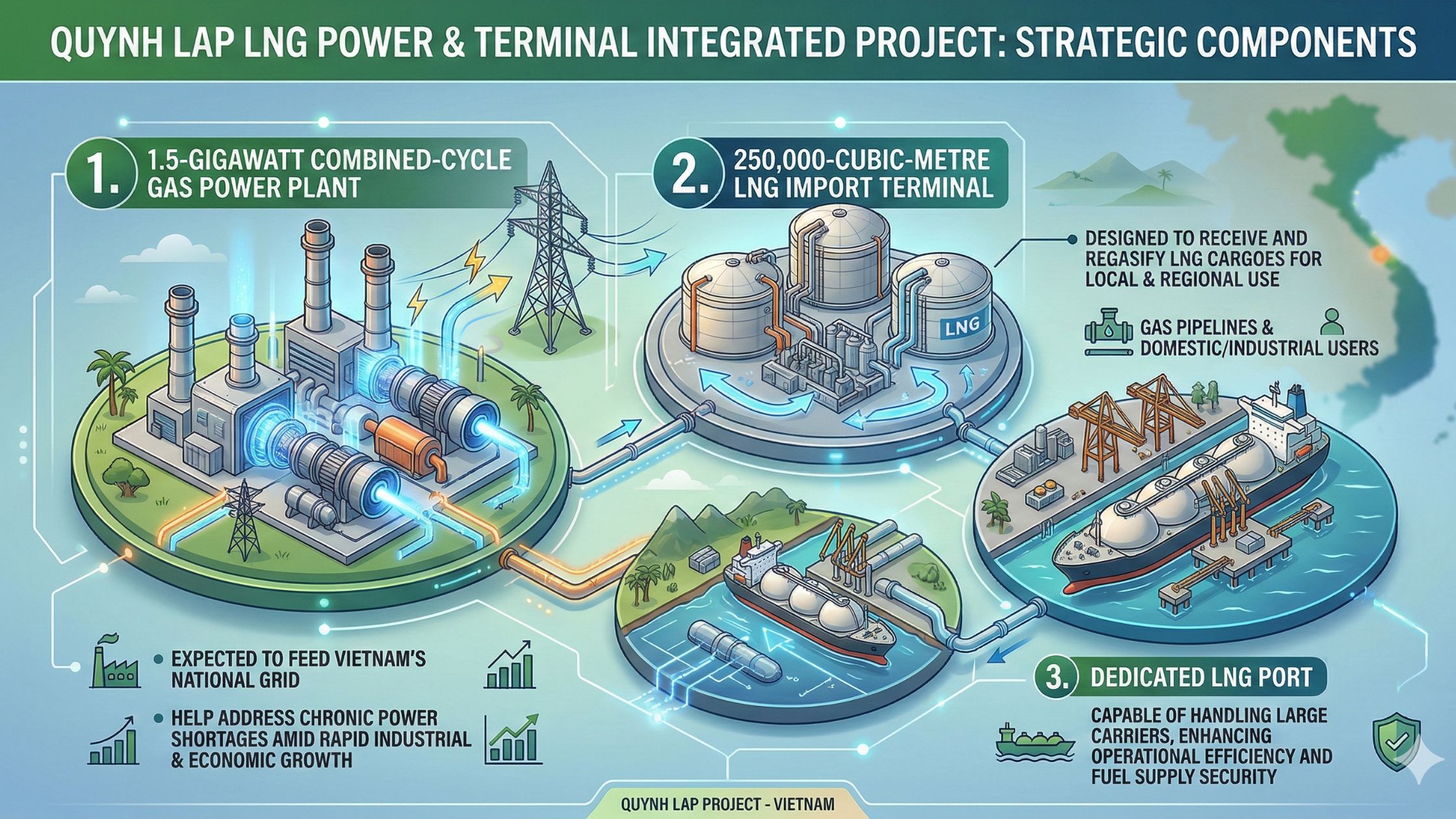
The Quynh Lap project comprises three interlinked facilities:
- A 1.5-gigawatt combined-cycle gas power plant, expected to feed electricity into Vietnam’s national grid, helping address chronic power shortages amid rapid industrial and economic growth.
- A 250,000-cubic-metre LNG import terminal, designed to receive and regasify LNG cargoes for local and regional use.
- A dedicated LNG port, capable of handling large carriers, enhancing operational efficiency and fuel supply security.
Construction is slated to begin in 2027, with full commercial operations targeted by 2030. The site lies roughly 220 kilometres south of Hanoi, strategically positioned to serve central and northern Vietnamese demand.
Why the Project Matters
Vietnam’s electricity demand has been rising rapidly, driven by population growth, urbanisation, and industrial expansion. Traditionally reliant on coal and hydropower, the country has moved LNG higher up the energy policy agenda to diversify its power mix and reduce the risk of supply shortfalls.
The Quynh Lap plant fits into Vietnam’s eighth national power development plan, which foresees multiple LNG facilities to meet growing baseload needs. By introducing a modern combined-cycle gas turbine plant, the project aims to deliver cleaner energy with higher efficiency than older thermal plants.
SK Innovation’s Strategic Perspective
For SK Innovation, the contract marks a key milestone in its global LNG strategy, reflecting years of relationship-building with Vietnamese authorities and energy partners. Over the past four years, the company has worked with the Vietnamese government to align long-term infrastructure planning with foreign investment frameworks.
An SK Innovation spokesperson said the project “demonstrates the strength of international collaboration and the competitiveness of SK’s integrated LNG value chain,” noting that close coordination with provincial officials and local partners will be critical throughout development.
The company has also said it is assessing the potential to operate the new LNG terminal as a regional fuel hub, serving neighbouring power plants and enhancing supply efficiency. Such a model would leverage SK’s broader LNG procurement and shipping capabilities.
Beyond Power Generation: Industrial Ecosystem Vision
The project is closely aligned with SK Group’s “Special Energy and Industrial Cluster” strategy, an approach that connects energy infrastructure to adjacent economic value chains. Under this model, stable power from LNG facilities is intended to support high-value sectors such as artificial intelligence data centres, logistics hubs, and advanced manufacturing.
This perspective reflects a shift from building standalone power assets to fostering integrated economic zones — blending energy supply with broader industrial development. It also represents SK’s efforts to export a domestic model of energy-industry linkage to overseas markets.
Regional and Global Context
The Quynh Lap development attracted attention from several overseas energy players during the early stages of the tender process in 2024, including companies from South Korea, Japan and the Middle East. After progressing through multiple review rounds, SK Innovation’s consortium was ultimately chosen following the final assessment conducted earlier this year.
Vietnam’s pivot toward LNG mirrors broader Southeast Asian trends, where governments seek reliable baseload alternatives to coal and hydropower while balancing environmental and economic imperatives. For South Korean energy firms, participation in such infrastructure builds links across ASEAN markets and supports export-oriented growth.
What’s Next
- Construction and financing: Groundbreaking is planned for 2027, with financing expected through a mix of equity contributions and project-level arrangements typical of large-scale energy infrastructure.
- Operational strategy: SK Innovation aims to grow its LNG processing and supply capacity from about 6 million tonnes annually to 10 million tonnes by 2030, reinforcing its role in global gas markets.
- Long-term energy mix: As Vietnam works toward cleaner energy and industrial expansion, the Quynh Lap facility will be a key test case for integrating LNG-based power with broader development aims.