
Galaxy Z TriFold enters a crowded premium foldables market as Chinese rivals accelerate innovation
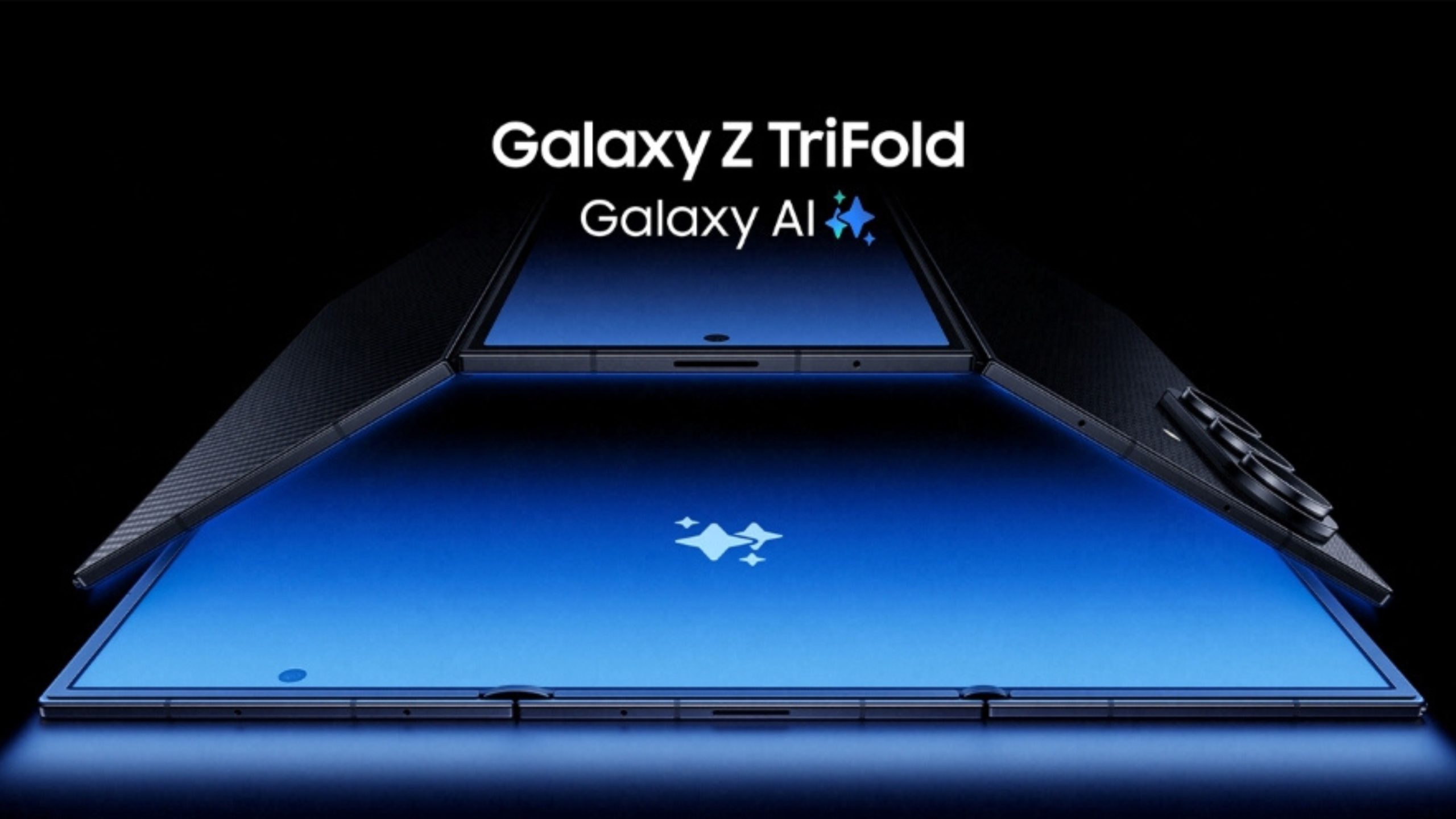
Samsung Electronics has unveiled the Galaxy Z TriFold, its first smartphone with a multi-folding design, signaling a major expansion of its foldable lineup. The new device uses two hinges to transform from a standard-sized phone into a 10-inch tablet-style display, introducing a form factor the company has not offered before. Samsung plans to release the TriFold in South Korea on December 12, with additional rollouts scheduled for China, Taiwan, Singapore and the UAE later this month, and a U.S. launch targeted for early 2026.
The launch arrives as Samsung faces mounting competition from Chinese smartphone makers, many of whom have accelerated their innovation in foldable and multi-fold designs. Samsung hopes the TriFold will re-establish its technological edge in a segment it pioneered but no longer dominates as firmly.
Pricing, Availability and Strategic Positioning
The Galaxy Z TriFold will be offered in a single configuration — a black model with 16GB of RAM and 512GB of storage, priced at 3.59 million won ($2,449). Samsung is intentionally keeping shipment volumes limited.
Analysts say the controlled rollout is deliberate.
Counterpoint Research’s Liz Lee noted that the TriFold is a “multi-fold pilot”, positioned to test hinge reliability, durability and software behavior in a real-world setting ahead of broader commercialization. With Apple expected to enter the foldables market around 2026, the timing is strategic.
Display, Design and Hardware
The TriFold opens into a 10-inch Dynamic AMOLED 2X display with a 2160 × 1584 resolution. When folded shut, the device measures 12.9 mm in thickness, striking a middle ground between Samsung’s own Fold series and Chinese multi-fold competitors.
Inside, the device runs on the Snapdragon 8 Elite chipset and includes a 5,600 mAh triple-cell battery, the largest Samsung has ever incorporated into a foldable. Fast charging brings the device to 50% in just 30 minutes.
Although the design introduces a new form factor, Samsung maintains a focus on everyday usability. The outer display is a 6.5-inch FHD+ panel with the same 120Hz refresh rate as the inner screen, ensuring consistent interaction in both modes.
Built for Productivity and Multitasking
Samsung is positioning the TriFold as a tool for productivity-oriented users, not the general smartphone market. The device supports multi-window layouts, allowing up to three apps to run simultaneously in vertical panes. It also debuts a standalone version of Samsung DeX, offering a desktop-like interface without any external display.
AI features are expanded with the introduction of Gemini Live, a multimodal assistant capable of interpreting on-screen or camera-detected content in real time. For heavy multitaskers, the TriFold can function as a secondary wireless monitor — a feature aimed at users who frequently work across multiple screens.
Durability Reinforcements in a New Mechanical Category
Durability remains one of the biggest challenges for multi-fold devices. Samsung upgraded the hinge architecture with a new Armor Flex Hinge using titanium reinforcement, along with a strengthened display layer designed to withstand repeated multi-angle folding.
To mitigate user-induced damage, the device includes gentle vibration alerts and on-screen prompts that activate if the hinge angle is incorrect — a first for Samsung’s foldable lineup. The phone carries an IP48 rating, offering water resistance but only moderate dust protection.
Camera and Display Quality
Samsung outfitted the TriFold with flagship-level camera hardware: a 200MP main sensor, a 12MP ultrawide lens and a 10MP telephoto camera with 3× optical zoom. Both the inner and outer screens have dedicated 10MP selfie cameras.
Brightness levels peak at 1,600 nits on the inner display and 2,600 nits on the external screen, ensuring visibility under varied lighting conditions, including bright outdoor environments.
Rising Competition and Market Outlook
The global foldable market remains small — under 2% of all smartphone shipments — but is projected to expand rapidly over the next several years. Huawei launched its own second-generation tri-fold device in September, and other Chinese brands such as Honor, Vivo and Oppo are aggressively pushing new foldable designs internationally.
Market forecasters expect:
- Samsung’s foldable share to decline from 45.2% in 2024 to 35.4% this year.
- Huawei’s share to rise to 34.3%.
- Stronger growth from 2026 onward as Apple prepares its first foldable model.
Analysts caution that high prices and manufacturing complexity will limit mass adoption in the near term.
Samsung’s Strategic Bet on the Future of Foldables
Samsung executives emphasize that the TriFold is less about immediate sales and more about shaping long-term user expectations for next-generation mobile designs.
“This device will reshape the user experience,” said Alex Lim, Samsung Electronics executive vice president. “Once you try it, you’ll understand how transformative a new form factor can be.”
Industry observers say the Galaxy Z TriFold will serve as a critical test of whether Samsung can maintain leadership in an increasingly competitive foldables segment — and whether multi-fold designs can transition from niche innovation to mainstream adoption over time.