
Korean operators achieve first real-world proof of AI-driven 6G optimization technology
Samsung Electronics and KT Corp. have successfully demonstrated that next-generation 6G artificial intelligence radio access network (AI-RAN) technology can operate reliably on a live commercial network. The companies said the validation confirms that AI-driven network optimization, a capability expected to be central to 6G is effective outside controlled test environments and can maintain stable performance under everyday usage conditions.
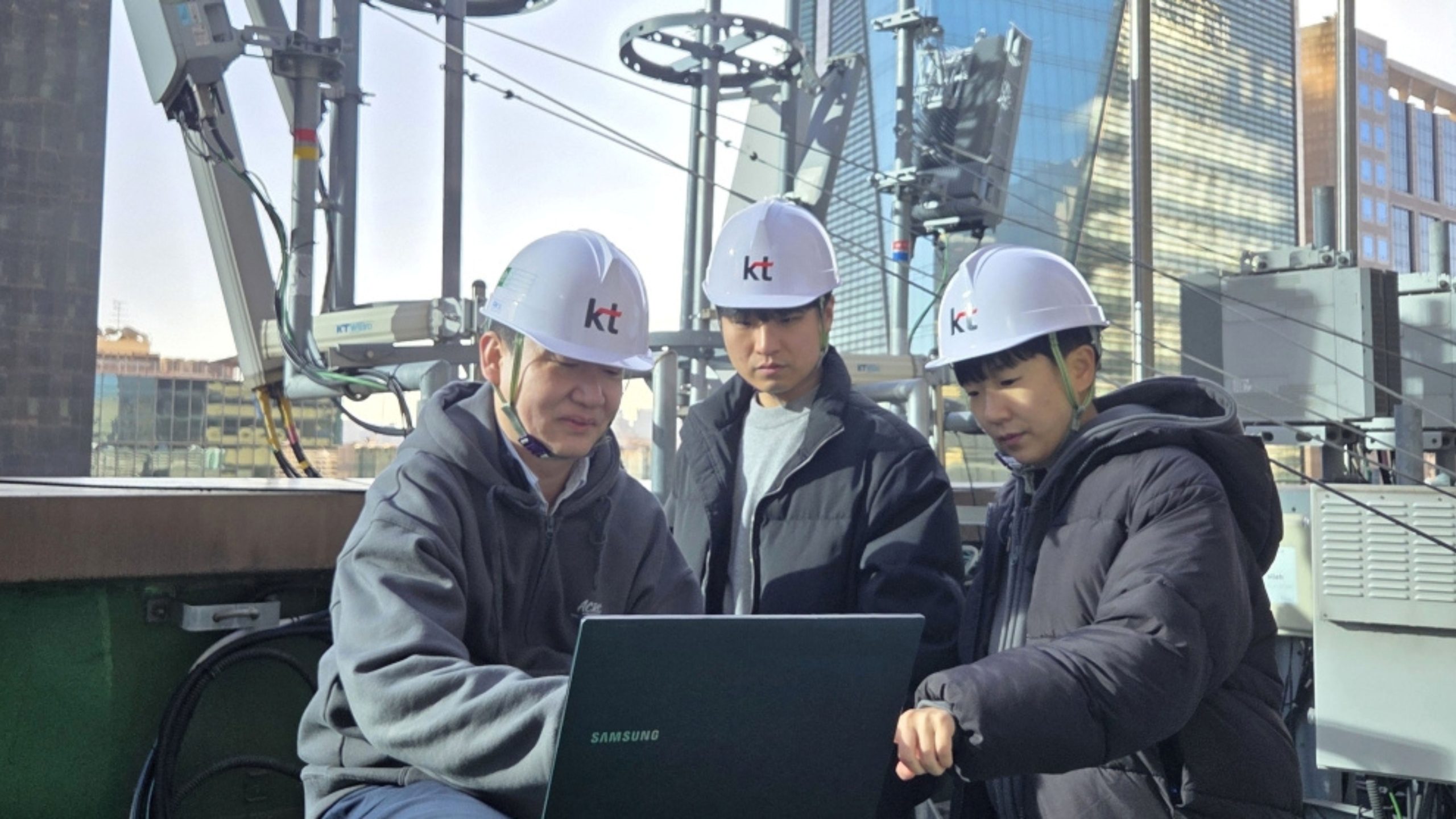
The field trial, conducted by Samsung Research and KT’s Future Network Laboratory, covered selected areas of Seongnam in Gyeonggi Province and involved roughly 18,000 active mobile users. By running the tests across locations with varied signal and environmental conditions, the companies were able to verify that AI-RAN delivers consistent connectivity in a wide range of real-world scenarios.
First Live Demonstration After Simulation Testing
According to Samsung and KT, this marks the first successful application of AI-RAN optimization on a commercial telecom system, following simulation-based verification completed in June. The achievement reflects a significant step forward for Korea’s 6G roadmap, as next-generation networks will require more autonomous, adaptive control systems to manage rapidly rising data demands.
How AI-RAN Works: Personalized Network Optimization
Current cellular networks generally rely on a base station applying a uniform configuration to all users. This approach struggles in situations where: (1) a device moves through low-signal areas, (2) a user travels at high speed, or (3) network load fluctuates rapidly.
AI-RAN changes this dynamic. The technology:
- Analyzes individual user movement patterns
- Learns from historical disruptions
- Predicts when a connection may weaken
It then automatically adjusts network parameters for each user, preventing service drops before they occur.
Field Trial Shows Significant Reduction in Disconnections
During the Seongnam test, Samsung and KT applied AI-RAN to users with a documented history of frequent disconnections. The system generated user-specific network settings according to each person’s movement and wireless environment.
The results showed:
- a substantial decrease in service dropouts for targeted users, and
- a noticeable improvement in network stability for other users in the same coverage area.
The broader performance gains suggest that individualized optimization can enhance overall network efficiency, not just individual user experience.
Preparing for Data-Heavy 6G Applications
Both companies said AI-RAN will be foundational as the telecom sector moves toward 6G, a generation expected to support data-intensive services such as:
- ultra-realistic extended reality (XR),
- autonomous mobility systems,
- high-density IoT networks, and
- mission-critical low-latency applications.
These services will require networks that can adapt in real time to shifting conditions and user demands — capabilities beyond today’s 5G systems.
Industry Perspective: AI at the Center of Future Networks
Jeong Jin-guk, Executive Vice President at Samsung Research, described the field results as an important inflection point for AI-driven communications technology.
“This is a major milestone that shows how AI can improve user experience on real-world commercial networks. Through close collaboration with KT, we will continue shaping and validating the next generation of AI-driven communication technologies.”
The companies highlighted that user-level quality improvements will play a larger role in evaluating future network performance, especially as traffic grows more complex and less predictable.
Next Steps: Expanding Validation for 6G Commercialization
Samsung and KT plan to extend AI-RAN testing across additional commercial networks and refine the system ahead of 6G standardization efforts. Samsung said it will intensify research into AI-powered network functions and strengthen collaboration with global operators and technology partners.
With this demonstration, Korea positions itself at the forefront of 6G development, signaling early progress toward an AI-native network architecture that could shape global communication standards in the next decade.