

Payment failures highlight platform dependence in Korea’s digital commerce market
Naver Pay, the mobile payment arm of Naver Corp., experienced a service disruption for roughly four hours on Thursday, temporarily blocking transactions and access to key account features for users across South Korea.
The issue began around noon, when users reported failed payment attempts and error messages during checkout. According to the company, services were fully restored at approximately 4:30 p.m. after emergency system checks and recovery work.
What Went Wrong
During the outage, several core functions were affected. Users encountered difficulties including:
- Inability to complete online payments at checkout
- Failure to use Naver Pay points or stored balance for in-store purchases
- Errors when checking reward balances, payment records, and event histories
- Blocked transactions using the Npay Money Card
In a notice posted during the disruption, Naver Pay said, “Some services are gcurrently experiencing errors, and we are urgently checking. We apologize for the inconvenience.” The company later confirmed that recovery efforts began around 3:30 p.m., with full normalization an hour later.
A company official said the malfunction did not appear to be caused by external factors such as a cyberattack, suggesting the problem originated within its internal systems. Naver added that it plans to identify and disclose the specific cause after further review.
Impact on Consumers and Merchants
The outage occurred during peak daytime hours, amplifying its immediate impact. One office worker said she attempted to purchase cosmetics during lunch through Naver Shopping but encountered a waiting screen for several minutes before the transaction ultimately failed.
While the disruption lasted only part of the afternoon, the incident illustrates the scale of reliance on Naver Pay within South Korea’s digital commerce ecosystem. The platform processed 86 trillion won (US$59.2 billion) in transactions in 2025, making it one of the country’s largest online payment services.
Given that Naver Pay is integrated across e-commerce, offline retail, digital subscriptions and loyalty programs, even short technical failures can temporarily affect a wide range of commercial activity.
Broader Context: Platform Concentration Risk in Korea’s Fintech Ecosystem
South Korea operates one of the world’s most deeply integrated digital payment markets. Consumers routinely rely on super-app style ecosystems where payments, e-commerce, loyalty rewards, credit services and investments are bundled within a single platform. In this structure, payment services are not standalone utilities — they are embedded into broader digital commerce infrastructure.
Platforms such as Naver Pay function more than transaction processors. They serve as financial gateways linking users to online marketplaces, subscription services, point-based reward systems, small-ticket lending products and offline merchants. The scale of these integrations means that a technical disruption can ripple across multiple layers of the digital economy simultaneously.
The recent outage highlights what analysts describe as platform concentration risk — a structural vulnerability that emerges when a significant share of transactions flows through a limited number of dominant infrastructure providers. When a single system processes tens of trillions of won annually, operational resilience becomes a matter of systemic stability rather than customer convenience.
For merchants, particularly small online sellers, even a few hours of disruption can translate into lost revenue and interrupted cash flow. For consumers, payment failures undermine trust in platform reliability. For affiliated financial service providers — including credit, insurance and investment products embedded within these ecosystems — service continuity becomes dependent on the technical robustness of the core payment infrastructure.
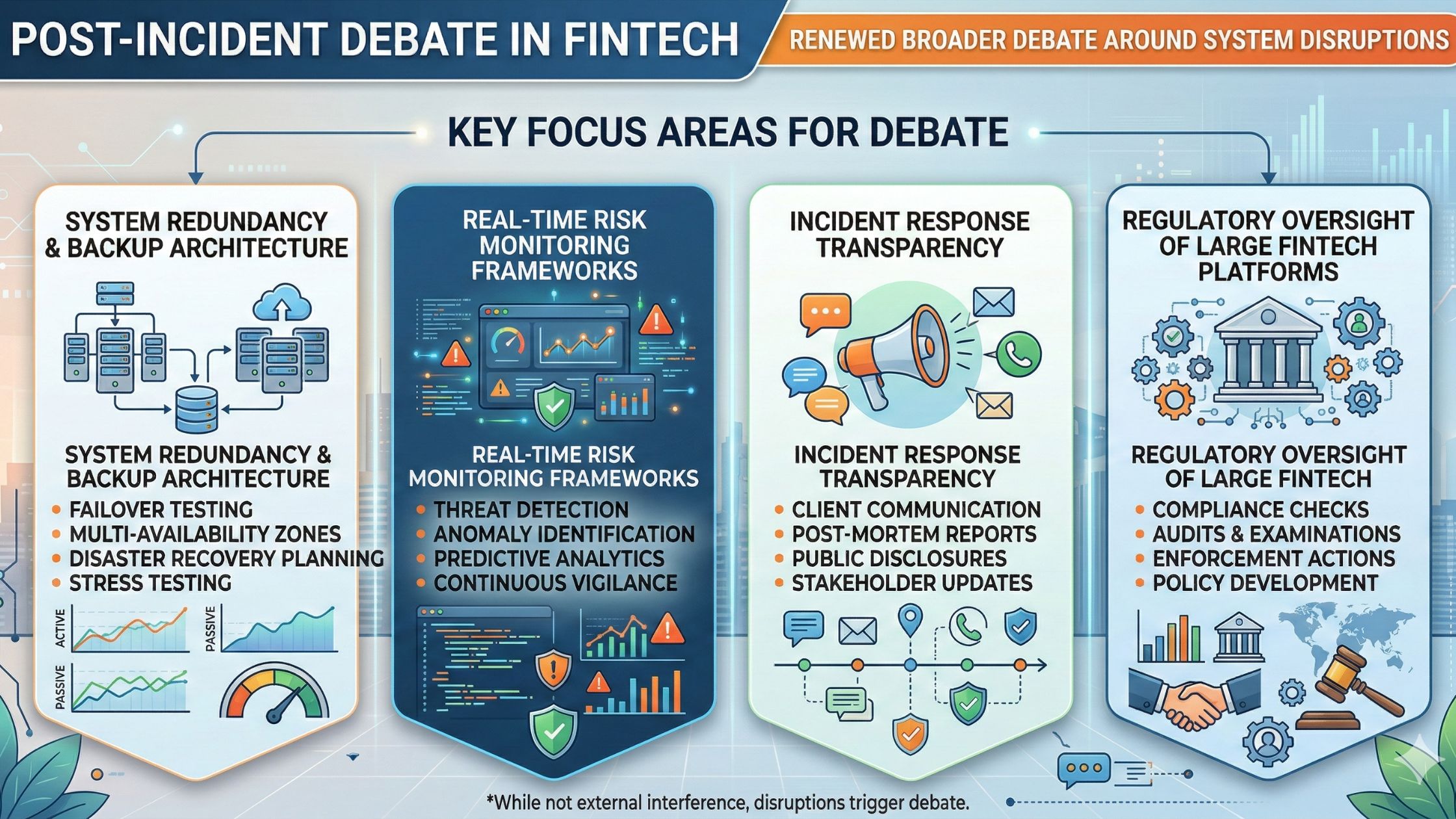
While the company stated that the incident was not the result of external interference, such disruptions often renew broader debate around:
- System redundancy and backup architecture
- Real-time risk monitoring frameworks
- Incident response transparency
- Regulatory oversight of large fintech platforms
As Korea’s digital payments sector continues to expand, questions around operational resilience and systemic risk management are likely to grow more prominent — particularly as platform-based fintech firms increasingly resemble critical financial infrastructure rather than conventional technology companies.
Company Response
In a follow-up notice announcing restoration, Naver stated, “We apologize for causing inconvenience due to the service error and will work to provide a more stable service.” The company said it would conduct a detailed review of the incident and share additional information once the cause is confirmed.
While service has returned to normal, the episode serves as a reminder of the operational demands placed on large-scale fintech platforms — particularly those embedded deeply in everyday consumer transactions.