
New service enters market as enterprises weigh automation, data protection, and reliability. Adoption likely to hinge on performance, privacy safeguards, and enterprise demand
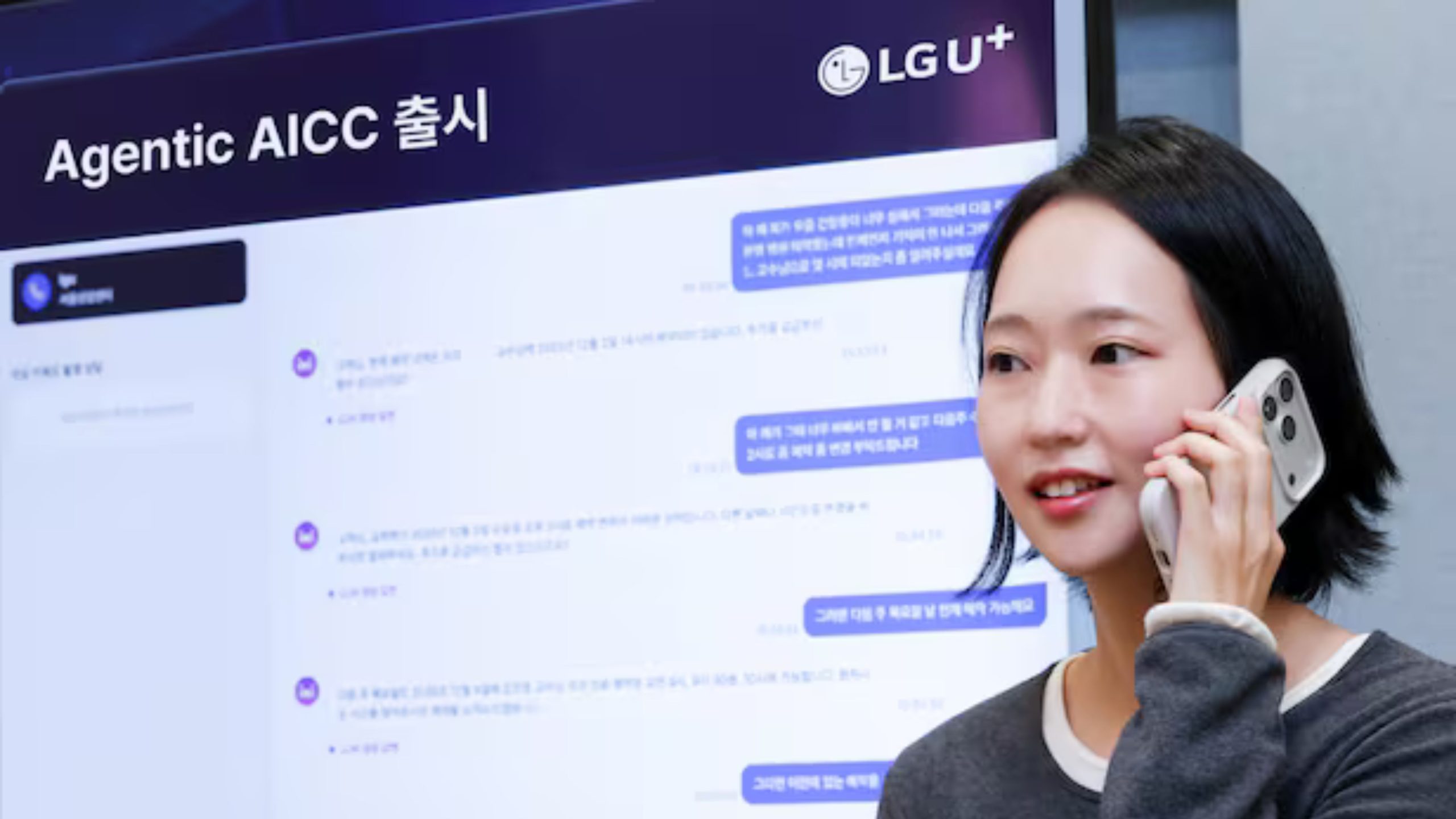
LG Uplus has launched a generative AI–based call bot designed to handle customer phone inquiries using OpenAI technology. The South Korean telecom operator said on the 16th that it introduced Agentic Callbot (Standard), a subscription service aimed at automating parts of enterprise customer support operations.
The launch comes as South Korean companies explore broader use of generative AI to reduce response times and manage rising call volumes. While call bots have been used for years in contact centers, most existing systems rely on rule-based scripts and are limited to handling simple, repetitive questions.
How the New System Differs From Traditional Call Bots
According to LG Uplus, the new callbot uses large language models and retrieval-augmented generation to interpret customer intent and conversation context in real time. This allows it to respond to a wider range of questions without being trained in advance on fixed scenarios.
“Traditional rule-based systems could only follow predefined scripts,” an LG Uplus spokesperson said. “The agentic model is designed to understand different expressions and situations as conversations unfold.”
The company said the approach is expected to shorten call times and reduce the need for human intervention, though it did not disclose performance data or customer adoption figures at launch.
Intended Use Across Multiple Industries
LG Uplus said the service is intended for use across various contact-center environments, including manufacturing, retail, services, healthcare, education, and facilities management. In hospital settings, for example, the callbot can handle appointment-related calls, including checking schedules, processing changes, and sending confirmation messages after calls end.
Such use cases reflect a broader industry trend toward applying AI to routine customer interactions, particularly in sectors where call volumes are high and inquiries follow predictable patterns.
Data Protection and System Oversight
The company said it has added guardrails to protect conversation content and personal information, addressing concerns around privacy and security in AI-driven customer support. LG Uplus also said enterprises using the service can monitor system performance through dashboards that provide real-time operational data.
“We have focused on stability and visibility so companies can manage AI-based call handling responsibly,” an FSC spokesperson said, without providing technical details on the safeguards.
Future Development and Product Roadmap
LG Uplus plans to expand the service by linking multiple language models and introducing a speech-to-speech function that combines speech recognition, text-to-speech, and reasoning through real-time APIs based on OpenAI’s multimodal models.
Jung Young-hoon, head of LG Uplus’ enterprise AI business, said the company plans to introduce additional agent-based call center services. An upgraded version, Agentic Callbot Pro, is scheduled for release next year.
Part of a Broader Enterprise AI Push
The callbot launch fits into LG Uplus’ wider enterprise AI strategy announced last year, which includes investments in AI data centers, smaller language models for business use, and AI-based services for corporate customers.
As South Korean telecom operators look beyond traditional connectivity services, developments like Agentic Callbot highlight how generative AI is increasingly being tested in practical, revenue-generating enterprise applications—though its long-term impact will depend on real-world performance and adoption.