
Move signals deeper integration of physics-based AI into South Korea’s advanced display production
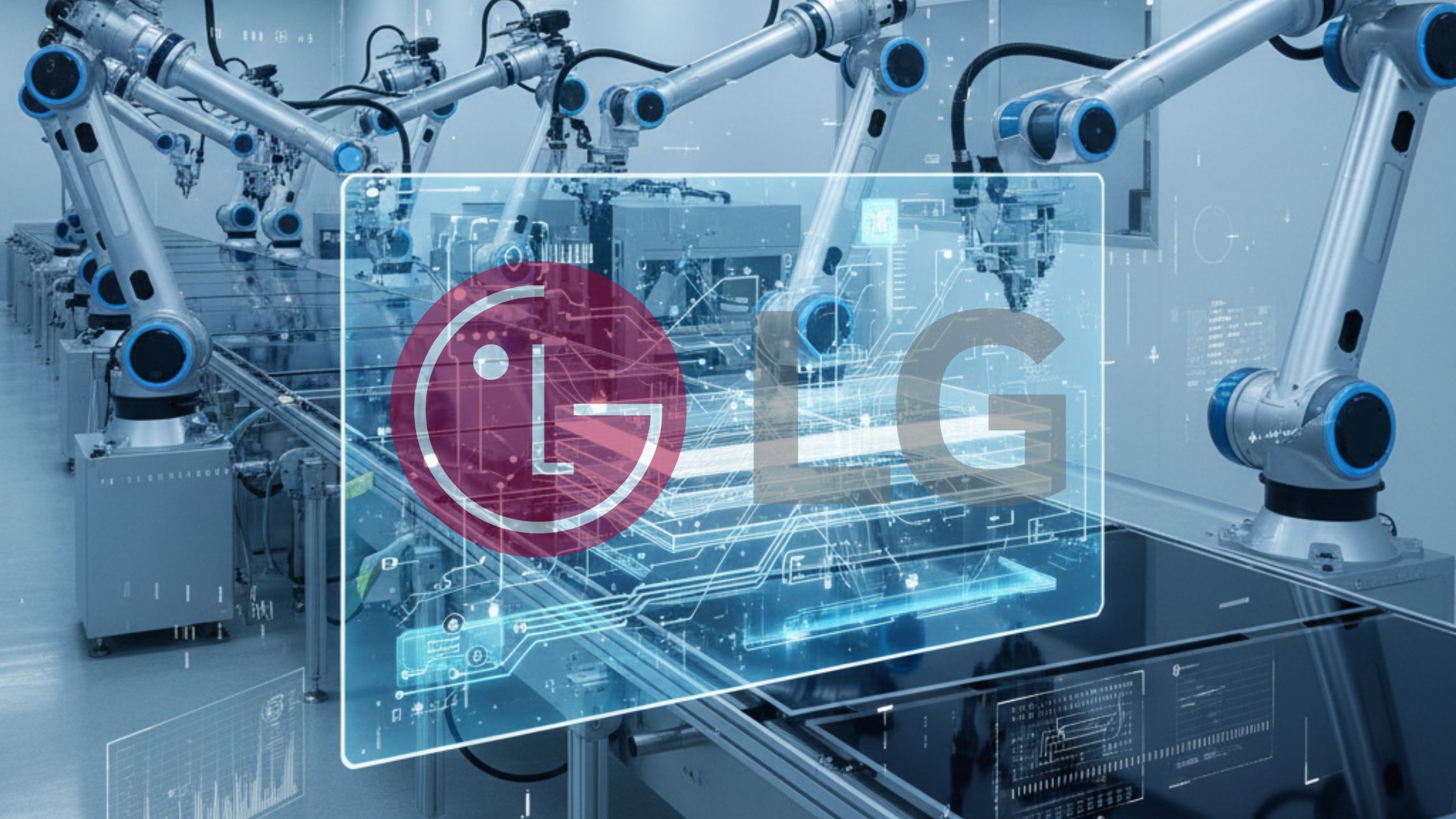
LG Display has deployed Nvidia’s PhysicsNeMo platform to develop a digital twin solution for panel research and manufacturing, marking one of the first industrial uses of the physics-informed AI framework in South Korea’s display sector.
The company said the new system — referred to internally as a Digital Panel Solution (DPS) — is designed to simulate panel production processes in a virtual environment. By modeling physical behavior using AI trained on both manufacturing data and physics equations, LG Display aims to shorten development cycles and improve process optimization, particularly for advanced OLED panels.
What PhysicsNeMo Brings to Manufacturing
PhysicsNeMo is Nvidia’s physics-informed machine learning platform that combines traditional engineering simulations with artificial intelligence. Unlike conventional “black-box” AI models, physics-informed systems incorporate scientific laws — such as fluid dynamics or thermal behavior — directly into the learning process.
According to Nvidia’s developer documentation, PhysicsNeMo enables engineers to create surrogate models that replicate complex physical simulations but run much faster. These models can be used to build digital twins — virtual replicas of physical systems — that allow real-time experimentation and optimization.
For display manufacturing, where panel production involves multiple precision processes such as deposition, etching and thermal treatment, digital twins can simulate how small changes affect yield, durability and power efficiency.
An Nvidia Korea executive said at a recent industry event that LG Display is using the platform in an actual manufacturing environment, demonstrating how physics-based AI can move beyond research labs into production workflows.
Why Digital Twins Matter in the Display Industry
The global display market is highly competitive, with thin margins and constant pressure to improve yield rates and reduce development time. OLED panel manufacturing, in particular, requires careful control of materials and process parameters.
A digital twin approach can offer several operational advantages:
- Faster development cycles: Engineers can test process adjustments virtually before applying them to physical production lines.
- Yield optimization: Simulations help identify conditions that reduce defects.
- Lower experimentation costs: Fewer physical trial runs reduce material waste and downtime.
If validated at scale, these improvements could strengthen LG Display’s position against competitors in South Korea, China and Japan.
However, industry experts note that digital twin systems must be rigorously validated against real production data. Physics-based surrogate models can accelerate simulation, but errors or data bias could lead to inaccurate predictions. For this reason, most manufacturers treat AI-driven twins as decision-support tools rather than fully autonomous systems.
A Broader AI Strategy in Korean Manufacturing
LG Display’s adoption of PhysicsNeMo reflects a broader trend in South Korea’s manufacturing sector toward AI-enabled “smart factory” systems. Companies are increasingly combining proprietary production data with GPU-accelerated computing to enhance design and process control.
The move also deepens LG Display’s collaboration with Nvidia at a time when demand for industrial AI infrastructure is growing. Nvidia has positioned PhysicsNeMo as part of its strategy to expand beyond data centers into engineering and industrial applications.
While LG Display has not disclosed specific performance gains from the deployment, company officials indicated that the system is intended to compress research timelines and improve alignment between panel design and production execution.
Strategic Implications
The introduction of physics-informed AI into panel development highlights a shift in how display makers compete. Beyond hardware specifications, differentiation increasingly depends on manufacturing intelligence — how quickly a company can refine designs, manage complexity and respond to customer requirements.
For LG Display, the digital twin initiative signals a move toward more integrated, software-enhanced manufacturing. For Nvidia, it represents another step in embedding AI frameworks into traditional industrial sectors.
Whether the collaboration delivers measurable productivity gains remains to be seen. But the deployment underscores a broader reality: advanced display manufacturing is becoming as much a software challenge as a hardware one.