
Korea’s flagship startup programme highlights a shift toward practical, market-ready solutions for a globalising economy
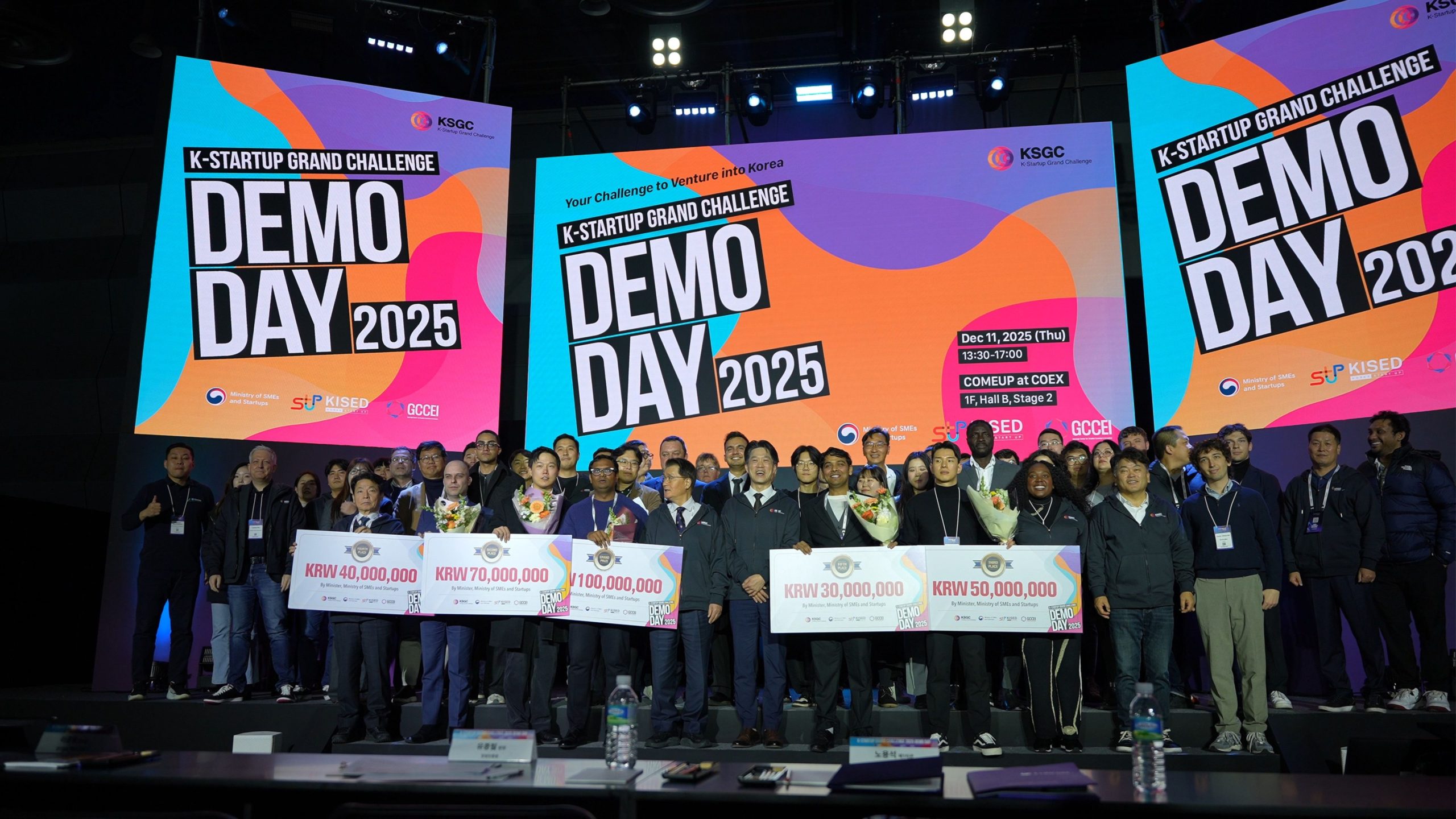
The K-Startup Grand Challenge (KSGC) 2025 Demo Day, held on December 11 at COEX in Seoul, concluded this year’s edition of Korea’s largest inbound startup programme for overseas founders. The event, hosted during COMEUP 2025, brought together global startups, investors, large enterprises, and policymakers, with final rankings determined through live pitching and on-site evaluation.
While Demo Day followed a familiar startup competition format, its broader significance lay in what it revealed about Korea’s evolving technology and innovation priorities. Now marking its 10th year, KSGC has moved beyond experimentation and into a more defined role as a policy instrument—designed to attract foreign technology that can integrate directly into Korea’s domestic market.
Record global demand, selective local focus
The 2025 programme received 2,626 applications from 97 countries, the highest number since KSGC was launched. After a multi-stage screening process, 40 startups were invited to Korea for Phase 2, and eight finalists were selected to pitch at Demo Day.
This growing selectivity reflects a shift in emphasis. Rather than prioritising novelty alone, KSGC is increasingly focused on startups that demonstrate:
- Clear relevance to Korea’s regulatory and market environment
- Practical deployment potential with local partners
- Alignment with national technology and digitalisation goals
For Korea, the value of inbound startups lies not in visibility, but in adoption and integration.
KSGC 2025 Phase 3 Top 20 Startups
- 3TGDS: Travel Trust Tickets enabling instant redemption across global travel & lifestyle services
- Acurion: AI detecting genomic markers for precise, efficient cancer diagnosis
- ArbaLabs: Securing AI at the edge for aerospace & critical infrastructure with sovereign trusted tech
- AvoLabs: AI-driven B2B EdTech tools delivering personalized learning and automation
- BION: LEO™ Gluten Sensor helping manage gluten intolerance with simple food-allergy detection
- Digital Human Corporation: Human-centric AI with KAi, an empathetic digital companion for elderly support
- GROUNDUP.AI: AI asset management using sensors and agents to predict equipment failures early
- IDOLL Robotics: Emotionally intelligent robot that sees, feels, and grows with users
- InsightMatches: AI SaaS platform automating and accelerating global research and innovation matching
- Konnect: Super-app for foreigners integrating search, bookings, payments, and verification
- MaimHaim: AI geofencing that auto-activates location-based services at venues and facilities
- Markopolo AI: AI automation platform personalizing engagement via SMS, email, push, WhatsApp, and more
- Niio: Platform turning any screen into a digital art canvas streaming curated global art
- Patientory: Web3 health platform enabling secure management and sharing of personal medical data
- Peris.ai: AI orchestration platform detecting and responding to cyber threats in real time
- Pierrot Company: IT device subscription and IT recovery service
- Predulive Labs: AI infrastructure analytics detecting defects and compliance issues in real time
- Protein Kapital: Sustainable alternative protein & bio-fertilizer produced using insects and food waste
- RIFFAI: AI sensing technology monitoring environmental changes and pollution
- Smart Contract: Automated smart contract workflows simplifying document and identity processes
Why Konnect stood out
The Grand Prize was awarded to Konnect, which received KRW 100 million (approximately US$66,700). Konnect is building a platform that addresses identity verification and payment challenges faced by foreign residents and visitors in Korea—a long-standing issue within the country’s otherwise advanced digital ecosystem.
Many Korean digital services rely on domestic identity systems and local banking infrastructure, creating friction for non-citizens. Konnect’s solution aims to provide foreigners with seamless access to authentication, payments, and settlements, with plans to expand into an integrated lifestyle platform.
From a technology policy perspective, Konnect’s win is notable. It reflects a growing recognition that digital inclusion for foreigners is becoming a structural requirement, not a niche feature, as Korea seeks to expand tourism, attract global talent, and support international business activity.
Automation and efficiency also take centre stage
Second place went to MaimHaim (USA), which received KRW 70 million for its unmanned operations solution built on IMU sensors and Zero UI technology. The platform enables automated services in physical spaces without relying on traditional user interfaces.
Such solutions align closely with Korea’s push toward automation in response to labour shortages, particularly in retail, logistics, and public facilities.
Third place was awarded to Pierrot Company (Canada), which received KRW 50 million for its data-driven IT asset circulation platform. The company focuses on managing and redistributing idle or underused IT devices across global markets.
Its selection highlights Korea’s growing interest in hardware lifecycle management, sustainability, and cost efficiency, especially as enterprises refresh devices more frequently and face rising ESG expectations.
Government backing reinforces long-term intent
Vice Minister Roh Yong-seok of the Ministry of SMEs and Startups (MSS) attended the event, reaffirming the government’s commitment to supporting global startups that choose Korea as a base for growth.
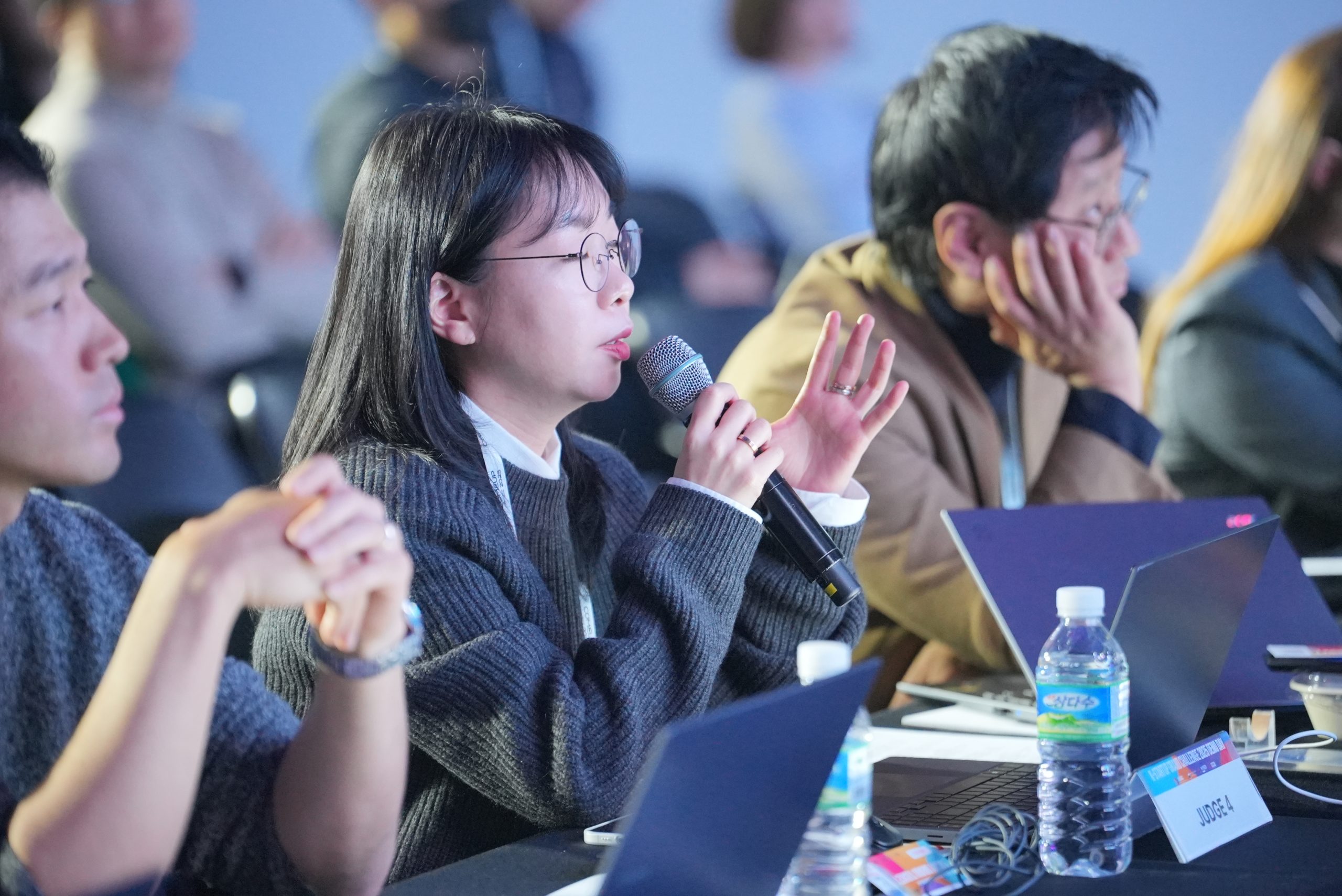
This support extends beyond funding. KSGC provides selected startups with assistance in visas, incorporation, settlement, and local networking—areas where foreign founders often face the greatest barriers.
For Korea, inbound startups are increasingly viewed as contributors to national competitiveness, particularly in advanced technologies where domestic supply may be limited.
Phase 3: where policy meets execution
Beyond prize money, 20 startups were selected for Phase 3, which includes three months of follow-up support. This phase offers office space in Pangyo, business matching with major Korean conglomerates, and tailored investor relations opportunities.
This structure reflects a clear policy lesson learned over the past decade: attracting startups is not enough. The real challenge lies in helping them secure pilots, partnerships, and early revenue within Korea.
Pangyo’s role as a technology hub is central here, providing proximity to large firms, research centres, and venture capital.
What the 2025 cohort says about Korea’s tech focus
The Phase 3 startups span sectors including AI, healthtech, cybersecurity, robotics, climate technology, and digital infrastructure. Despite their diversity, the cohort shares a common theme: each company operates at the intersection of technology and real-world systems.
Health and ageing-related technologies feature prominently, reflecting Korea’s demographic realities. Industrial AI, cybersecurity, and infrastructure analytics point to continued demand from manufacturing and critical systems. Robotics and automation mirror Korea’s push toward smart facilities and services.
Rather than chasing trends, the 2025 cohort suggests Korea is selectively importing technologies that complement its existing industrial and digital strengths.
Conclusion: KSGC as a technology gateway, not a showcase
KSGC 2025 demonstrates how Korea is refining its approach to inbound innovation. The programme is no longer positioned as a one-off competition, but as a structured gateway for global technology to enter and operate within Korea.
Konnect’s win underscores this shift. The startup was recognised not for abstract innovation, but for solving a concrete problem that sits at the intersection of technology, policy, and daily life in Korea.
As Phase 3 begins, the key question will be whether these startups can move beyond pilots and pitches to become long-term contributors to Korea’s tech ecosystem. If they do, KSGC’s model may offer a blueprint for how governments can compete globally for technology, not just talent.