
The Korean platform operator positions its full-stack parking technology as a foundation for autonomous and robotic services.
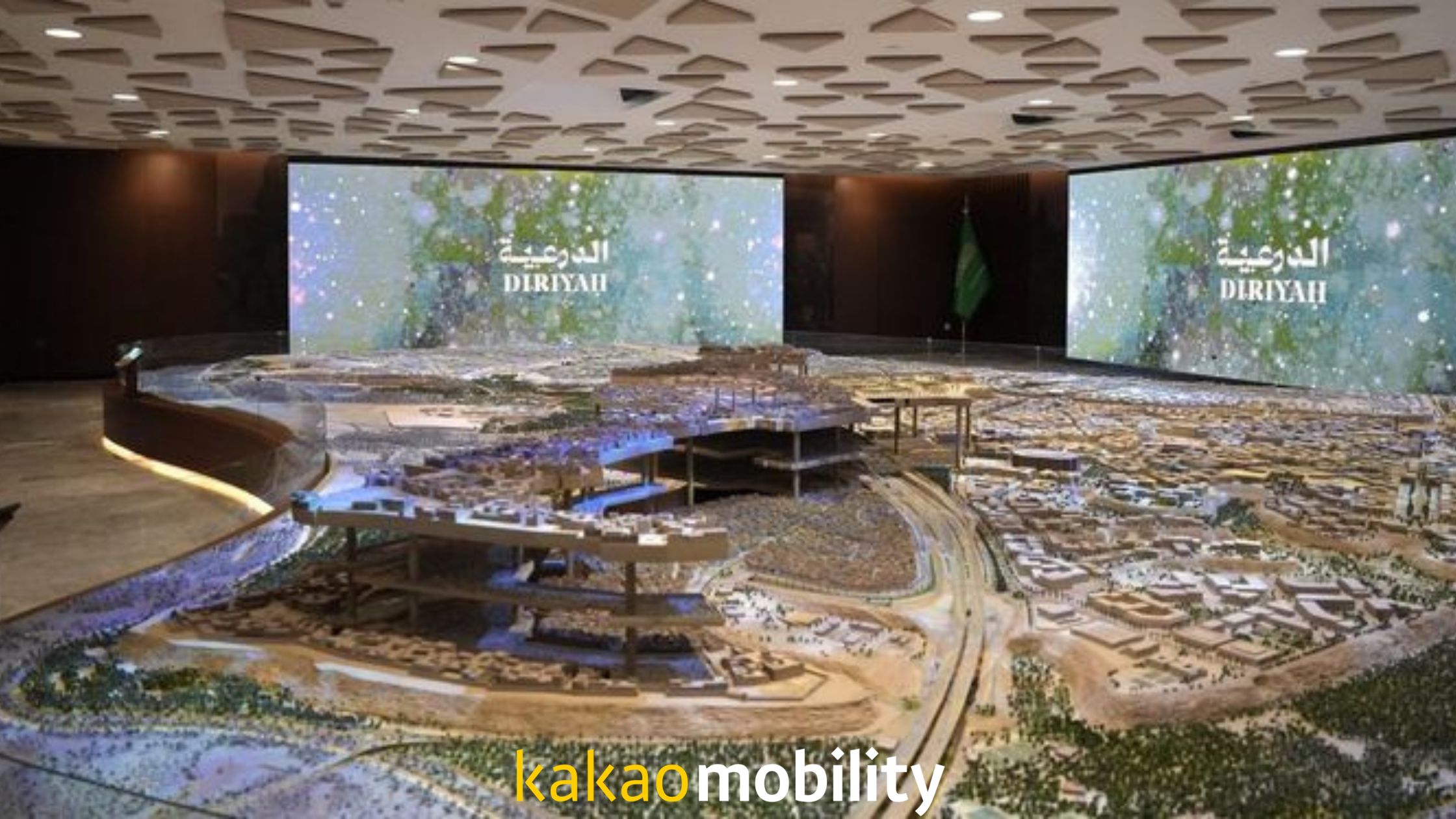
South Korean mobility platform operator Kakao Mobility has signed a paid proof-of-concept (PoC) agreement to supply its integrated mobility solution to the ambitious Diriyah smart city project in Saudi Arabia, marking its first major overseas technology deployment. The deal with Diriyah Company follows a memorandum of understanding (MoU) signed in May last year and reflects growing interest by Middle Eastern mega-projects in leveraging advanced digital mobility infrastructure.
Kakao Mobility’s solution will initially be deployed in three key parking zones within Diriyah, covering about 5,000 vehicle spaces. The pilot aims to validate the company’s technology and operating model before any potential full-scale rollout across the entire development, which is planned to accommodate more than 60,000 vehicles across its parking facilities.
The deployed system represents a full-stack smart mobility package covering both user-facing applications and infrastructure operations. Core components include:
- AI-based parking guidance and vacancy prediction, which uses demand forecasting to help drivers find available spaces efficiently.
- Indoor positioning and navigation systems capable of guiding vehicles and users seamlessly in complex underground environments where GPS signals are limited.
- Integrated payment and service interfaces that unify valet, parking reservations and transactions under a single digital platform.
The technology will not only digitize existing parking infrastructure but also provide real-time data services for drivers and operators, shifting traditional parking facilities toward data-driven operational platforms.
Strategic Significance of the PoC
A proof-of-concept contract is a preliminary, legally binding agreement designed to test and verify the feasibility and effectiveness of a solution before larger investment or full implementation. In this case, the PoC will help determine whether Kakao Mobility’s technology can scale effectively in a high-capacity environment and meet the performance expectations of a mega smart city ecosystem.
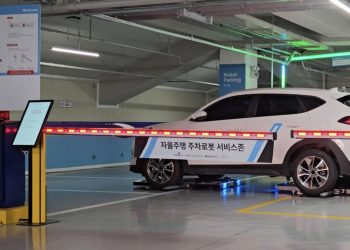
Officials from Diriyah Company visited Kakao Mobility’s headquarters in Korea before the agreement was finalised, observing the company’s indoor navigation system in action at Seoul’s COEX parking facility and experiencing its autonomous valet robotics developed with HL Robotics. These exchanges helped build confidence in the platform’s capabilities and operational readiness for deployment in Diriyah.
Expanding Mobility Beyond Parking
While this initial deployment focuses on smart parking, the contract lays the groundwork for broader cooperation in future urban mobility areas. The agreement’s language allows room for collaboration on services such as robotic delivery platforms and autonomous vehicle integration, both of which require robust, data-rich infrastructure as a foundation.
Kakao Mobility’s CEO, Ryu Geung-seon, framed the contract as “a strategic bridgehead for Kakao Mobility to expand into future mobility technologies in the global market.” He emphasised the broader implications of the project, noting that “a sophisticated data-driven parking platform will become core infrastructure connecting autonomous vehicle charging, waiting operations, and robot delivery services” in next-generation smart city environments.
The Diriyah smart city is one of Saudi Arabia’s most ambitious development initiatives, led by the Public Investment Fund (PIF) with a projected total investment of around $63 billion (about 90 trillion won). The project spans roughly 14 square kilometres near Riyadh’s historic core, and aims to become a cultural, tourism and residential hub with integrated, futuristic infrastructure.
Because significant portions of the city’s parking and transport infrastructure will be located underground to protect cultural heritage and optimise land use, advanced systems like indoor navigation and AI-enabled traffic management are particularly crucial. Deploying and refining these technologies in Diriyah could set important precedents for future urban developments in the region.
Broader Implications for Korean Mobility Tech
Kakao Mobility’s Diriyah contract represents more than a single overseas project; it reflects a broader shift in how Korean platform companies are positioning themselves globally. For years, Kakao Mobility has been known primarily as a domestic ride-hailing and mobility platform. This agreement signals a transition toward exporting not only software but also operational models, infrastructure management systems and AI-driven analytics. In that sense, the deal moves the company into the domain of smart city infrastructure providers rather than remaining solely a consumer-facing mobility service.
The project also illustrates how Korean technology firms are adapting to growing international demand for integrated urban solutions. Large-scale developments in the Middle East, backed by sovereign investment funds, increasingly require data-based traffic control, digital payment systems and autonomous-ready infrastructure. By offering a full-stack system — from predictive parking management to indoor navigation and backend operations — Kakao Mobility positions itself as a systems integrator capable of supporting complex, high-capacity urban environments.
For Korea’s broader technology ecosystem, the deal highlights the export potential of mobility data platforms that were originally developed for a dense, digitally advanced domestic market. If the Diriyah pilot proves successful, it could serve as a reference case for other smart city projects globally, particularly in regions prioritising next-generation infrastructure. More importantly, it signals that Korean mobility firms are seeking to compete not only in app-based services but also in the foundational layers of future urban transport systems.