

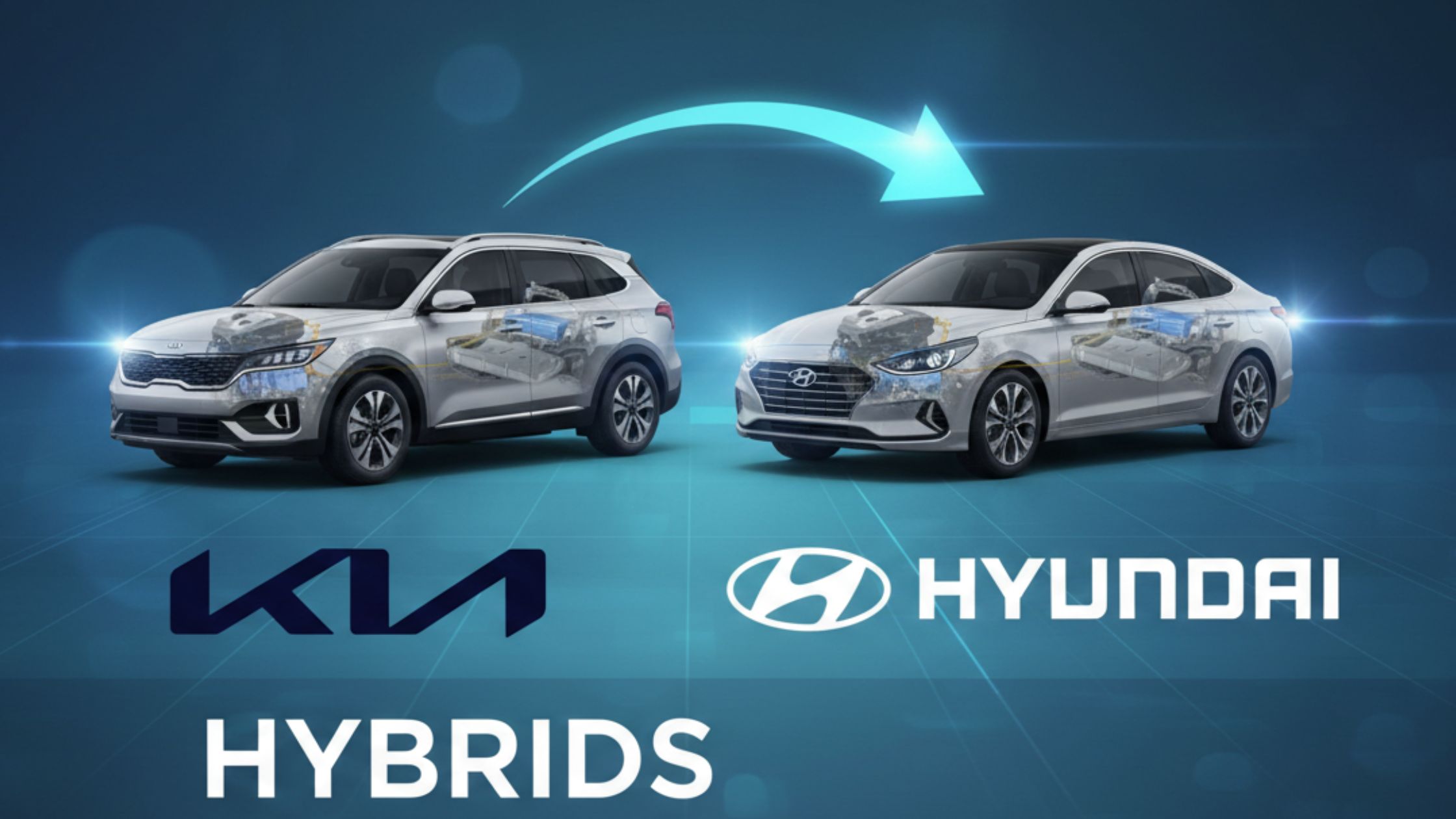
Automakers recalibrate electrification strategy amid cooling demand and shifting consumer sentiment
Hyundai Motor and its affiliate Kia are accelerating their push into hybrid vehicles this year, even as they continue expanding electric vehicle (EV) lineups. The move reflects a broader recalibration across the global auto industry, where fully electric adoption has slowed in several key markets and consumers remain cautious about charging infrastructure and long-term ownership costs.
While both companies maintain long-term commitments to electrification, recent sales data show hybrid electric vehicles (HEVs) gaining faster traction than battery electric vehicles (BEVs). The trend is reshaping how the two automakers balance product portfolios across regions including South Korea, the United States and Europe.
EV Growth Cools as Incentives Fade
In markets such as the United States, EV sales growth has moderated compared with earlier years. Analysts point to the gradual reduction of purchase incentives, higher interest rates and uneven charging infrastructure as contributing factors.
In contrast, hybrid vehicles — which combine internal combustion engines with electric motors — have posted strong year-on-year growth. Hyundai and Kia together are expected to surpass one million global hybrid sales this year, according to industry estimates.
An executive from Hyundai Motor Group said in a recent strategy briefing that the company is pursuing a “multi-pathway approach” to electrification, emphasizing flexibility across powertrains.
“Electrification remains our long-term direction, but we must respond to real market demand,” the executive said.
Hybrids Outpacing EVs in Key Regions
Hybrid demand has risen sharply in South Korea and the United States. In Korea, hybrid vehicles recently exceeded 30 percent of new passenger car sales for the first time. In the U.S., Hyundai and Kia reported double-digit growth in hybrid deliveries, even as EV volumes showed more modest increases.
The appeal of hybrids lies in their practicality. Unlike pure EVs, hybrids do not rely on external charging infrastructure, reducing what consumers often describe as “range anxiety.” At the same time, they offer improved fuel efficiency and lower emissions compared with conventional gasoline vehicles.
Hyundai’s hybrid versions of models such as the Santa Fe and Tucson, along with Kia’s Sorento and Sportage hybrids, have become central to the companies’ SUV-heavy lineups — segments that generate significant revenue.
Industry observers caution against interpreting the hybrid push as a retreat from electrification. Both Hyundai and Kia continue investing in next-generation EV platforms and battery technologies. However, hybrids are increasingly seen as a bridge technology that supports regulatory compliance while maintaining profitability.
From a business perspective, hybrids offer several advantages:
- Lower production risk compared with fully electric platforms
- Broader consumer acceptance across income groups
- Immediate emissions reductions without reliance on charging networks
For regulators, hybrids also help automakers reduce fleet-average emissions, particularly in regions where charging infrastructure expansion lags behind EV targets.
Competitive Pressures and Market Realities
The global EV market has become more competitive, particularly with aggressive pricing strategies from Chinese manufacturers. This has squeezed margins and intensified pressure on legacy automakers to manage costs carefully.
By expanding hybrid offerings alongside EV models, Hyundai and Kia can preserve market share without overexposing themselves to price wars in the pure EV segment. Analysts say this diversified approach provides financial stability during what remains a volatile transition period.
At the same time, both companies continue developing dedicated EV platforms such as E-GMP and launching new electric models under Hyundai’s Ioniq and Kia’s EV sub-brands. The hybrid surge does not replace these efforts but complements them.
Consumer Sentiment Still Divided
Surveys across major markets suggest that while interest in EVs remains strong, many consumers hesitate due to concerns about:
- Charging availability in urban and rural areas
- Battery replacement costs
- Resale value uncertainty
Hybrids address many of these concerns while delivering incremental environmental benefits. For mainstream buyers who prioritize reliability and convenience, hybrids present a transitional option rather than a radical shift.
A Measured Transition Strategy
Hyundai and Kia’s hybrid emphasis underscores a pragmatic interpretation of the global energy transition. Rather than pursuing electrification at a fixed pace, the companies appear to be adjusting to demand signals in real time.
This strategy aligns with their broader global footprint. In Europe, where emissions regulations are tightening rapidly, EV investments remain central. In North America and parts of Asia, hybrids help cushion the pace of change.
The key question for investors and policymakers is whether hybrid growth will slow the long-term EV transition or simply stabilize it. For now, Hyundai and Kia appear to be betting that flexibility — rather than ideological commitment to a single powertrain — will define competitiveness in the coming decade.
As the automotive industry navigates shifting incentives, infrastructure gaps and evolving consumer expectations, hybrids are emerging not as a legacy technology, but as a strategic bridge in an uneven road toward full electrification.