

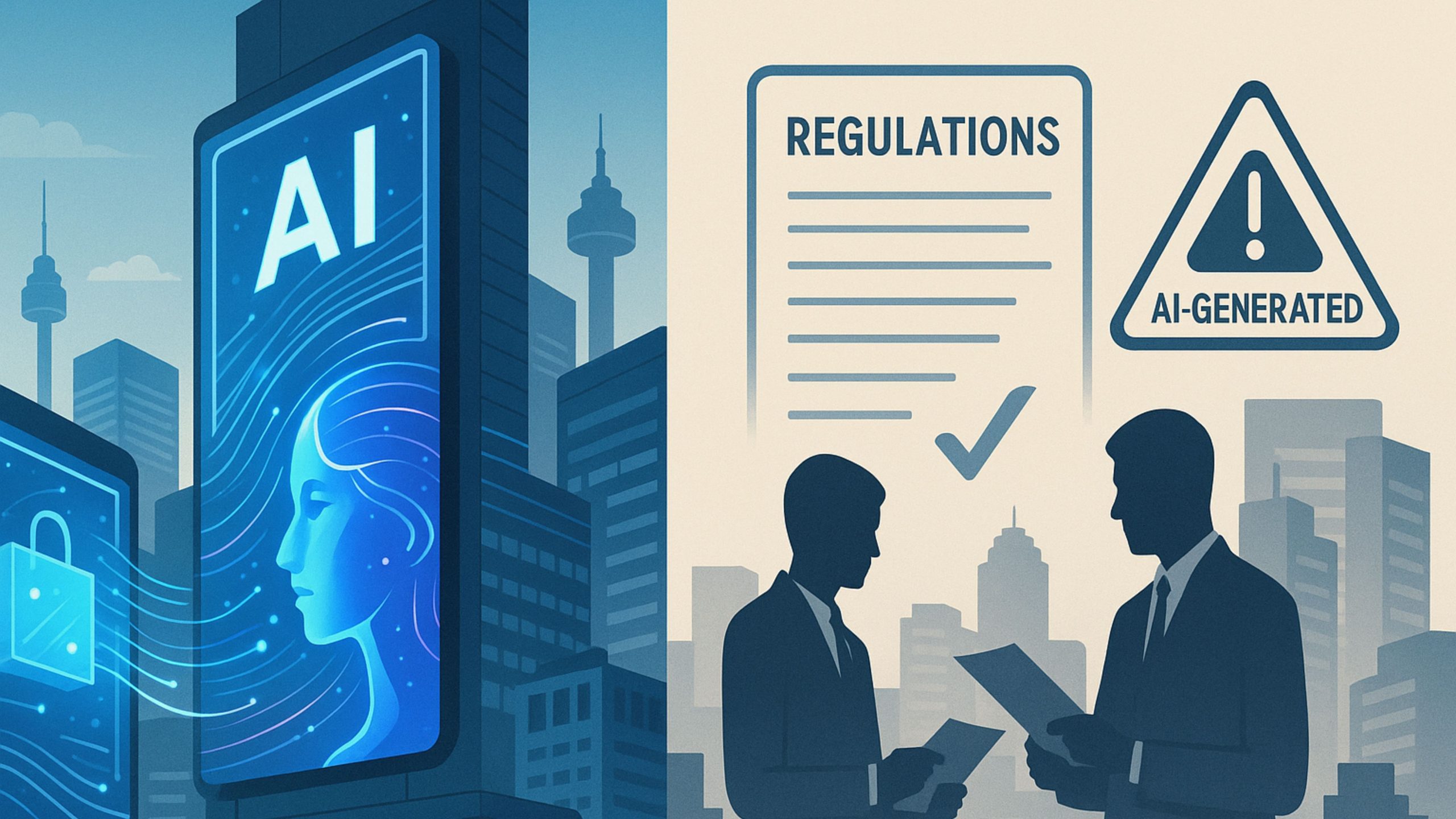
There’s a tension between transparency, regulatory oversight, and AI-driven growth in Korea’s advertising industry. Here’s a closer look at the trade-offs behind South Korea’s push to regulate synthetic media in online advertising.
South Korea’s new requirement for advertisers to label AI-generated content has changed how the country intends to manage the rapid integration of artificial intelligence into online commerce. Beginning in early 2026, advertisers and platforms will have to disclose when ads are created, modified, or assisted by AI. While the regulation aims to strengthen consumer protection and address a sharp rise in deceptive content, it carries broader implications for Korea’s innovation environment.
The policy raises a central question: Can South Korea protect consumers from AI-driven manipulation without hindering the creative and industrial momentum that AI has unlocked across its digital economy? The answer is complex, layered, and reveals emerging tensions within Korea’s fast-evolving tech ecosystem. At the heart of this issue lies the balance between safeguarding the public and sustaining a competitive environment for startups, agencies, and global platforms that increasingly rely on AI-based tools.
This article examines the policy’s rationale, limitations, economic impact, and broader context. It also explores how the measure may contribute to a “two-speed ecosystem,” where large firms adapt more easily while smaller players struggle. By analysing the factors behind the regulation and the potential long-term outcomes, we can better understand how South Korea is shaping the role of AI in its economy.
Why Korea Felt Forced to Tighten Consumer Protection
The Rise of Deepfake Advertising
Over the past three years, South Korea has seen a steady increase in AI-generated ads that blur the line between authentic and synthetic content. Many of these ads feature deepfake versions of well-known actors, comedians, athletes, and medical professionals endorsing products such as health supplements, skincare treatments, financial schemes, or gambling services. These ads often mimic real interviews or mimic the visual style of legitimate TV news programs, making them difficult to distinguish from genuine content.
The sophistication of generative AI tools has lowered both the cost and the expertise required to produce convincing synthetic visuals and audio. Individuals or groups operating online fraud schemes can now produce an entire ad campaign using AI tools within hours, without actors, studios, or professional editing. This has changed the scale and nature of online misinformation in the advertising sector.
Vulnerable Demographics and Risk Amplifiers
A recurring pattern in reported cases is the demographic most affected. Older adults, particularly those with limited digital literacy, have been disproportionately targeted and have suffered financial and health-related harm. For many senior users, celebrity endorsements carry a high degree of trust. When AI is able to convincingly replicate a public figure delivering well-scripted advice or instructions, the persuasive effect becomes even stronger.
Korean regulators have noted that misleading ads related to healthcare products and financial schemes are especially common. These categories already pose challenges due to complex claims and limited consumer understanding. When combined with synthetic imagery and fabricated authority, they create a stronger risk of manipulation.
A Growing Enforcement Burden
Regulatory data shows a sharp increase in flagged illegal online ads over recent years. Cases rose from roughly 58,000 in 2021 to more than 96,000 in 2024, with tens of thousands more reported in 2025. Although not all of these cases involve AI, authorities highlight that the difficulty of detection and the speed at which offenders produce new content have intensified the enforcement burden.
Existing monitoring systems, including manual inspections and keyword-based filtering, have been insufficient against AI-generated content that constantly shifts and adapts. Regulators describe a situation where enforcement efforts are reactive and often come too late to prevent consumer harm. This environment contributed to the push for a proactive measure that increases transparency at the point of content creation.
Social and Political Pressure
The rise of AI-assisted deception has not only triggered regulatory attention but also shaped public discourse. Many of the deepfake ads have gone viral, leading to public frustration and calls for stronger oversight of online platforms. Consumer groups argue that existing rules have not kept up with the evolving digital landscape, and lawmakers have faced pressure to demonstrate that the government can respond quickly to the risks posed by generative AI.
The new labelling requirement therefore reflects not only consumer protection concerns but also a political imperative to show decisive action. It signals that the government intends to strengthen its regulatory tools before AI-generated content becomes unmanageable.
Why Mandatory Labelling May Not Solve the Problem
The Policy’s Assumptions
The central assumption behind mandatory labelling is that transparency enables informed decision-making. If consumers know that a piece of content was generated using AI, the expectation is that they will treat it with greater caution. Labelling is framed as a way of restoring consumer trust in an environment where synthetic media is increasingly difficult to identify.
Platforms and advertisers will have to disclose the use of AI in a clear and visible manner. The requirement applies to modified imagery as well as fully synthetic content. Labels must be displayed in a way that cannot be removed by advertisers or end-users, and platforms will be responsible for ensuring the labels remain intact.
Evidence From Behavioural Research
However, research on AI-generated content suggests that labelling alone may not significantly reduce its persuasive impact. Studies on online messaging and political ads have found that audiences often do not change their behaviour in response to labels indicating synthetic or automated origins. Even when consumers notice the label, it does not necessarily reduce their trust in the message or the likelihood of acting on it.
One explanation is that many consumers, especially those already inclined to trust certain types of content, do not interpret labels as warnings. Another is that emotional or urgency-based advertising can override disclaimers. This creates a mismatch between regulatory intention and real-world outcomes.
Practical Enforcement Challenges
Beyond behavioural resistance, practical enforcement poses another layer of difficulty. Scammers and malicious actors are rarely deterred by disclosure rules. They can easily bypass labelling requirements by hosting their content outside Korean jurisdiction or by modifying content so that it is not immediately detected as AI-generated.
Detection itself presents challenges. Platforms will need advanced tools capable of identifying AI-generated assets at scale. Such technologies remain imperfect and may generate false positives or miss well-crafted synthetic content. Smaller platforms with limited engineering resources may struggle to implement required detection mechanisms.
A Cat-and-Mouse Dynamic
Regulation of fast-moving technological domains often develops a reactive pattern. As authorities introduce new compliance requirements, malicious actors adapt. With AI tools advancing quickly, the gap between detection and evasion could widen.
This raises the question of whether labelling requirements will meaningfully reduce harmful behaviour or simply shift deceptive advertising to less regulated channels. While the policy provides a framework for transparency, it is not a comprehensive solution to the underlying challenges of AI-driven manipulation.
The Innovation Diddle ema: How Much Will This Slow AI Adoption?
Compliance Burden on Startups and Agencies
The new rules introduce operational costs that may affect how companies adopt AI tools. Advertisers will need to track when AI is used in creative production, maintain documentation, and ensure that labelling is accurately applied across all platforms.
For large companies, compliance may involve adjustments to workflows but is likely manageable. For startups, small marketing agencies, and independent creators, the new requirements may introduce friction into processes that rely on flexibility and experimentation. Many small firms use AI tools to reduce production time or compensate for limited budgets. Additional regulatory steps could discourage them from using these tools altogether.
Constraints on Creative Experimentation
South Korea’s advertising industry is known for its rapid experimentation and embrace of new technologies. AI tools have expanded this creative capacity by enabling more dynamic visuals, personalised content, and faster production cycles. Mandatory labelling introduces a reputational consideration: consumers may view AI-assisted ads as less genuine or trustworthy.
Brands may hesitate to use generative AI for fear that the label could negatively influence consumer perception. Agencies may revert to more traditional production methods to avoid regulatory complexity. This shift could slow innovation within an industry that has been quick to integrate AI into its creative practices.
The Move Toward Invisible AI
If visible AI-generated creative assets become harder to use, companies may shift toward parts of the advertising pipeline where AI is harder to detect or regulate. Tools for segmentation, predictive analytics, and bidding optimisation can operate without producing visible AI content.
This may encourage a transition where AI remains central to advertising but becomes less transparent to regulators and consumers. Instead of generating imagery or text, companies may use AI to determine targeting strategies or optimise ad performance. Such a shift could reduce the intended transparency of the new rules and make future regulatory oversight more difficult.
Offshoring and Structural Adjustments
Some firms may respond by relocating certain creative operations outside Korea, especially if cross-border work enables them to sidestep specific labelling requirements. Offshore production of AI-generated assets could reduce compliance burdens and allow companies to maintain creative freedom.
On the technology side, ad-tech platforms may redesign their tools to automate compliance or integrate AI in ways that do not trigger disclosure rules. These adjustments could reshape Korea’s advertising ecosystem, shifting innovation incentives and possibly influencing where talent and investment move.
Korea’s Two-Speed Ecosystem: Uneven Impact Across the Industry
Large Firms and Chaebol Remain Well-Positioned
Major online platforms, telecom operators, and large advertising groups already have compliance teams, engineering resources, and structured internal processes. These organisations often maintain detailed content pipelines and have the capacity to integrate new rules without major disruption. Some of them also develop proprietary AI technologies, giving them greater control over production workflows.
For these companies, the regulation may serve as an opportunity. By adapting quickly, they can differentiate themselves as trustworthy platforms and partners. Their ability to absorb compliance costs means they face fewer competitive pressures compared to smaller firms.
The Startup Disadvantage
Startups and young companies often rely on AI tools to improve content quality while keeping costs low. The mandatory labelling requirement adds new administrative responsibilities that may require legal and operational expertise. For firms operating on lean budgets and tight deadlines, this may disrupt workflows and slow output.
In an industry where speed matters, additional documentation or approval steps could reduce a startup’s competitiveness. Some may choose to avoid AI-generated imagery entirely, narrowing their creative toolbox. Others may struggle to meet new compliance expectations, especially when producing content across multiple platforms.
Risk of Market Fragmentation
The uneven burden across company sizes may lead to a fragmented ecosystem. Large firms may consolidate their position as compliant, reliable providers of AI-enabled services, while smaller companies become more cautious or less innovative.
This could widen an existing gap in Korea’s tech sector, where major conglomerates already dominate hardware, infrastructure, and platform services. If regulatory complexity accelerates this divide, Korea risks entrenching a two-speed ecosystem in which only some players can fully harness AI’s potential.
Policy Options to Ease the Divide
To prevent such an imbalance, policymakers could consider several approaches:
- Phased implementation that gives smaller firms more time to adapt.
- Clear exemptions for low-risk AI use cases, reducing compliance burdens.
- Government-supported compliance tools that automate labelling.
- Regulatory sandboxes that allow startups to experiment safely while meeting consumer protection goals.
These measures could help ensure that innovation is not concentrated solely among large firms.
Why Korea May Still Benefit — If It Manages the Balance
Positioning Korea as an AI Governance Leader
Many countries are developing rules for synthetic media, but few have implemented comprehensive frameworks for advertising. Korea’s approach may place it at the forefront of AI governance in Asia, especially if the rules prove to be both effective and innovation-friendly.
The policy also aligns with international trends. The EU’s AI Act, American state-level regulations, and frameworks under discussion in Japan and Singapore all explore how synthetic media should be labelled or governed. Korea’s experience may influence regional standards and contribute to international discussions on AI regulation.
Opportunities for TrustTech Companies
Regulation often creates new markets for compliance technologies. As companies adapt to new requirements, demand may rise for content detection software, verification tools, auditing systems, and trust-enhancing products. Korean startups in these areas may find new business opportunities domestically and abroad.
The emergence of such “TrustTech” firms could help offset potential slowdowns in creative sectors. It also aligns with Korea’s goal of building a more resilient and transparent digital ecosystem.
Strengthening Consumer Rights Over Time
Even if mandatory labelling does not eliminate deception, it introduces a baseline level of transparency that can help consumers become more aware of AI’s presence in everyday content. Over time, as digital literacy improves, labels may serve as useful indicators, especially for those inclined to verify the authenticity of content.
In the long term, Korea may benefit from cultivating a culture of digital awareness. Labelling alone cannot resolve the challenges of AI-driven advertising, but it may complement broader efforts to educate the public and reduce the impact of deceptive content.
Korea’s Dual Strategy: Innovation and Guardrails
Accelerating AI Infrastructure
While imposing new rules on advertising, Korea is simultaneously investing heavily in AI infrastructure. National strategies emphasise semiconductors, AI computing centres, robotics, and domestic model development. These initiatives aim to position Korea as a strong competitor in global AI markets.
Expanding AI Talent Pipelines
The government has also introduced new immigration pathways for highly skilled workers, including the K-STAR visa, and is supporting local training programs. These initiatives aim to address talent shortages in the AI industry, which are expected to grow as demand increases.
Building a Risk-Managed AI Market
Beyond advertising, Korea is strengthening laws related to deepfake-related crimes, platform accountability, and AI governance. The country is working toward comprehensive frameworks that aim to support innovation while mitigating risks associated with synthetic media and automated decision-making.
The Balancing Act
Korea’s broader challenge is balancing rapid advancement with responsible governance. Its regulatory approach sits between the innovation-first model seen in the United States and the more precautionary model in Europe. Achieving this balance is not easy. Over-regulation may slow innovation, while under-regulation can lead to public harm and loss of trust.
The success of the AI advertising labelling policy will depend on how it integrates into Korea’s larger vision for AI development, industry competitiveness, and consumer protection.
The Path Ahead for Korea’s AI Advertising Ecosystem
South Korea’s new AI labelling requirement represents a proactive step in managing the changing landscape of digital advertising. It reflects genuine concerns about consumer vulnerability, rising cases of deceptive content, and the need for stronger oversight in an era where synthetic media is becoming common.
However, the policy raises questions about how regulation can coexist with innovation. Compliance requirements may slow adoption among smaller firms and reshape industry dynamics. The possibility of a two-speed ecosystem, where larger firms thrive and smaller ones struggle, deserves careful attention from policymakers.
At the same time, the regulation could generate new opportunities in trust and verification technologies and reinforce Korea’s position as a leader in responsible AI governance. The country is pursuing both innovation and oversight, aiming to create a digital environment that is competitive, transparent, and safe.
The outcome will depend on how well Korea balances these priorities. If implemented thoughtfully, the labelling policy could strengthen consumer protection without limiting the country’s creative and technological capabilities. If the balance shifts too far in either direction, Korea risks slowing innovation or failing to address the harms that prompted the regulation in the first place.
What unfolds over the next few years will shape not only advertising practices but also how AI integrates into Korean society. The labelling requirement is one piece of a broader transformation — a sign that Korea is entering a new phase in its approach to artificial intelligence, one defined by both ambition and caution.