KoreaTechToday - Korea's Leading Tech and Startup Media Platform
  • Topics
    • Naver
    • Kakao
    • Nexon
    • Netmarble
    • NCsoft
    • Samsung
    • Hyundai
    • SKT
    • LG
    • KT
    • Retail
    • Startup
    • Blockchain
    • government
  • Lists
KoreaTechToday - Korea's Leading Tech and Startup Media Platform
  • Topics
    • Naver
    • Kakao
    • Nexon
    • Netmarble
    • NCsoft
    • Samsung
    • Hyundai
    • SKT
    • LG
    • KT
    • Retail
    • Startup
    • Blockchain
    • government
  • Lists
KoreaTechToday - Korea's Leading Tech and Startup Media Platform
No Result
View All Result
Home Automotive industry

Hyundai Mobis Creates Rear Occupant Alert System for Passenger Safety

James Jung by James Jung
PUBLISHED: March 23, 2020 UPDATED: March 27, 2020
in Automotive industry, Hyundai, Hyundai Mobis
0
hyundai-mobis-radar-based-rear-occupant-alert
Hyundai Mobis develops in-cabin radar based Rear Occupant Alert system for passenger safety. / photo courtesy of Hyundai Mobis

Hyundai Mobis develops in-cabin radar based Rear Occupant Alert system for passenger safety. / photo courtesy of Hyundai Mobis

Hyundai Mobis reported on Sunday that it successfully developed an in-cabin safety alert system for detecting rear-seat passengers. The system uses radar sensors with a Rear Occupant Alert (ROA) to prevent child vehicular heatstroke deaths. The company plans to introduce the system to global carmakers.

The ROA system gives alerts through the car’s instrument panel or smartphone preventing drivers to leave passengers unattended. The Hyundai Motor Group affiliate said it improved the detection accuracy by using radar sensors instead of an ultrasonic alert system.
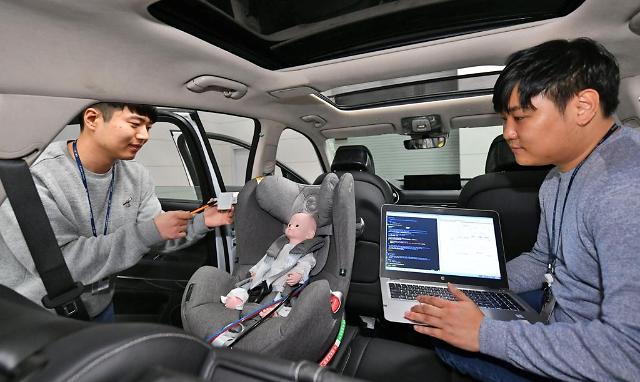
 

The company expects the system to help prevent heatstroke accidents by unattended children left in vehicles during summer. Radars can accurately measure minute movements such as breathing, blood flow, and other biosignals of passengers through their clothes.

Director of the EE Research Center at Hyundai Mobis, Jang Jae-ho, said that the core of the passenger detection system, which mostly acted as a sensor for autonomous driving, is the software algorithm that detects the micromovements of passengers.

He added that the use of radar overcame the limitation posed by camera sensors, which cannot discern babies covered in blankets.

Safety System

Hyundai Mobis said its system, secured with electromagnetic reliability, could operate normally near high-voltage lines and railroad tracks. The company added that it could precisely distinguish adults, infants, and pets. They would also upgrade the system so it could measure passengers’ heart rates by the end of the year.

The parts-making unit of Hyundai said that it could combine the ROA system with safety technologies such as seatbelts and airbags depending on the location and shape of the passenger. The firm said that the technology is not commercially available yet.

As the autonomous vehicles industry grow, auto parts companies strive to develop sensor technologies providing safety features and more convenience.

This in-cabin #radar sensor can detect your baby's movement and even the smallest bio-signals.#MobilityForTomorrow #HyundaiMobis #Mobis #Sensor #RearOccupantAlert #ROA #Baby pic.twitter.com/36C94ju7xD

— Hyundai Mobis Global (@global_mobis) March 27, 2020

Passenger Accidents

The technological development comes after heightened regulations as the number of accidents related to children left in cars increases.

The U.S. National Highway Traffic Safety Administration said that almost 50 children die from being left unattended in hot vehicles every year. In Europe, the ROA system would be mandatory in all new cars starting from 2022.

McKinsey & Company reported that the global vehicle radar market would grow from $4 billion this year to $14 billion in 2030. The consulting firm also said that the in-cabin sensor market would likely grow seven percent annually.

Tags: hyundaihyundai mobisin-cabin sensorradarROAsafety

Related Posts

Hyundai & Kia Bet Big on Battery Innovation with W1.2tn R&D Campus in Anseong
Hyundai Mobis develops in-cabin radar based Rear Occupant Alert system for passenger safety. / photo courtesy of Hyundai Mobis
Hyundai

Hyundai & Kia Bet Big on Battery Innovation with W1.2tn R&D Campus in Anseong

December 1, 2025
Korea Inc. Comes Home: How Samsung, Hyundai and SK Are Reshaping the Domestic Tech Economy
Hyundai Mobis develops in-cabin radar based Rear Occupant Alert system for passenger safety. / photo courtesy of Hyundai Mobis
Hyundai

Korea Inc. Comes Home: How Samsung, Hyundai and SK Are Reshaping the Domestic Tech Economy

December 1, 2025
Hyundai Motor Announces $86 Billion Investment in Korea After U.S. Trade Deal
Hyundai Mobis develops in-cabin radar based Rear Occupant Alert system for passenger safety. / photo courtesy of Hyundai Mobis
EV

Hyundai Motor Announces $86 Billion Investment in Korea After U.S. Trade Deal

November 20, 2025
Hyundai Motor Group and Singapore EDB Partner to Accelerate Low-Carbon Technologies and Hydrogen Innovation
Hyundai Mobis develops in-cabin radar based Rear Occupant Alert system for passenger safety. / photo courtesy of Hyundai Mobis
Hyundai

Hyundai Motor Group and Singapore EDB Partner to Accelerate Low-Carbon Technologies and Hydrogen Innovation

November 4, 2025
Hyundai Motor Invests KRW 930 Billion to Build Hydrogen Fuel Cell Hub in Ulsan
Hyundai Mobis develops in-cabin radar based Rear Occupant Alert system for passenger safety. / photo courtesy of Hyundai Mobis
Hyundai

Hyundai Motor Invests KRW 930 Billion to Build Hydrogen Fuel Cell Hub in Ulsan

October 31, 2025
When Robots Meet Archers: Hyundai’s Wind-Reading Robot Tests Precision at Korea’s National Championship
Hyundai Mobis develops in-cabin radar based Rear Occupant Alert system for passenger safety. / photo courtesy of Hyundai Mobis
Hyundai

When Robots Meet Archers: Hyundai’s Wind-Reading Robot Tests Precision at Korea’s National Championship

November 1, 2025
No Result
View All Result

Most Popular

  • EveR 6: South Korea’s First Robot Conductor Makes Debut with National Orchestra

    0 shares
    Share 0 Tweet 0
  • From LLMs to Agents: Naver and Kakao Enter Next Phase of AI Competition

    0 shares
    Share 0 Tweet 0
  • AI in Korea, One Year After the Hype Peak: What Actually Scaled in 2025

    0 shares
    Share 0 Tweet 0
  • What Counts as “From Scratch”? Korea’s AI Project Faces Its First Real Test

    0 shares
    Share 0 Tweet 0
  • What South Korea’s Facial Recognition Rule Means for SIM Registration and Digital Identity

    0 shares
    Share 0 Tweet 0
  • South Korea to Boost Science and ICT R&D Spending by 25% in 2025

    0 shares
    Share 0 Tweet 0

PRODUCTS

[ads_amazon]

TOPICS

  • Naver
  • Kakao
  • Nexon
  • Netmarble
  • NCsoft
  • Samsung
  • Hyundai

FREE NEWSLETTER

FOLLOW US

  • About Us
  • Cookie policy
  • home
  • homepage
  • mainhome
  • Our Services
  • Privacy Policy
  • Terms of Use

Copyright © 2024 KoreaTechToday | About Us | Terms of Use |Privacy Policy |Cookie Policy| Contact : [email protected] |

No Result
View All Result
  • Topics
    • Naver
    • Kakao
    • Nexon
    • Netmarble
    • NCsoft
    • Samsung
    • Hyundai
    • SKT
    • LG
    • KT
    • Retail
    • Startup
    • Blockchain
    • government
  • Lists

Copyright © 2024 KoreaTechToday | About Us | Terms of Use |Privacy Policy |Cookie Policy| Contact : [email protected] |