
Uruguay deployment highlights Korea’s hydrogen ambitions, but cost and infrastructure challenges persist
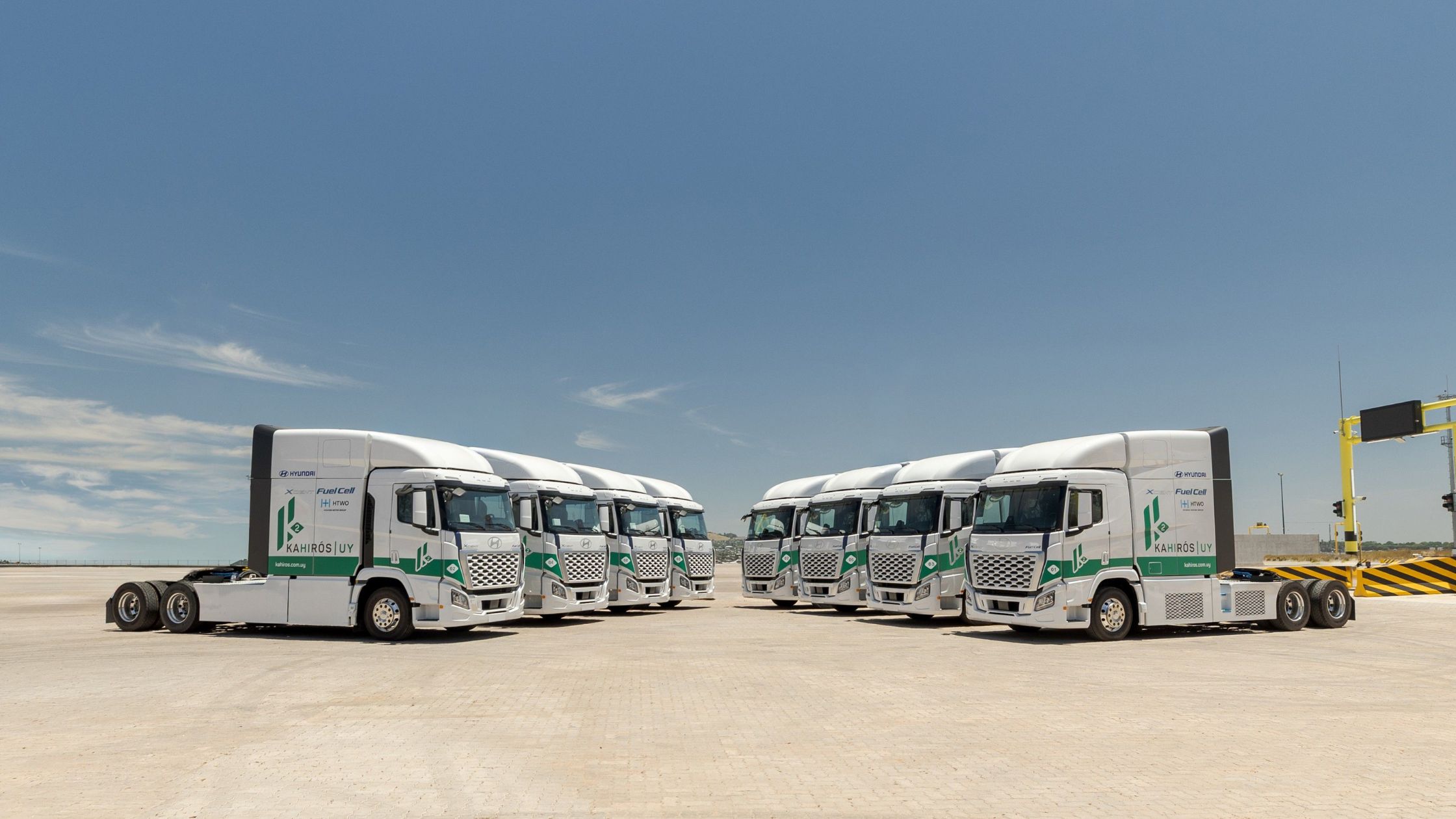
Hyundai Motor’s deployment of hydrogen-powered XCIENT trucks in Uruguay marks more than a regional expansion—it reflects South Korea’s broader effort to position itself as a global leader in hydrogen mobility. The rollout, part of the Kahirós Project, introduces one of the first operational hydrogen freight systems in South America, combining vehicles, fuel production, and logistics in a single ecosystem.
However, the project also underscores a central challenge facing Korea’s hydrogen strategy: while the country has advanced fuel cell technology, scaling hydrogen logistics globally depends on infrastructure, economics, and local energy conditions that remain uncertain.
South Korea has been one of the most active countries in promoting hydrogen as a future energy source, particularly in transport. Government-backed initiatives have supported the development of fuel cell vehicles, hydrogen infrastructure, and export-oriented industrial strategies.
Hyundai has been at the center of this push, deploying fuel cell trucks in Europe and North America before expanding into new regions. The Uruguay project signals a shift from mature markets to emerging ones, where hydrogen systems can be built from the ground up rather than integrated into existing fossil fuel-based infrastructure.
This reflects a broader Korean approach: exporting not just vehicles, but entire hydrogen ecosystems—including production, refueling, and logistics operations.
Uruguay as a controlled testbed for hydrogen logistics
Uruguay offers conditions that make it suitable for early-stage hydrogen deployment. The country relies heavily on renewable energy, allowing hydrogen to be produced with relatively low emissions. The Kahirós Project integrates a solar-powered hydrogen plant with logistics operations, creating a localized supply chain for fuel.
Under this model:
- Hydrogen is produced locally using solar energy
- Fuel is supplied directly to trucks operating fixed routes
- Infrastructure is built specifically for the logistics use case
This approach avoids one of the main barriers to hydrogen adoption—lack of refueling infrastructure—but it also limits scalability, as each deployment requires a similar level of localized investment.
Unlike earlier demonstrations, the Uruguay deployment is designed for continuous use in timber transport. The trucks are expected to operate over long distances, leveraging a range of more than 700 kilometers per refueling cycle.
This marks a transition from experimental trials to operational validation. The goal is not only to prove that hydrogen trucks can function, but to assess whether they can be integrated into real logistics chains with consistent performance.
Projects like Kahirós are increasingly seen as “contained ecosystems,” where variables such as fuel supply, routes, and usage patterns can be controlled. This allows companies like Hyundai to test viability without relying on broader infrastructure networks that do not yet exist.
Structural limits: cost, efficiency, and infrastructure
Despite these advances, hydrogen trucking continues to face structural constraints. Producing, storing, and transporting hydrogen remains energy-intensive and costly compared to battery-electric alternatives. Industry estimates suggest that achieving cost competitiveness with diesel may take several years and require significant reductions in fuel and vehicle costs.
There are also efficiency concerns. Hydrogen fuel chains typically require more energy input than direct electrification, while infrastructure—such as electrolysis plants and refueling stations—demands high upfront investment.
Globally, many fleet operators remain cautious. Battery-electric trucks are currently gaining faster adoption in short- and medium-haul routes, while hydrogen is being positioned for longer distances where batteries face limitations.
Korea’s competitive position: technology vs ecosystem
From a Korean perspective, Hyundai’s expansion highlights both strength and limitation. The company has established itself as one of the few manufacturers with commercially deployed hydrogen trucks, supported by years of development and international pilot projects.
However, Korea’s advantage is concentrated at the vehicle and technology level, rather than across the full hydrogen value chain. Projects like Kahirós require coordination across energy production, infrastructure, financing, and logistics—areas that depend heavily on local conditions and partnerships.
This creates a gap between Korea’s technological leadership and its ability to scale hydrogen solutions globally.
A model for replication—or a niche solution?
The Uruguay deployment suggests one possible path forward: localized hydrogen ecosystems built around specific industries, such as timber logistics. By focusing on fixed routes and predictable demand, these systems can operate without a nationwide hydrogen network.
However, replicating this model at scale may prove difficult. Each project requires:
- Dedicated renewable energy capacity
- Hydrogen production facilities
- Logistics integration and financing
This raises questions about whether hydrogen trucking will expand broadly or remain limited to specific use cases where conditions are favorable.
Early signal of Korea’s global hydrogen ambitions
Hyundai’s move into South America reflects a broader effort by Korean companies to extend their role in next-generation mobility beyond domestic and developed markets. By entering emerging regions early, they can shape how new energy systems are built and adopted.
At the same time, the project highlights the uncertainty surrounding hydrogen’s long-term role in freight transport. While the technology is advancing, its adoption will depend on whether costs can be reduced and infrastructure can scale beyond controlled environments.
For now, the Uruguay deployment serves as both a demonstration of Korea’s hydrogen ambitions and a reminder of the challenges involved in turning those ambitions into a globally viable logistics model.