
Technology aims to improve real-time detection in urban and industrial environments
Hyundai Motor and Kia Corporation have announced the development of Vision Pulse, a new driver safety technology that uses ultra-wideband (UWB) signals to detect nearby obstacles in real time. The companies say the system is designed to improve situational awareness around vehicles, particularly in dense urban settings where conventional sensing technologies face limitations.
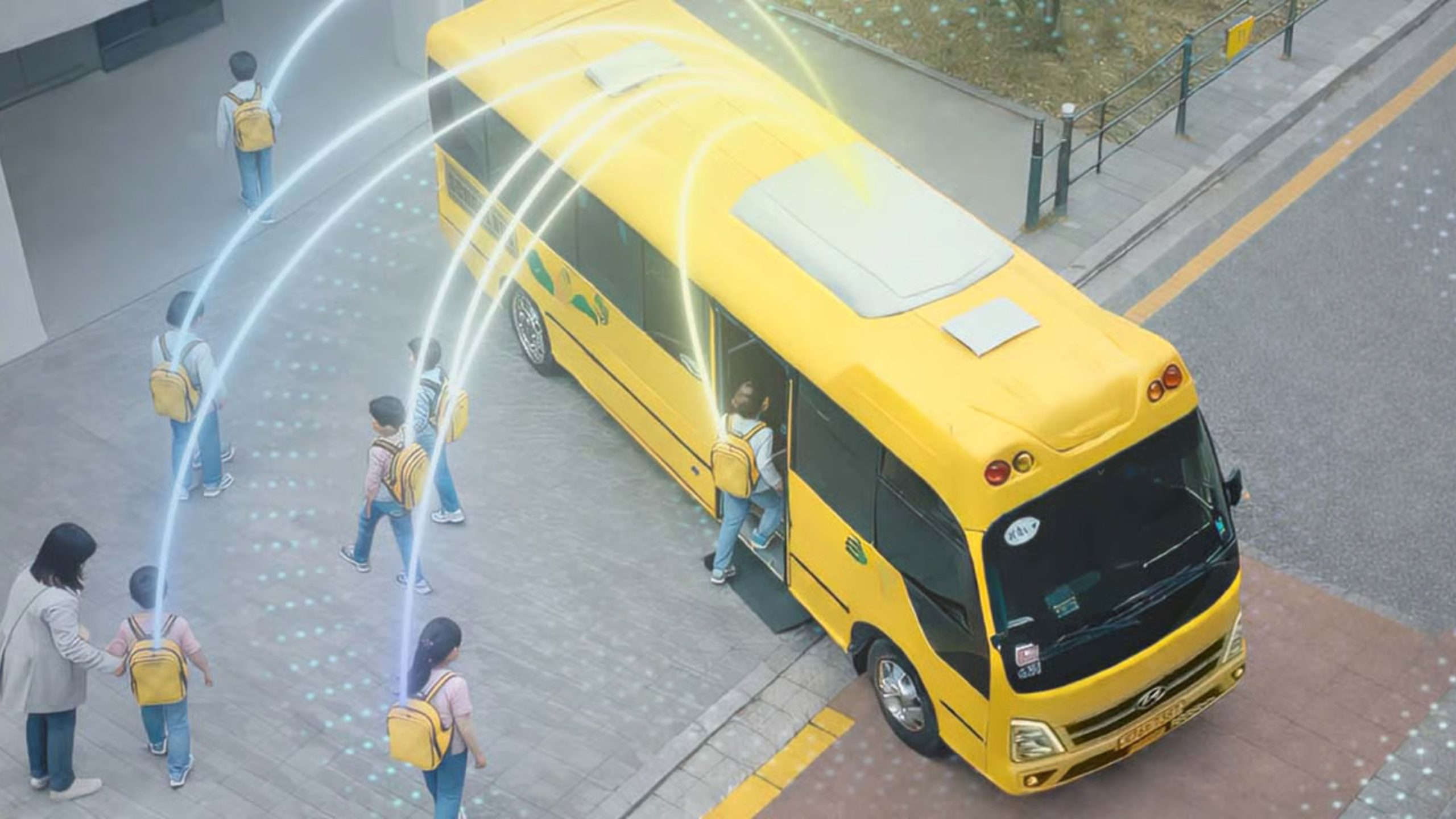
Unlike traditional driver-assistance systems that rely mainly on cameras, radar, or LiDAR, Vision Pulse is based on UWB communication between devices. By measuring how long it takes for signals to travel between UWB modules, the system can calculate the precise location of surrounding objects and issue warnings when a potential collision is detected.
How the system works
Vision Pulse uses UWB modules installed inside vehicles to transmit and receive signals. If nearby objects—such as other vehicles, bicycles, or pedestrians—are also equipped with UWB-enabled devices, including certain smartphones, wearables, or trackers, the system can identify their position relative to the vehicle.
According to Hyundai Motor and Kia, the technology can be activated through additional UWB modules. However, vehicles already equipped with the companies’ Digital Key 2 system include the necessary hardware, meaning Vision Pulse could be enabled without further physical upgrades in those models.
Addressing limits of existing safety technologies
Current blind-spot and collision warning systems often depend on fixed roadside infrastructure or communication networks with slower response times. Hyundai Motor and Kia say Vision Pulse is designed to overcome these constraints by relying on direct UWB radio communication, which allows for faster and more precise data exchange.
UWB operates across a wide GHz bandwidth, reducing signal interference and improving penetration in complex environments. The companies claim the system can detect objects within a 100-meter radius with an error margin of about 10 centimeters, while maintaining detection accuracy above 99 percent even at night or in poor weather. Communication latency is reported to be between one and five milliseconds, supporting near-instant alerts.
Another focus has been software. Hyundai Motor and Kia said they developed algorithms capable of tracking and predicting the movement of multiple objects around a vehicle, including those traveling at high speeds, to make the alerts more reliable in real-world traffic conditions.
Broader use cases beyond passenger vehicles
While Vision Pulse is positioned primarily as a driver safety feature, the automakers see wider applications in non-automotive environments. Potential use cases include:
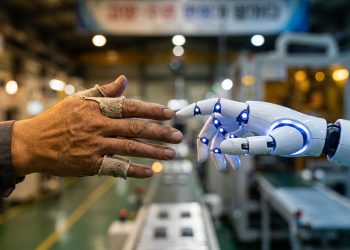
- Industrial mobility: Collision prevention between vehicles such as forklifts and workers in factories or warehouses
- Emergency response: Locating people trapped under debris during disasters using UWB signal detection
These scenarios rely on the same principle of precise location tracking without the need for heavy or expensive sensor arrays.
Pilot testing in industrial settings
Hyundai Motor and Kia said Vision Pulse is already being tested in live environments. Since 2025, trials have been under way at Kia’s PBV Conversion Center in Hwaseong, South Korea, where the technology is used to help prevent accidents between forklifts and workers on production lines.
The companies are also preparing pilot tests with the Busan Port Authority. Following an agreement signed in October 2025, the system is expected to be evaluated for its ability to reduce collisions between industrial vehicles and workers at port terminals and nearby logistics areas.
Strategic context
The introduction of Vision Pulse reflects a broader industry shift toward software- and communication-based safety systems that complement traditional sensors. By using UWB modules that are already being installed for digital key and connectivity functions, Hyundai Motor and Kia are aiming to improve safety while limiting additional hardware costs.
Industry observers note that such approaches could become increasingly important as vehicles operate in more connected environments, where interaction with personal devices and infrastructure plays a larger role in accident prevention.
Hyundai Motor and Kia have not yet disclosed a commercial rollout timeline for Vision Pulse, but said further testing and validation will continue as they explore applications across mobility, industrial safety, and emergency response.