
The construction giant moves beyond pilot testing as robotics becomes part of residential infrastructure
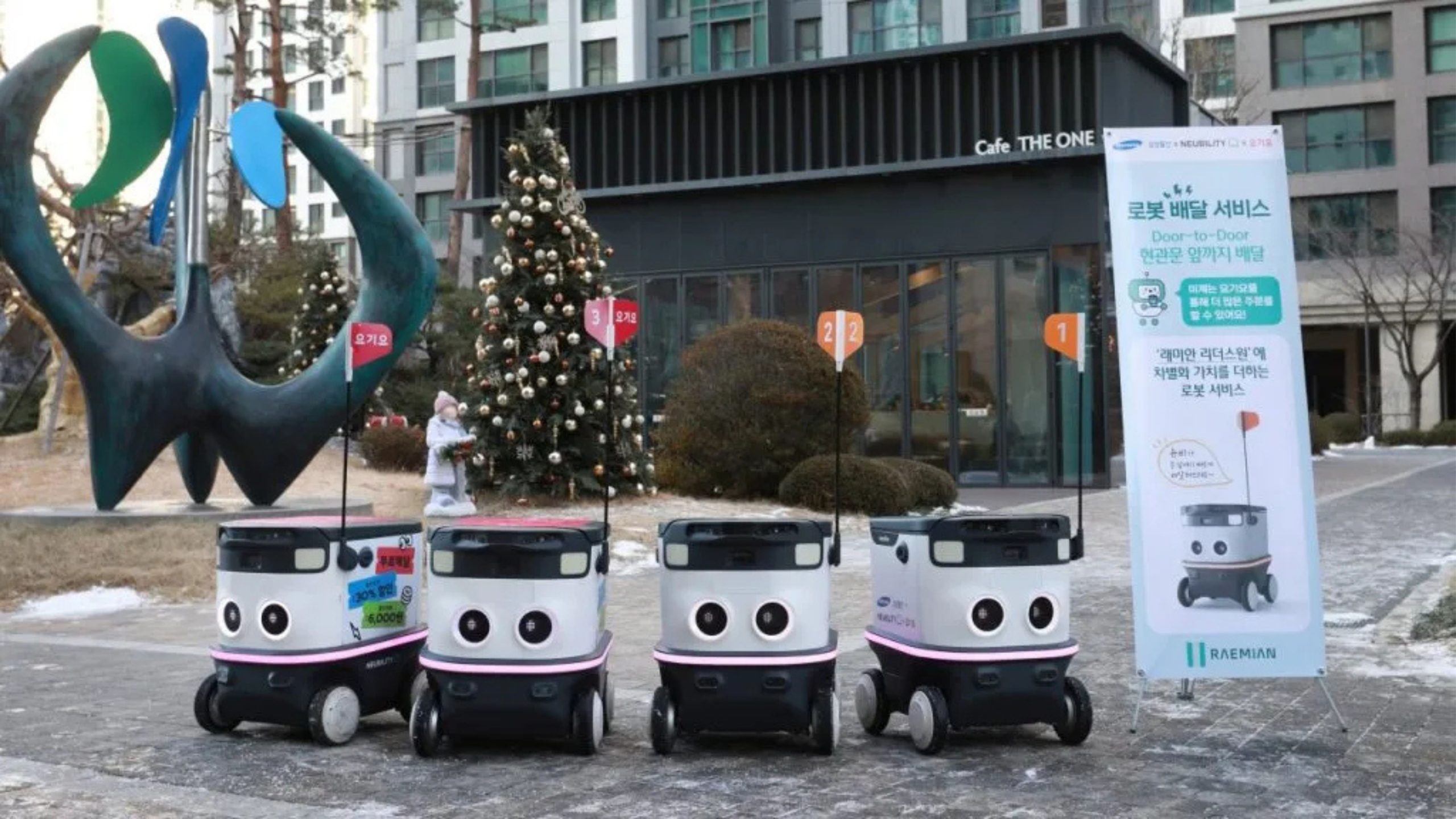
Samsung C&T is scaling up its autonomous food delivery robot service, signalling a broader push to integrate robotics into residential living rather than treating it as a short-term pilot or showcase project.
The initiative, led by Samsung C&T’s Engineering & Construction Group, allows robots to deliver meals directly from restaurants to individual apartment doors. The expansion follows a year-long trial at the Raemian Leaders One apartment complex in Seocho-gu, Seoul, where the company tested whether autonomous delivery could function reliably within a dense, multi-building residential environment.
From pilot test to commercial rollout
The pilot, conducted in partnership with Neubility, focused on the practical challenges of operating robots inside apartment complexes. These included navigating shared corridors, elevators, and common areas, as well as ensuring deliveries could be completed safely without disrupting residents.
To address these concerns, the robots were programmed to operate at approximately walking speed. Food was transported in sealed compartments that remained locked during transit and could only be opened by the designated recipient. Samsung C&T said this design helped protect both food quality and delivery security.
Following consultations with the residents’ council and site management, the company decided to move beyond testing and launch a full door-to-door service, enabling robots to deliver meals directly to apartment entrances.
Reducing access risks inside residential complexes
One of the key drivers behind the service is the company’s effort to limit the movement of external delivery workers within residential compounds. By using robots for the final stage of delivery, Samsung C&T aims to reduce:
- safety risks in shared indoor spaces
- disputes related to non-resident access
- pressure on on-site security management
This approach shows growing concerns among large apartment communities in South Korea about access control, privacy, and security, particularly in high-density housing developments.
Strong resident response supports expansion
Resident feedback played a significant role in Samsung C&T’s decision to scale the service. According to the company, a survey conducted during the pilot period showed a satisfaction rate of 95% among 113 participating residents.
After receiving favourable feedback from residents, Samsung C&T expanded the service in 2025. The addition of an ordering link with food delivery platform Yogiyo has extended the system’s reach to about 130 nearby restaurants and cafés within a 1.2-kilometre area, giving residents a broader selection of meals delivered via the robot service.
Robotics as part of future housing design
The food delivery service is part of a wider effort by Samsung C&T to test how robotics can be embedded into residential environments. Alongside delivery robots, the company has been trialling AI-based home companion robots and automated systems designed to move cargo from underground car parks to residential units.
Hyejeong Cho, vice-president and head of Samsung C&T’s DxP business strategy team, said the group is planning for a future in which robots are a natural part of daily living, rather than a short-term or experimental technology.
“Preparing for an era where robots are naturally integrated into daily living, we are continuously developing new residential experiences that residents can directly feel,” Cho said. She added that Samsung C&T plans to gradually expand a residential robotics ecosystem that delivers practical changes to how people live in apartment communities.
A shift from experimentation to infrastructure
Rather than positioning robot delivery as a standalone service, Samsung C&T’s approach suggests a longer-term strategy: treating robotics as part of residential infrastructure. If scaled further, such systems could influence how future apartment complexes are designed, managed, and secured—especially in urban environments where labour shortages, safety concerns, and efficiency are becoming more pressing.
For South Korea’s construction and property sector, the project highlights how robotics is moving from controlled pilots into real-world, commercial use cases that directly affect daily life.