

As generative AI excitement cooled in 2025, South Korea’s tech industry shifted toward infrastructure, enterprise adoption, and regulation—revealing where AI delivered real value and where expectations fell short.
By early 2024, artificial intelligence had become unavoidable in South Korea’s tech conversation. Major conglomerates announced sweeping AI roadmaps, startups rebranded products around generative AI, and policymakers positioned AI as a national growth engine. Expectations were high that AI would rapidly transform consumer services and business operations alike.
By the end of 2025, the mood was noticeably different. AI was still central to Korea’s tech strategy, but the conversation had matured. Fewer bold promises were made. Fewer consumer AI launches dominated headlines. Instead, progress showed up in less visible places: data centers, factory floors, enterprise software deployments, and regulatory frameworks.
Rather than asking what AI could do, Korea’s tech industry spent 2025 answering a more practical question: where does AI actually work at scale?
The Shift Away From Consumer AI
One of the clearer patterns to emerge in South Korea’s AI ecosystem in 2025 was a slowdown in new consumer-facing AI experimentation, rather than a collapse in consumer AI usage itself. Chatbots, generative image tools, and AI assistants continued to be widely used, but few Korean-developed consumer AI products translated that usage into sustained commercial growth during the year.
This gap between adoption and monetisation became increasingly visible. Several domestic startups launched consumer AI products in 2024 with strong early attention, only to struggle with retention, pricing, or infrastructure costs in 2025. Industry observers noted that while user interest remained high, willingness to pay for standalone AI services was limited—especially when comparable tools were already available for free or bundled into global platforms.
This was not unique to Korea. Globally, consumer AI struggled with:
- Low willingness to pay
- High compute and inference costs
- Strong competition from global platforms like OpenAI and Google
In Korea, these pressures were compounded by a relatively small domestic language market and high consumer expectations for accuracy, tone, and local relevance. As a result, many Korean startups found it difficult to justify the cost of running consumer-facing generative AI services at scale.
That said, consumer AI did not disappear from the Korean market. Instead, it became concentrated around large platforms and ecosystems. Global tools such as ChatGPT remained widely used, while domestic platforms integrated AI features into existing services rather than launching standalone products. This included AI-powered search, recommendation, and customer support functions embedded within e-commerce, gaming, and messaging platforms.
The most telling response from startups was not shutdown, but repositioning. Several AI teams shifted focus from direct-to-consumer products toward enterprise licensing, vertical-specific solutions, or backend AI services. This pivot reflected a growing recognition that consumer AI, while visible and influential, was harder to sustain as an independent business under current cost and competition dynamics.
In that sense, the slowdown in consumer AI experimentation in 2025 did not signal declining demand. It marked a reassessment of where value could realistically be captured. Consumer AI remained important as an interface and adoption driver—but for many Korean companies, it was no longer the primary path to scale.
This was the original section. From the points you mentioned, I want them to be incorporated in this section. So please write accordingly. don’t make it too long or too short. you can include bullet points. remember this is not an entire article but a section of it. Please give me this section again with suggested updates.
Enterprise AI Adoption: Quiet, Practical, and Persistent
Enterprise AI adoption in Korea expanded steadily in 2025, though it rarely made headlines. Rather than rolling out flashy products, companies focused on embedding AI into existing operations.
Common enterprise use cases included:
- Predictive maintenance in manufacturing
- AI-assisted quality inspection
- Customer service automation
- Internal productivity tools such as coding and documentation assistants
A key signal of this shift was Samsung SDS becoming an official reseller of ChatGPT Enterprise in South Korea, targeting corporate clients that needed secure, governed AI tools rather than consumer-facing products.
Large enterprises were selective. AI projects had to integrate with existing systems, demonstrate measurable ROI, and meet security standards. Many firms reduced the number of pilot projects but expanded the ones that proved effective.
AI adoption in Korea was not explosive, but it was disciplined. This slowed headline growth while improving long-term sustainability.
Industrial AI and Robotics Gained Momentum
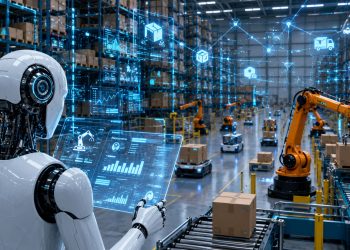
Another area that advanced in 2025 was industrial AI, particularly when combined with robotics and automation. Korea’s strength in manufacturing made this a natural focus.
The launch of the K-Humanoid Alliance illustrated this long-term approach. Backed by industry players and research institutions, the initiative aims to develop AI-powered humanoid robots over the next decade—not immediate consumer products.
Separately, the Koean government committed hundreds of billions of won to industrial AI projects focused on smart factories, autonomous systems, and intelligent logistics.Korea’s AI ambition leaned toward embodied, industrial systems rather than purely digital consumer tools—reflecting national strengths rather than global trends.
Consumer AI Startups Faced Reality
Many AI startups struggled to convert attention into revenue in 2025. Despite strong demos, high operational costs and limited differentiation made growth difficult. Several startups pivoted to B2B services, while others downsized or exited quietly.
This was less a failure than a market correction. The cost structure of generative AI made sustainable consumer businesses difficult without massive scale.
Standalone Korean Foundation Models Remained Challenging
Korean startups such as Upstage continued developing local language models, but competing directly with global foundation models proved costly.
As a result, many firms adopted hybrid strategies—fine-tuning global models for Korean enterprise needs rather than training models from scratch.
AI Market Growth: Steady, Not Spectacular
Market estimates suggest South Korea’s AI market reached around $7 billion in 2025, up from roughly $5.5 billion in 2024.
Growth was driven mainly by enterprise adoption, public-sector projects, and infrastructure investment, while consumer AI growth flattened.
A More Realistic AI Trajectory
One year after the hype peak, AI in South Korea looked quieter—but stronger.
The country did not lead global consumer AI trends, but it built foundations that matter: compute capacity, enterprise adoption, industrial integration, and regulatory clarity. These are not headline-grabbing achievements, but they shape long-term competitiveness.
In hindsight, 2025 may be remembered not as the year AI transformed everything in Korea, but as the year Korea decided where AI truly belonged.